Join us on a literary world trip!
Add this book to bookshelf
Grey
Write a new comment Default profile 50px
Grey
Subscribe to read the full book or read the first pages for free!
All characters reduced
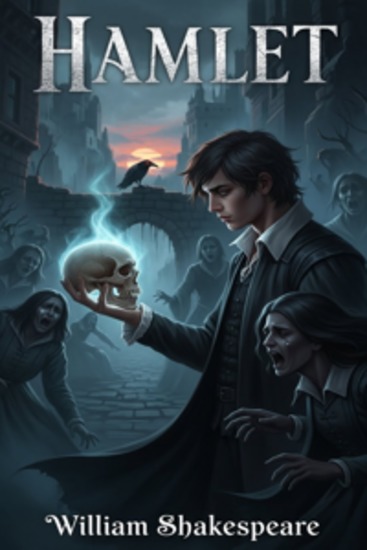
Hamlet - cover

Hamlet

William Shakespeare

Publisher: Bu Classics Books

  • 0
  • 0
  • 0

Summary

Confront the ultimate tragedy of the human intellect in this brooding drama of a Danish prince paralyzed by grief and the demand for revenge. Haunted by his father's ghost and the treachery of his uncle, the protagonist spirals into a philosophical inquiry on existence, madness, and the morality of action. The play’s soliloquies are among the most famous in the English language, dissecting the complexity of the mind with unparalleled depth. It remains the definitive portrait of the burden of consciousness.
Available since: 01/29/2026.
Print length: 127 pages.
Other books that might interest you

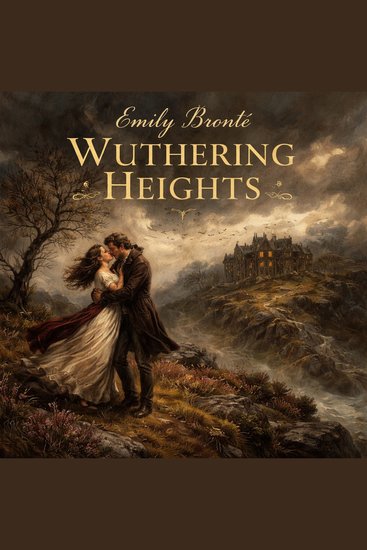
  • Wuthering Heights - cover

    Wuthering Heights

    Emily Brontë

    • 0
    • 0
    • 0
    Wuthering Heights is a haunting and powerful tale of love, obsession, and revenge set on the wild Yorkshire moors. This iconic gothic novel tells the story of Heathcliff and Catherine Earnshaw, whose intense and destructive bond defies social boundaries and even death itself.Spanning generations, the novel explores passion, cruelty, and the consequences of emotional extremes. Dark, atmospheric, and unforgettable, Wuthering Heights is one of the greatest love stories in English literature—both beautiful and tragic.This audiobook is essential for fans of gothic romance, classic drama, and emotionally intense storytelling.
    Show book
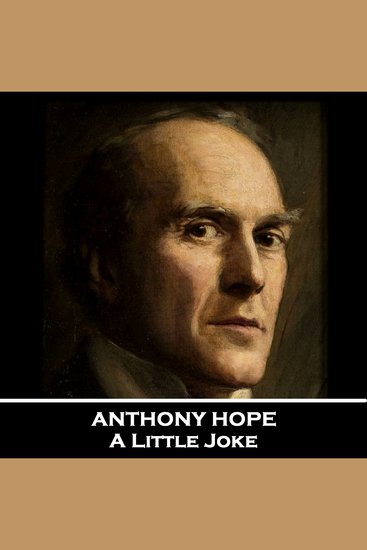
  • A Little Joke - From their pens to your ears genius in every story - cover

    A Little Joke - From their pens...

    Anthony Hope

    • 0
    • 0
    • 0
    Sir Anthony Hope Hawkins was born on 9th February 1863 in Clapton, London.  
    He was educated at St John's School, Leatherhead, Marlborough College and Balliol College, Oxford.  Hope trained as a lawyer and barrister and was called to the Bar by the Middle Temple in 1887. Despite what was thought to be a promising legal career he had literary ambitions and wrote in his spare time. 
    His early works appeared in various periodicals of the day but for his first book ‘A Man of Mark’ (1890), with no publisher interested, he published with his own resources.  
    More novels and short stories followed, including the mildly successful ‘Mr Witt's Widow’ in 1892. Hope even found time to run as the Liberal candidate for Wycombe in the election that same year but was unsuccessful. 
    His first major literary success came with ‘The Dolly Dialogues’, a collection of previously published magazine pieces followed very quickly by his instant classic, ‘The Prisoner of Zenda’. He now gave up the vestiges of his legal career to pursue writing full-time. 
    Despite never again reaching the same pinnacle of success he was popular and wrote prolifically across novels, plays and of course, short stories though his writing output rapidly diminished after the war. 
    In 1918 he was knighted for his contribution to propaganda efforts during World War I.  
    His short stories are delicate, mannered and often surprising with their wit, humour and interplay of characters who say one thing and usually mean another.  He was very definitely a writer of escapist rather than serious fare but they are no less enjoyable for that. 
    Anthony Hope died of throat cancer on 8th July 1933 at his country home, Heath Farm at Walton-on-the-Hill in Surrey. He was 70.
    Show book
  • Uncle Wiggily’s icicle maker - cover

    Uncle Wiggily’s icicle maker

    Howard R. Garis

    • 0
    • 0
    • 0
    Uncle Wiggily's icicle maker is a fun children's story for wintertime. Uncle Wiggily runs into Jack Frost and he gets an icicle maker from him. Uncle Wiggily helps a lot of his friends with the icicle maker, but then the bad fox wants to catch him... The moral of the story is: The bad guys don't win. Recommended for age 3+.
    Show book
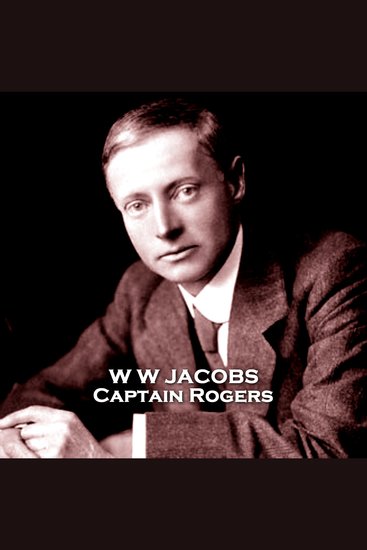
  • Captain Rogers - From their pens to your ears genius in every story - cover

    Captain Rogers - From their pens...

    WW Jacobs

    • 0
    • 0
    • 0
    William Wymark Jacobs was born on 8th September 1863 in Wapping, East London.  
    He was educated at a private school and then Birkbeck Literary and Scientific Institution, now part of the University of London. 
    In 1879, Jacobs began work as a clerk in the civil service, in the Post Office Savings Bank.  In 1885 his first short story was published but it was not until almost the turn of the century that he would abandon his post office career to that as a full-time writer. By then he was a very popular author, his collections selling extremely well and with an excellent income. 
    His best-known work is the macabre ‘The Monkey's Paw’ and he is also highly regarded for his ghost stories although much of his remaining short story output is streaked with humour.  His characters are immediately identifiable and we all know that life will take chunks out of them in no time at all.  
    Jacobs married the noted suffragette Agnes Eleanor Williams in 1900 at West Ham, Essex. They went on to have two daughters and three sons as they settled down to life.  
    By the outbreak of the First World War his literary output had declined and he now mainly spent his time rewriting his earlier stories for the stage.  In all he wrote 18 plays. 
    W W Jacobs died on 1st September 1943 at Hornsey Lane, Islington in London. He was 79.
    Show book
  • The Bells - cover

    The Bells

    Edgar Allan Poe

    • 0
    • 0
    • 0
    "The Bells" is a heavily onomatopoeic poem by Edgar Allan Poe which was not published until after his death in 1849. It is perhaps best known for the diacopic use of the word "bells". The poem has four parts to it; each part becomes darker and darker as the poem progresses from "the jingling and the tinkling" of the bells in part 1 to the "moaning and the groaning" of the bells in part 4.
    Show book
  • Anathema - From their pens to your ears genius in every story - cover

    Anathema - From their pens to...

    Alexander Kuprin

    • 0
    • 0
    • 0
    Alexander Kuprin was born in Narovchat, Penza in Russia on 7th September 1870. 
    At 3 his Father died and he and mother moved to Moscow. By 10 he was enrolled at the Second Moscow Military High School and there his interest in literature began. The Alexander Military Academy followed and two years later he was a sub-lieutenant and posted to an Infantry Regiment for a further four years. 
    Despite his duties he was a now a keen writer and published his first short story at this time. His military duties also garnered him experiences for his breakthrough work ‘The Duel’.  Leaving the military he left for Kiev to work for local newspapers.  He continued to publish both stories and novels and by 1901 he was in St Petersburg becoming part of a group that included Chekhov, Ivan Bunin, Maxim Gorky and Leonid Andreyev.  
    In the years that followed further controversial works and acclaim followed.  His comments on the regime meant he was also put under secret police surveillance.   
    As World War I erupted, Kuprin opened a military hospital but was then given command of an infantry company in Finland. He was soon discharged on grounds of ill health.  
    The October Revolution saw him praise Lenin, but he warned that the Bolsheviks threatened Russian culture and might cause further widespread suffering to the peasants.  As Civil War raged he took his family to Helsinki and then on to Paris. 
    Exile saw his talents decline further and his succumbing to alcoholism. He became lonely and withdrawn. The family's poverty increased his malaise.   
    In May 1937, the Kuprin’s returned to Moscow.  He now saw his work published but wrote almost nothing new.  In 1938 his health rapidly deteriorated.  Already suffering from a kidney problems and sclerosis, he had now developed cancer of the oesophagus.  
    Alexander Kuprin died on 25th August 1938.
    Show book