Join us on a literary world trip!
Add this book to bookshelf
Grey
Write a new comment Default profile 50px
Grey
Subscribe to read the full book or read the first pages for free!
All characters reduced
The Lost Lemuria - The Story of the Lost Civilization (Ancient Mysteries Series) - Unveiling the Mysteries of Lemuria - A Tale of Lost Lands and Ancient Legends - cover

The Lost Lemuria - The Story of the Lost Civilization (Ancient Mysteries Series) - Unveiling the Mysteries of Lemuria - A Tale of Lost Lands and Ancient Legends

William Scott-Elliot

Publisher: Good Press

  • 0
  • 0
  • 0

Summary

In "The Lost Lemuria - The Story of the Lost Civilization," William Scott-Elliot delves into the enigmatic narrative of a once-thriving civilization, believed to have existed in the Pacific Ocean during prehistoric times. Blending speculative history with esoteric philosophy, Scott-Elliot employs a vivid literary style filled with evocative imagery and rich detail, inviting readers to explore the cultural, spiritual, and technological achievements of Lemuria. This work is not only a captivating account of a purported ancient civilization but also a reflection of late 19th-century fascination with lost worlds and mystical traditions, situating it within the broader context of the Theosophical movement and the era's growing interest in alternative histories. William Scott-Elliot, a prominent figure in the Theosophical society, was deeply influenced by the quest for understanding humanity's past, which inspired him to explore the mythical narratives surrounding Lemuria. His background in science and spirituality led him to write this book as both a historical inquiry and an exploration of humanity's deeper metaphysical connections. Through this lens, he aims to provide insight into the evolution of consciousness and the potential for ancient wisdom to illuminate contemporary understanding. Readers drawn to the mysterious intersections of history, myth, and spirituality will find "The Lost Lemuria" to be an enthralling read. Scott-Elliot's well-researched narrative invites contemplation and reflection, appealing to those seeking a deeper understanding of lost civilizations and their implications for modern society.
Available since: 01/09/2024.
Print length: 360 pages.


Other books that might interest you

  • Maroons and the Gullah The: The History of the Unique Cultures Formed by Free Africans in the Americas - cover

    Maroons and the Gullah The: The...

    Editors Charles River

    • 0
    • 0
    • 0
    Although the slave systems required the continual use of force and coercion, as well as the harsh punishment of any rebellion, slaves were not a helpless labor force terrorized into obedience and docility. Slaves resisted and sometimes rebelled, and over the centuries there were thousands of slave rebellions of varying sizes. Slaves commonly resisted in many ways, such as sabotaging their tools and the crops they were tending, but much more rarely slaves violently rebelled, which were for the most part put down with extreme violence. 
    Of course, a fairly common form of resistance was running away and seeking hiding places in environments where slave catchers experienced difficulty. Slaves who ran and hid out, or who made their own settlements, were called maroons, from the Spanish word cimarron, which means “wild” or “untamed.” The term that historians commonly use to describe this is marronage, adapted from the French word maron, meaning the same as maroon. Marronage took two forms, grand and petty. Grand marronage was permanent, with escapees joining together to establish lasting settlements in inaccessible areas in mountains and swamps, sometimes preferring death rather than being caught and enslaved again. 
    The Gullah Geechee, or the “Gullah” for short, are the descendants and rightful heirs of the once-shackled slaves who resided in these parts. As the guardians and torch holders of the incredible legacy left behind by their persevering ancestors, the modern Gullah spare no effort in preserving the inherently unique customs and traditions, complete with their own creole tongue, that have been passed down from one generation to the next.
    Show book
  • History of Poland between 966-1919 - The Rise and Fall of the Polish Lithuanian Commonwealth - cover

    History of Poland between...

    HISTORY FOREVER

    • 0
    • 0
    • 0
    ★ Do you want to discover the History of Poland? ★ 
    If your answer is yes, get this book now! 
    ★ BUY THIS BOOK NOW AND DISCOVER MORE ABUOT POLAND  TODAY! ★ 
    In this book you will discover; 
    ·       History of the Polish Kingdom: Lech, Czech, and Rus 
    ·       Vladislav the Short & Kashmir the Great 
    ·       The Grand Duchy of Lithuania – The 15th century 
    ·       Polish History of the 16th and 17th century 
    ·       Polish History of the 18th and 19th century 
    ·       Occupation & Revolution - The French Polish Legion 
    ·       The November Uprising 
    ·       The Galician Province 
    ·       The Polish Lithuanian Commonwealth 
    ·       The Great Northern War 
    ·       Poland after the Partition 
      
    ★ BUY THIS BOOK NOW AND DISCOVER MORE ABUOT POLAND TODAY! ★
    Show book
  • 100 Facts About Learning Spanish - English to Spanish - cover

    100 Facts About Learning Spanish...

    Science-Based Language Learning Lab

    • 0
    • 0
    • 0
    Introduction to the 100 Facts Language Learning Series 
     
    Welcome to an innovative approach to language learning! Our series helps you master Spanish through captivating topics like art, science, and history. Each book presents 100 carefully selected facts, providing knowledge in both English and Spanish. 
     
    How It Works: 
     
    - Each fact is introduced in Spanish for initial interpretation. 
     
    - The fact appears in English on the next page, repeated in Spanish to clarify any unknown terms. 
     
    - This repetitive, yet concise format aids memorization and streamlines learning. 
     
    Benefits: 
     
    - Concise Learning: One-sentence facts make learning impactful and relevant to your interests. 
     
    - Reinforcement: Alternating languages with each fact solidifies vocabulary and grammar through constant, practical application. 
     
    - Engagement: Associating new words with passionate topics keeps learning dynamic and engaging. 
     
    - Dual Knowledge: Learn a new language and deepen your understanding of a specific subject simultaneously. 
     
    Designed for learners who thrive on clear, targeted information, this series offers an enjoyable and effective educational journey. Whether you're a curious beginner or expanding your skills, these books ensure your language learning is both educational and engaging. Embrace this journey of 100 facts and let your passions drive your progress in mastering Spanish!
    Show book
  • Occupation and Liberation of France during World War II The: The History of the Decisive Campaigns in 1940 and 1944 - cover

    Occupation and Liberation of...

    Editors Charles River

    • 0
    • 0
    • 0
    One of the most famous people in the world came to tour the city of Paris for the first time on June 28, 1940. Over the next three hours, he rode through the city’s streets, stopping to tour L’Opéra Paris. He rode down the Champs-Élysées toward the Trocadero and the Eiffel Tower, where he had his picture taken. After passing through the Arc de Triomphe, he toured the Pantheon and old medieval churches, though he did not manage to see the Louvre or the Palace of Justice. Heading back to the airport, he told his staff, “It was the dream of my life to be permitted to see Paris. I cannot say how happy I am to have that dream fulfilled today.” 
    Four years after his tour, Adolf Hitler would order the city’s garrison commander, General Dietrich von Choltitz, to destroy Paris, warning his subordinate that the city "must not fall into the enemy's hand except lying in complete debris." Of course, Paris was not destroyed before the Allies liberated it, but it would take more than 4 years for them to wrest control of France from Nazi Germany after they took the country by storm in about a month in 1940. That said, it’s widely overlooked today given how history played out that as the power of Nazi Germany grew alarmingly during the 1930s, the French sought means to defend their territory against the rising menace of the Thousand-Year Reich. As architects of the most punitive measures in the Treaty of Versailles following World War I, France was a natural target for Teutonic retribution, so the Maginot Line, a series of interconnected strongpoints and fortifications running along much of France's eastern border, helped allay French fears of invasion. 
    The French had not expected the Germans would be able to move armored units through the Ardennes Forests, a heavily wooded region spanning parts of Belgium, France and the Netherlands. To the Allies’ great surprise, the Germans had no trouble rolling across these lands in the span of weeks.
    Show book
  • Enchantment: Part IV - Leech (Yaoi Erotic Gay Romance) - cover

    Enchantment: Part IV - Leech...

    Kai Aubrey

    • 0
    • 0
    • 0
    Desert night shrouds the capital city in its heady warmth. Heath and Caio walk the winding alleyways, absorbing sights of unrestrained decadence. This is that infamous den of hedonism: the pleasure district of Sa’arre. 
    Deep within the palace of desire, they feel an irresistible, charismatic pull. In a world of inhuman passion, no spell can protect against raw demonic charm. 
    A search for allies takes an unexpected turn as the danger around them spirals out of control. The naïve couple soon realizes nothing is what it seems. 
    ***CONTAINS EXPLICIT GAY SEXUAL CONTENT*** 
    Written by Kai Aubrey. Narrated by Arcadian Audios. 
    For more content, visit www.KaiAubrey.com.
    Show book
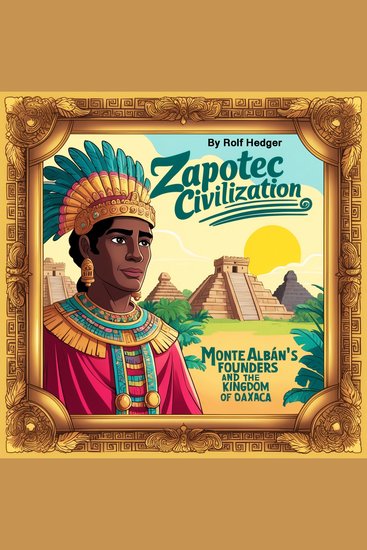
  • Zapotec Civilization - Monte Albán's Founders and the Kingdom of Oaxaca - cover

    Zapotec Civilization - Monte...

    Rolf Hedger

    • 0
    • 0
    • 0
    The Zapotec civilization emerged in the valleys of Oaxaca, a region characterized by its fertile land, diverse ecosystems, and strategic position for trade and agriculture. Archaeological evidence suggests that the earliest Zapotec communities began forming around 1500 BCE, with small farming villages dotting the landscape. Over time, these settlements grew in complexity, giving rise to a society that would become one of Mesoamerica’s most influential civilizations. 
    Early Zapotec communities relied heavily on agriculture, cultivating maize, beans, squash, and chili peppers—staples that formed the foundation of their diet. The region’s rivers and seasonal rains provided a reliable water source, allowing for irrigation techniques that supported larger populations. As food production increased, villages expanded, and the need for organization led to the development of social hierarchies. Religious leaders, warriors, and skilled artisans began to hold distinct roles in society, paving the way for the emergence of political structures. 
    By the first millennium BCE, the Zapotecs had established themselves as a dominant force in the Oaxaca Valley. Unlike nomadic or loosely structured societies, they developed permanent settlements with planned architecture, ceremonial centers, and marketplaces. This period saw the rise of San José Mogote, one of the earliest known Zapotec centers, where the first signs of their writing system and political organization appeared. San José Mogote’s influence laid the groundwork for the later establishment of Monte Albán, which would become the heart of Zapotec power.
    Show book