Join us on a literary world trip!
Add this book to bookshelf
Grey
Write a new comment Default profile 50px
Grey
Subscribe to read the full book or read the first pages for free!
All characters reduced
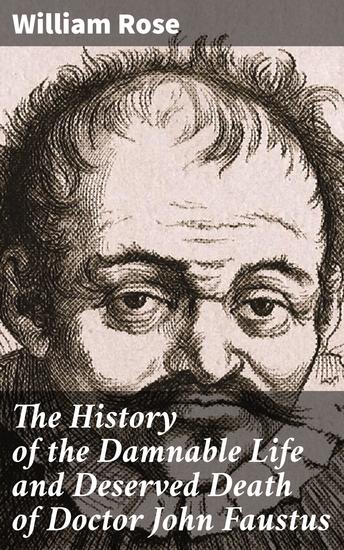
The History of the Damnable Life and Deserved Death of Doctor John Faustus - A Dark Exploration of Ambition and Supernatural Deals - cover

The History of the Damnable Life and Deserved Death of Doctor John Faustus - A Dark Exploration of Ambition and Supernatural Deals

William Rose

Publisher: Good Press

  • 0
  • 0
  • 0

Summary

In "The History of the Damnable Life and Deserved Death of Doctor John Faustus," William Rose delves into the compelling narrative of ambition and moral conflict through the tragic tale of Doctor Faustus, a scholar who sells his soul to the devil for earthly knowledge and pleasures. Written with a blend of Elizabethan prose and poetic elements, the book reflects the era's fascination with the supernatural and the tension between Renaissance humanism and emerging Protestant ethics. Rose challenges the reader to engage with themes of hubris, repentance, and the consequences of overreaching, set against a backdrop of rich allegory and allegorical figures that breathe depth and realism into Faustus's descent into damnation. William Rose, an astute scholar and playwright in his own right, was steeped in the literary currents of the 16th and 17th centuries. His works often draw from historical events, philosophical discourse, and theological debates of his time. The exploration of Faustus's tragic journey might be a reflection of Rose's own inquiries into the moral implications of unchecked ambition and the duality of human nature as he grappled with the complexity of faith and science during the Enlightenment period. This book is highly recommended for those who appreciate classic literature rich in allegorical meaning and moral questioning. Rose's work invites reflection on the eternal struggle between aspiration and ethical boundaries, making it a significant read for students of literature, history, and philosophy alike.
Available since: 07/10/2023.
Print length: 217 pages.
Other books that might interest you

  • A Rare Recording of Maxwell Maltz - cover

    A Rare Recording of Maxwell Maltz

    Maxwell Maltz

    • 0
    • 0
    • 0
    Maxwell Maltz (1889-1975) was a plastic surgeon best known for his bestseller, "Psycho-Cybernetics." In the book, Maltz explains a system of ideas that he thought could improve a person’s self-image and would help that person to live a more successful and fulfilling life. His ideas focus on visualizing one's goals. Maltz believed if a person’s self-image was unhealthy or poor, all of his or her efforts would end in failure. This recording is part of a lecture Maltz gave on Psycho-Cybernetics' key principles.
    Show book
  • Teotihuacan Empire - The City of the Gods and the Forgotten Giants of Mesoamerica - cover

    Teotihuacan Empire - The City of...

    Rolf Hedger

    • 0
    • 0
    • 0
    Teotihuacan, known as the "City of the Gods," remains one of the most enigmatic civilizations of ancient Mesoamerica. Its origins date back to around 400 BCE, when small settlements began to emerge in the Valley of Mexico. Over the centuries, these settlements merged, gradually forming what would become the largest and most influential city of its time. The exact reasons for its rise are still debated, but archaeologists believe that a combination of favorable geography, trade opportunities, and sociopolitical factors contributed to Teotihuacan’s emergence as a dominant power. 
    The valley’s rich volcanic soil provided fertile land for agriculture, supporting crops such as maize, beans, and squash. The region was also strategically located along key trade routes, allowing early inhabitants to engage in commerce with neighboring cultures. As the population grew, so did the need for organization, leading to the development of complex social structures. Unlike other civilizations that revolved around a single ruling dynasty, Teotihuacan appears to have been governed by a collective leadership, possibly a council of elites who controlled different aspects of city life. 
    One of the most intriguing aspects of Teotihuacan’s early history is the origin of its name. The Aztecs, who discovered the abandoned ruins centuries later, named it "Teotihuacan," meaning "the place where gods were born." This suggests that even in ancient times, the city held a sense of divine significance. Mythology and spiritual beliefs were deeply intertwined with its development, as seen in its grand temples and pyramids, which were aligned with celestial movements.
    Show book
  • The Collapse of Global Liberalism - And the Emergence of the Post Liberal World Order - cover

    The Collapse of Global...

    Philip Pilkington

    • 0
    • 0
    • 0
    In the 1990s, a vision emerged of a frictionless world of globalization in which the West would become ever richer on the basis of a tech-based service economy, all underpinned by a rules-based liberal international order. It became the basis for the mainstream politics of center-left and right. 
     
    Philip Pilkington argues that this vision was always delusional and is now dying. It is based on a doctrinaire and unrealistic form of liberalism and has given rise to hollowed-out financialized economies and disintegrating societies that can barely even reproduce their population or meet their energy needs. The US and UK find themselves ill-equipped to compete with China and other non-liberal states within an emerging post-liberal order in which what really matters is industrial capacity, realpolitik, and military strength. Only by abandoning our liberal delusions and advancing our own brand of hard-headed post-liberalism can the West survive. 
     
    No clearsighted observer of contemporary geopolitics can afford to miss this bracing diagnosis of the West's malaise and bold agenda for renewal.
    Show book
  • Transform Your Influence: Secrets to Unleashing Unstoppable Leadership - "Master the art of leadership! Dive into riveting audio lessons that reveal the secrets to unstoppable influence" - cover

    Transform Your Influence:...

    Orson Calloway

    • 0
    • 0
    • 0
    Transform Your Influence: Secrets to Unleashing Unstoppable Leadership 
    ⭐⭐ Simplified Guide & Explanations Included ⭐⭐ 
    Are you ready to advance in your career and solidify your expertise in unleashing transformative leadership? 
    In search of an all-encompassing guide that equips you with everything you need to inspire others and make an impact? 
    Look no further! 
    This guide is your ultimate resource for deepening your insights, honing your skills, and participating in engaging exercises that will set you on the path to success. 
    Updated for the latest in transformative leadership methodologies. 
    Key features of this comprehensive guide: 
    - In-depth insights into transformative leadership and its profound impact on others 
    - Detailed explanations of the principles behind effective leadership 
    - Successful strategies for inspiring and motivating those around you 
    Our guide stands out with its thorough approach, essential for your development as a leader. Concepts are not just briefly touched upon; instead, they are explored in detail to facilitate complete understanding. 
    Crafted with a clear structure and accessible language, our guide ensures a seamless flow between topics. Say goodbye to complex jargon and welcome straightforward, crystal-clear, and technically accurate content. 
    So, why hesitate? Click the BUY NOW button, secure your guide, and embark on your journey to becoming an unstoppable leader today! 
    Get ready to ignite your impact and inspire others through transformative leadership!
    Show book
  • Telling Lies - Clues to Deceit in the Marketplace Politics and Marriage - cover

    Telling Lies - Clues to Deceit...

    Paul Ekman

    • 0
    • 0
    • 0
    From breaking the law to breaking a promise, how do people lie and how can they be caught? 


    In this revised edition, Paul Ekman, a renowned expert in emotions research and nonverbal communication, adds a new chapter to present his latest research on his groundbreaking inquiry into lying and the methods for uncovering lies. Ekman has figured out the most important behavioral clues to deceit; he has developed a one-hour self-instructional program that trains people to observe and understand "micro expressions"; and he has done research that identifies the facial expressions that show whether someone is likely to become violent—a self-instructional program to train recognition of these dangerous signals has also been developed. 


    Telling Lies describes how lies vary in form and how they can differ from other types of misinformation that can reveal untruths. It discusses how a person's body language, voice, and facial expressions can give away a lie but still fool professional lie hunters—even judges, police officers, drug enforcement agents, and Secret Service agents.
    Show book
  • Justinian I - Biography of the Byzantine Emperor Justinian the Great - cover

    Justinian I - Biography of the...

    Kelly Mass

    • 0
    • 0
    • 0
    Justinian I, known to history as Justinian the Great, ruled as the Byzantine emperor from 527 until his death in 565. His reign is marked by a series of ambitious efforts to revive the grandeur of the Roman Empire, although many of these goals were only partially realized. This vision, known as the renovatio imperii or "reinstatement of the Empire," encapsulated his drive to restore Roman territories lost to barbarian invasions and to reassert imperial authority across the Mediterranean world. 
    One of the most prominent aspects of Justinian's renovatio imperii was the partial reconquest of the western provinces of the fallen Roman Empire. His military campaigns, led by the brilliant general Belisarius, achieved remarkable successes. Belisarius swiftly captured the Vandal Kingdom in North Africa, establishing Byzantine control over the region. Shortly thereafter, he, along with other generals like Narses, waged a series of successful campaigns against the Ostrogoths in Italy, eventually reclaiming key territories such as Dalmatia, Sicily, Rome, and much of Italy. This marked the end of the Ostrogothic Kingdom, which had ruled for over fifty years. Additionally, under the leadership of the praetorian prefect Liberius, the Byzantines reasserted control over the Iberian Peninsula, establishing the province of Spania. These victories re-established Roman dominance in the western Mediterranean and brought in substantial annual revenues, estimated at over a million solidi.
    Show book