Junte-se a nós em uma viagem ao mundo dos livros!
Adicionar este livro à prateleira
Grey
Deixe um novo comentário Default profile 50px
Grey
Assine para ler o livro completo ou leia as primeiras páginas de graça!
All characters reduced
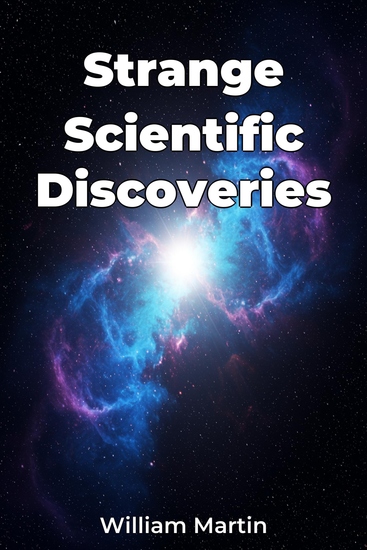
Strange Scientific Discoveries - cover
LER

Strange Scientific Discoveries

William Martin

Tradutor A AI

Editora: Publifye

  • 0
  • 0
  • 0

Sinopse

Strange Scientific Discoveries explores the most baffling and revolutionary findings in science, challenging our understanding of the universe and ourselves. It delves into scientific anomalies, from the seemingly impossible phenomenon of quantum entanglement – suggesting instantaneous connections regardless of distance – to the profound influence of the human microbiome on our mental well-being. By questioning established norms, the book highlights the dynamic nature of scientific truth and the potential for groundbreaking advancements.

 
The book reveals the mysteries of dark matter and dark energy, the unseen components that dominate the cosmos, and examines the enigmas of the human brain, including consciousness. It emphasizes that embracing the unknown is crucial for scientific progress, showing how anomalies can spark new avenues of exploration.

 
Beginning with an introduction to scientific anomalies, the book progresses through quantum physics, the human microbiome, brain mysteries, and cosmology, offering insights into the future of science and technology. This book bridges science with philosophy and technology, demonstrating the broader implications of scientific inquiry. It presents complex concepts in an accessible manner, encouraging critical thinking and providing an overview of cutting-edge science for general readers interested in biology and the life sciences.
Disponível desde: 31/03/2025.
Comprimento de impressão: 68 páginas.

Outros livros que poderiam interessá-lo

  • Domestication of Dogs and Cats The: The History and Legacy of People’s Favorite Pets - cover

    Domestication of Dogs and Cats...

    Editors Charles River

    • 0
    • 0
    • 0
    As the oft-repeated and invariably accurate pearl of wisdom goes, a dog truly is man's best friend. For a long time, people have almost universally loved dogs, and it seems to have been that way for at least tens of thousands of years. When affection is abundantly and consistently expressed, this pure, unspoken, wholesome love is one that is very much requited, and then some. This bond can be demonstrated by the mere existence of pet keepers who unironically refer to themselves as “dog parents,” not merely “dog owners.” 
    Of course, this camaraderie between man and dog did not materialize overnight. Quite the contrary, the relationship between people and dogs gradually evolved and steadily strengthened over several millennia, following a premise best summed up by the dog's metamorphosis from a predator to a lifelong companion. Apart from friendship and companionship, dogs may have been the first animal to be domesticated, and they have been trained to provide loyal and competent service in a variety of fields, ranging from seeing-eye dogs to vest-wearing police partners, among other lines of work. 
    People's obsession with felines is an enigma in and of itself. Unlike dogs, famously known as man's most excitable, trustworthy, and loyal friend, cats are oftentimes indifferent, guarded, and yet finicky little furry creatures who only yearn for attention and affection when one is neck-deep in work or otherwise preoccupied. And still, people adore them all the same. 
    In a recent poll that surveyed 600 American college students, 60% of the participants identified themselves as “dog lovers,” whereas only 11% pledged their love for cats. The remaining 29% regarded themselves as fans of both critters or fans of neither. Be that as it may, there is said to be anywhere between a staggering 88=94 million pet cats in the United States alone, which eclipses the roughly 84-90 million pet dogs in the country.
    Ver livro
  • Thinking Small and Large - How Microbes Made and Can Save Our World - cover

    Thinking Small and Large - How...

    Peter Forbes

    • 0
    • 0
    • 1
    The environmental crisis will not be solved by battery technology. We are looking for answers in the wrong places.


    Life began with the hydrogenation of CO2, and this is the process we must return to in order to heal the planet. Ground-breaking ongoing research into bacterial processes means our knowledge of bacterial processes is ever-expanding, and we can harness this new knowledge to develop a parallel carbon economy using engineered bacteria for fuel, food, and materials. This would enable rewilding on a vast scale, with the small land footprint of bacterial technologies solving the current conflict in land use between farming and fuel and materials production.


    In this fascinating and illuminating book, Peter Forbes shines a light on this crucial technology and offers a tantalising glimpse at what is possible. To solve the big problems, sometimes you have to think small.
    Ver livro
  • Horses And Ponies - cover

    Horses And Ponies

    Shelagh Canning

    • 0
    • 0
    • 0
    Kids will love this sweet story as they listen to “Horses and Ponies” and follow along word-for-word in this adorably illustrated eBook. Children will get to watch how a horse grows up, from the time they're born as a foal, to all the different ways they make our lives great as adults. Kids and parents alike will enjoy reading along to “Horses and Ponies” over and over again!
    Ver livro
  • Pollution - The Environmental Crisis That Threatens Our Health - cover

    Pollution - The Environmental...

    Marcus Klein

    • 0
    • 0
    • 0
    Pollution is a pervasive and urgent global issue that affects every corner of the planet, from the air we breathe to the water we drink and the land we depend on for survival. Over the past century, the rapid pace of industrialization, urbanization, and population growth has contributed significantly to environmental degradation. What was once seen as the price of progress has now become a formidable challenge that threatens the health of humans, animals, and ecosystems alike.  
      
    The scope of pollution is vast and multifaceted. It encompasses a wide range of pollutants, including chemicals, plastics, heavy metals, and greenhouse gases, which infiltrate the air, water, and soil. While air pollution from vehicle emissions and industrial activities poses immediate health risks, water pollution contaminates vital freshwater resources, threatening marine ecosystems and human livelihoods. Land pollution, driven by improper waste disposal and deforestation, further exacerbates the crisis by depleting soil fertility and destroying habitats. Together, these forms of pollution create a complex web of environmental and health hazards that demand immediate attention.  
      
    Human health is intricately tied to the environment, making pollution a direct and indirect cause of numerous diseases and conditions. Respiratory ailments, cardiovascular issues, and neurological disorders are increasingly linked to exposure to polluted air and toxic chemicals. Vulnerable populations, such as children and low-income communities, bear a disproportionate burden of these impacts, amplifying social inequalities. Beyond physical health, the psychological toll of living in a degraded environment adds another layer of complexity to the crisis. 
    Ver livro
  • Obesity - The other pandemic of the 21st century - cover

    Obesity - The other pandemic of...

    Ada Cuevas, Donna Ryan

    • 0
    • 0
    • 0
    Obesity is becoming one of the preeminent public health concerns, with prevalence increasing throughout the world.
    Covering many aspects of contemporary obesity research, this timely book by some of the leading experts in the field explores issues relating to the biology, diagnosis, treatment, and prevention of obesity, including childhood obesity. The work is attuned to the needs of those living with obesity, with a chapter devoted to
    the harm caused by weight stigma and false narratives around lifestyle choices.
    'Obesity, the other pandemic of the 21st century' reviews the available evidence to prove that obesity should be considered not just as a key contributor towards other comorbidities, but as a disease by itself. Importantly, the effect of the COVID-19 pandemic on obesity is addressed, which raised the complexity and severity of the obesity and should be a call to action for the prevention and early treatment of this disease. This book has been developed by World Obesity Federation collaborators, and is aimed at healthcare practitioners, academics, policymakers, students, patients living with obesity and all those impacted by the issue.
    The research covered in these pages goes some way towards proving that obesity is quickly becoming 'the other pandemic' of the 21st century. Much like any major pandemic, the consequence of inaction is truly alarming.
    Ver livro
  • Renewable Power Generation Costs in 2021 - cover

    Renewable Power Generation Costs...

    Irena International Renewable...

    • 0
    • 0
    • 0
    IRENA's latest global cost study shows how the competitiveness of renewables continued amid the fossil fuel crisis and highlights cost trends for major renewable electricity sources.
    Ver livro