Join us on a literary world trip!
Add this book to bookshelf
Grey
Write a new comment Default profile 50px
Grey
Subscribe to read the full book or read the first pages for free!
All characters reduced
Digital Age Ethics - cover

Digital Age Ethics

William Martin

Translator A AI

Publisher: Publifye

  • 0
  • 0
  • 0

Summary

In "Digital Age Ethics," the critical intersection of technology and philosophy takes center stage, exploring how traditional concepts of honor and justice are challenged by our increasingly digital world. The book argues for a revitalized ethical framework to address contemporary issues such as data privacy breaches, algorithmic bias, and the spread of misinformation.

 
Did you know that large datasets of online behavior are used to illustrate the prevalence of unethical digital practices? This book stands out by combining established ethical principles with the unique challenges of digital technology, offering a practical guide for navigating this complex landscape.

 
The book begins by examining core ethical concepts and their historical context, then moves into an analysis of current digital technologies and their ethical implications. Subsequent chapters delve into specific concerns like data privacy, artificial intelligence, and online communication, using case studies and research to support its points.

 
Ultimately, "Digital Age Ethics" proposes a balanced framework, integrating regulation, self-regulation, and technological solutions, to promote responsible digital citizenship and ethical decision-making.
Available since: 02/20/2025.
Print length: 79 pages.

Other books that might interest you

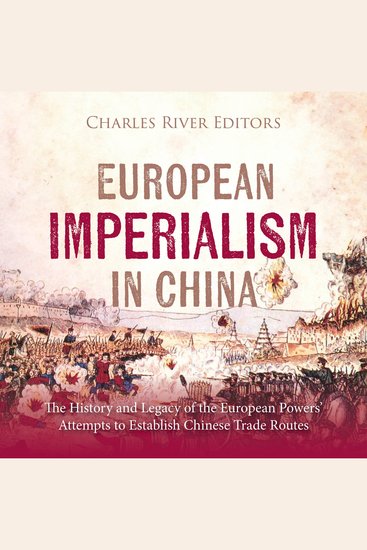
  • European Imperialism in China: The History and Legacy of the European Powers’ Attempts to Establish Chinese Trade Routes - cover

    European Imperialism in China:...

    Editors Charles River

    • 0
    • 0
    • 0
    During the 15th century, China had become economically and technologically advanced compared to civilizations in Europe at the time, and its fleet, which had reached a total of 3,500 ships, was unmatched by any other world power. Nevertheless, after conducting several trade expeditions with the massive fleet, the Chinese ships were either burned in the docks or left to rot. With that, China began to revert to the xenophobic policies of its past and reduce its presence in other lands. By 1525, the largest naval fleet in the world had essentially been destroyed or dismantled by China itself.  
    While China was in the process of isolating itself from the rest of the world, the European explorers were beginning to discover new lands, such as North America and South America. Among the countries doing the most exploring during this time were the Portuguese. The Portuguese had reached India in 1498, and by 1509 they had established part of their empire in India. This allowed the Portuguese to have a base of operations to further expand east into Asia. In 1511, the Portuguese captured the large spice trading center of Malacca in Malaysia, and like their base in India, Malacca allowed the Portuguese to have a foothold, thereby providing access to China and Southeast Asia. 
    The location of Macau was beneficial and strategically chosen by the Portuguese, as it was in close communication with Guangzhou and connected via a river system. In contrast to their earlier dealings with the Chinese, the Portuguese attempted to appear more humble and comply with the wishes of the Chinese rather than with force. As it turned out, the policy, in conjunction with increased European activities in the region, would help the Portuguese Empire hold on to Macau even as its fortunes dwindled everywhere else across the world.
    Show book
  • Blockchain technology explained: a simple guide for investors - cover

    Blockchain technology explained:...

    AHMED MUSA

    • 0
    • 0
    • 0
    Blockchain Technology Explained: A Simple Guide for Investors 
    Unlock the potential of blockchain technology with this comprehensive yet accessible guide designed specifically for investors. "Blockchain Technology Explained: A Simple Guide for Investors" demystifies one of the most transformative innovations of our time. Whether you're new to blockchain or looking to deepen your understanding, this book offers a clear and concise exploration of blockchain's core concepts, its evolution, and its far-reaching impact across industries. 
    From its foundational features like decentralization, transparency, and security, to its groundbreaking applications in sectors like finance, healthcare, supply chain, and real estate, this book covers it all. With easy-to-understand explanations, real-world examples, and practical insights, it provides investors with the knowledge they need to navigate the blockchain space confidently. 
    Whether you're interested in cryptocurrency, looking for innovative investment opportunities, or seeking to understand how blockchain can disrupt traditional industries, this guide will equip you with the essential knowledge to make informed decisions in an ever-evolving digital landscape
    Show book
  • Bheema - cover

    Bheema

    Amol Raikar

    • 0
    • 0
    • 0
    In Mahabharata, Bheema is the 2nd born of the Pandavas. He alone killed hundred Kaurava brothers in the Mahabharata War. Along with other Pandava brothers, Bheema was trained in religion, science, administration and military arts by Kripa and Drona. Bheema's strong point throughout the epic remains his towering strength. He was so wrathful and strong that it was impossible even for Indra to subdue him in a battle.
    Show book
  • Lost & Found - Nine life-changing lessons about stuff from someone who lost everything - cover

    Lost & Found - Nine...

    Helen Chandler-Wilde

    • 0
    • 0
    • 0
    On New Year's Eve of 2018, Helen Chandler-Wilde lost everything she owned in a storage unit fire in Croydon, England, where she'd stowed all her possessions after a big breakup. She was left devastated and forced to re-evaluate her relationship with owning material things. 


    In Lost & Found, she offers a profound mix of memoir, self-help, and journalism to explore the psychological reasons, sociological quirks of human nature, and fascinating science behind why we buy and hold onto things. Helen interviews people from all walks of life, including behavioral psychologists on the science of nostalgia, a nun on what it's like to own almost nothing, and consumer psychologists on why we spend impulsively, to help us better understand why we're surrounded by clutter and what we can do to change it. 


    By the end of this smart-thinking book filled with lessons and engaging prompts to help us gain perspective on our buying habits and the value we place on what we already have, your relationship with your belongings will be changed forever. The perfect "new year, new you" listen or gift for anyone who is downsizing, striving for a more sustainable lifestyle, or is eager to cultivate a minimalist mindset.
    Show book
  • Dirty Linen - The Troubles In My Home Place - cover

    Dirty Linen - The Troubles In My...

    Martin Doyle

    • 0
    • 0
    • 0
    Martin Doyle, Books Editor of The Irish Times, offers a personal, intimate history of the Troubles seen through the microcosm of a single rural parish, his own, part of both the Linen Triangle – heartland of the North’s defining industry – and the Murder Triangle – the Badlands roamed by the Glenanne gang of security forces colluding with loyalist paramilarites. He lifts the veil of silence drawn over the horrors of the past, recording in heartrending detail the terrible toll the conflict took – more than 20 violent deaths in a few square miles – and the long tail of trauma it has left behind. He also conveys the texture of the times, the high streets where cars could not be left unattended, the newsflashes, the constant background buzz of threat and fear. 
    Neighbours and classmates who lost loved ones in the conflict, survivors maimed in bomb attacks and victims of sectarianism, both Catholic and Protestant, entrust him with their stories. Doyle marries his local knowledge with a literary sensibility and skilfully shows how the once dominant local linen industry serves as a metaphor for both communal division but also the solidarity that transcended the sectarian divide. 
    To those who might ask why you would want to reopen old wounds, the answer might be that some wounds have never been allowed to heal. It is by sharing our stories that we build a ridge of common ground from which good things can grow.
    Show book
  • Scoping the Legal World - A Hidden Gem of a Work-at-Home Career - cover

    Scoping the Legal World - A...

    Laura Axelsen

    • 0
    • 0
    • 0
    Here is a career involved in the legal world. Scopists support court reporters in transcript preparation by editing (scoping) their transcripts. They are their own bosses and accept as much or as little work as they want. They get to be a fly on the wall in legal proceedings while making good income. In this book you lean what you need to do to become a scopist and enter this great work-at-home world
    Show book