Join us on a literary world trip!
Add this book to bookshelf
Grey
Write a new comment Default profile 50px
Grey
Subscribe to read the full book or read the first pages for free!
All characters reduced
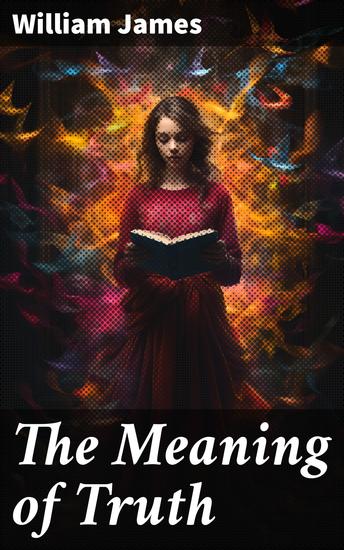
The Meaning of Truth - Exploring Truth: A Philosophical Journey with William James - cover

The Meaning of Truth - Exploring Truth: A Philosophical Journey with William James

William James

Publisher: Good Press

  • 0
  • 0
  • 0

Summary

In "The Meaning of Truth," William James explores the complex relationship between truth and belief within the framework of pragmatism, a philosophical movement he significantly shaped. Richly interwoven with nuanced argumentation, the text delves into the practicality of truth, advocating that beliefs must be evaluated through their tangible effects in real life. James's literary style is marked by accessible language coupled with profound philosophical insights, allowing readers to engage with the intricate interplay between human experience and the concepts of truth and reality, especially against the backdrop of 19th-century philosophical debates. William James, a prominent figure in psychology and philosophy, provides a vital context for understanding this work through his background in both disciplines. His interdisciplinary approach reflects a commitment to bridging the gap between abstract thought and lived experience, fostering a dialogue that resonates with the individual'Äôs subjective reality. Having wrestled with existential doubts and the challenges of modernity, James's perspectives offer a refreshing lens through which to contemplate the nature of truth in a rapidly evolving world. This compelling examination is essential for anyone seeking to grasp the nuances of pragmatism and its implications on personal and collective belief systems. "The Meaning of Truth" invites readers to reflect on their own understanding of truth while challenging them to consider the impact of their beliefs on their actions and the broader society.
Available since: 10/27/2023.
Print length: 148 pages.
Other books that might interest you

  • Solitude - The Science and Power of Being Alone - cover

    Solitude - The Science and Power...

    Thuy-vy T. Nguyen, Heather...

    • 0
    • 0
    • 0
    The average adult spends nearly one-third of their waking life alone. How do we overcome the stigma of solitude and find strength in going it alone? Whether we love it or try to avoid it, we can make better use of that time. The science of solitude shows that alone time can be a powerful space used to tap into countless benefits. Translating key research findings into actionable facts and advice, this book shows that alone time can boost well-being. From relaxation and recharging to problem solving and emotional regulation, solitude can benefit personal growth, contentment, creativity, and our relationships with ourselves and others. By learning what makes us better at spending time alone, you can use these principles to move toward your best possible self.
    Show book
  • Philippine History - How the Philippines developed into the amazing country of today - cover

    Philippine History - How the...

    Will Forrest

    • 0
    • 0
    • 0
    Get to know the Philippines like never before with this engaging audiobook on its history. 
    Dive into hundreds of years of exploration and discovery, uncovering stories of resilience, courage, and strength in the face of adversity. Follow a timeline from Spanish colonization to independence, explore key moments in Philippine history, learn about influential figures throughout time and gain a greater understanding of how this nation has developed into what it is today. 
    Buy Your copy today and gain a comprehensive insight into the country's rich cultural heritage!
    Show book
  • Ukraine and the Art of Strategy - cover

    Ukraine and the Art of Strategy

    Lawrence Freedman

    • 0
    • 0
    • 0
    The Russian invasion of Crimea in 2014, subsequent war in Eastern Ukraine, and economic sanctions imposed by the West transformed European politics. The conflict did not escalate to the levels originally feared but nor was either side able to bring it to a definitive conclusion. Ukraine suffered a loss of territory but was not forced into changing its policies away from the Westward course adopted as a result of the EuroMaidan uprising of February 2014. President Putin was left supporting a separatist enclave as Russia's economy suffered significant damage. 


    Ukraine and the Art of Strategy provides an account of the origins and course of the Russia-Ukraine conflict through the lens of strategy. Lawrence Freedman describes the development of President Putin's anxieties that former Soviet countries were being drawn towards the European Union, the effective pressure he put on President Yanokvych of Ukraine to turn away from the EU, and the resulting "EuroMaidan Revolution" which led to Yanukovych fleeing. He explores the reluctance of Putin to use Russian forces to do more that consolidate the insurgency in Eastern Ukraine, the failure of the Minsk peace process, and the limits of the international response. Putin's strategic-making is kept in view at all times, including his use of "information warfare" and attempts to influence the American election.
    Show book
  • The Crisis of Psychoanalysis - Essays on Freud Marx and Social Psychology - cover

    The Crisis of Psychoanalysis -...

    Erich Fromm

    • 0
    • 0
    • 0
    "This book is must [listening] . . . although it will at times shock and perhaps even offend the sensibilities of traditional therapists." —American Journal of Psychiatry 


    This book brings together Erich Fromm's basic statements on the application of psychoanalytic theory to social dynamics. At the same time, it offers an image of man consonant with the hopes of radical humanism. 


    The Crisis of Psychoanalysis is a collection of nine brilliant essays. Although his work is deeply rooted in Freudian theory, Fromm further develops Freud's doctrines by including both social and ethical dimensions, and applies his discoveries and insights to address the problems we face in society at large.
    Show book
  • Getting in Touch With Our Interior Greatness - cover

    Getting in Touch With Our...

    Guy Finley

    • 0
    • 0
    • 0
    In this provocative dialogue, Finley guides us in how to better cope with our own sense of being overwhelmed by unbidden occurrences and the conditions of life. He points out that what we are truly seeking is a higher understanding of our relationship to Divine Source.
    Show book
  • How to Live a Happily Ever Afterlife - Stories of Trapped Souls and How Not to Become One - cover

    How to Live a Happily Ever...

    Echo Bodine

    • 0
    • 0
    • 0
    “What happens after we die? What is the Afterlife really like? From her own perspective, Echo shares intimate insights that she has garnered from Spirit about life after death. This book is compelling, thought-provoking, and comforting.”—Chip Coffey, costar, Kindred SpiritsA Psychic's Exploration of Ghosts and How to Prevent It from Happening to You"Echo Bodine is the most genuine psychic I have ever worked with..." —Dennis William Hauck, author of Haunted PlacesWell-known psychic and ghost hunter, Echo Bodine, started seeing spirits as a young girl and has been helping to set them free for decades. Most of these spirits have one thing in common—unfinished business from their lives that leaves them restless, unable to let go and move on. Some souls choose to remain closer to this dimension rather than move into the light when they die.Here, Bodine shares her experiences and compelling investigations that have led her to see the issues from a spirit's living time on Earth which have left them restless and unable to cross over. Each story is accompanied by an exercise that will help the reader avoid the fate of a trapped, angry, or unprepared soul.Some reasons spirits haven't gone through the light include:They don't know they're dead.They are afraid of what could be waiting for them on the other side.They don't believe in an afterlife so they’re stuck in limbo.They are possessive over a person or object.They are terrified of change.How To Live a Happily Ever Afterlife is an eye-opening look at spirits—at what compels and holds them—and what you can do to avoid the same fate. 
    Show book