¡Acompáñanos a viajar por el mundo de los libros!
Añadir este libro a la estantería
Grey
Escribe un nuevo comentario Default profile 50px
Grey
Suscríbete para leer el libro completo o lee las primeras páginas gratis.
All characters reduced
Is Life Worth Living? - Enriched edition - cover

Is Life Worth Living? - Enriched edition

William James

Editorial: DigiCat

  • 0
  • 0
  • 0

Sinopsis

In "Is Life Worth Living?", William James engages the reader in a profound exploration of existential questions central to human experience. Written in 1895, this essay captures James's trademark pragmatic philosophical style, characterized by its accessible prose and deep emotional resonance. He employs case studies, personal anecdotes, and philosophical reflections to investigate the complexities of life's meaning and the tensions between despair and purpose. As part of the broader context of late 19th-century American thought, this work reflects the emerging psychological insights and the philosophical underpinnings of pragmatism, suggesting that meaning in life is contingent upon individual experience and choice. William James, often referred to as the father of American psychology, was a forward-thinking intellectual whose life was influenced by both his diverse academic background and his struggles with depression. His interest in human consciousness and the psychology of belief is evident in this work, which resonates with his broader ideas surrounding the will to believe and the power of choice in shaping our realities. This personal and philosophical inquiry is a testament to his relentless pursuit of understanding the intricacies of human experience Recommended for both scholars and general readers, "Is Life Worth Living?" invites readers to reflect on their own lives and beliefs, encouraging an introspective journey that reassesses the values of hope and resolve amidst adversity. This timeless inquiry into the human condition remains relevant today, offering insights into our pursuit of meaning in an often chaotic world.

In this enriched edition, we have carefully created added value for your reading experience:
- A succinct Introduction situates the work's timeless appeal and themes.
- The Synopsis outlines the central plot, highlighting key developments without spoiling critical twists.
- A detailed Historical Context immerses you in the era's events and influences that shaped the writing.
- An Author Biography reveals milestones in the author's life, illuminating the personal insights behind the text.
- A thorough Analysis dissects symbols, motifs, and character arcs to unearth underlying meanings.
- Reflection questions prompt you to engage personally with the work's messages, connecting them to modern life.
- Hand‐picked Memorable Quotes shine a spotlight on moments of literary brilliance.
- Interactive footnotes clarify unusual references, historical allusions, and archaic phrases for an effortless, more informed read.
Disponible desde: 29/05/2022.
Longitud de impresión: 24 páginas.


Otros libros que te pueden interesar

  • Wicked Detroit - cover

    Wicked Detroit

    Mickey Lyons

    • 0
    • 0
    • 0
    The Motor City boasts a long and sordid history of scoundrels, cheats, and ne'er-do-wells. The wheeling and dealing prowess of founding father Antoine Cadillac is the stuff of legend. Fur trader and charlatan Joseph Campau grew so corrupt and rambunctious that he was eventually excommunicated by Detroit's beloved Father Gabriel Richard. The slovenly and eccentric Augustus Brevoort Woodward, well known as a judge but better known as a drunkard, renamed himself, reshaped the city streets and then named them after himself, creating a legion of enemies along the way. Local historian and creator of the Prohibition Detroit blog Mickey Lyons presents the stories of the colorful characters who shaped the city we know today.
    Ver libro
  • Liao Dynasty - Nomadic Conquerors of Northern China - cover

    Liao Dynasty - Nomadic...

    Rolf Hedger

    • 0
    • 0
    • 0
    The story of the Liao people begins in the vast and harsh steppe regions to the north of China, where they first emerged as a formidable force in the region’s history. The Liao were a nomadic group, characterized by their mastery of horseback riding and combat, which set them apart from the sedentary agricultural societies of the surrounding civilizations. Their origins are not fully understood, but it is widely believed that they came from the Mongolian Plateau, migrating southward and eastward into the northern reaches of China during the early centuries of the Common Era. 
    In their early years, the Liao people were organized into various tribes, each with its own leadership and customs. These tribes were constantly in motion, following the migratory patterns of their livestock and engaging in periodic warfare with one another for dominance and resources. Despite the chaotic nature of their existence, the Liao were bound together by a common identity rooted in their nomadic lifestyle and warrior culture. Over time, they developed a strong sense of unity, driven by their shared need to survive in an unforgiving environment. 
    As the tribes of the Liao people grew in number and influence, they began to organize themselves more systematically under the leadership of powerful chieftains. These chieftains rose to prominence not only through their military prowess but also through their ability to forge alliances and broker peace with neighboring peoples. The Liao were skilled diplomats, and many of their early leaders recognized the value of creating relationships with the settled agricultural societies that dominated China’s northern frontier. This strategic diplomacy allowed them to secure critical resources, such as grain and horses, while maintaining their autonomy and military strength.
    Ver libro
  • Ways of Eating - Exploring Food through History and Culture - cover

    Ways of Eating - Exploring Food...

    Benjamin Aldes Wurgaft, Merry White

    • 0
    • 0
    • 0
    What we learn when an anthropologist and a historian talk about food. 


    From the origins of agriculture to contemporary debates over culinary authenticity, Ways of Eating introduces listeners to world food history and food anthropology. Through engaging stories and historical deep dives, Benjamin A. Wurgaft and Merry I. White offer new ways to understand food in relation to its natural and cultural histories and the social rules that shape our meals. 


    Wurgaft and White use vivid storytelling to bring food practices to life, weaving stories of Panamanian coffee growers, medieval women beer makers, and Japanese knife forgers. From the Venetian spice trade to the Columbian Exchange, from Roman garum to Vietnamese nuoc cham, Ways of Eating provides an absorbing account of world food history and anthropology. Migration, politics, and the dynamics of group identity all shape what we eat, and we can learn to trace these social forces from the plate to the kitchen, the factory, and the field.
    Ver libro
  • Hebrew Prophets The: A Jewish Perspective - cover

    Hebrew Prophets The: A Jewish...

    David Ben Yosef

    • 0
    • 0
    • 0
    This book explores the concept of prophecy in Judaism as defined by two great figures of Jewish history. Moses Maimonides and Abraham Joshua Heschel are two influential scholars who have impacted the many streams of Judaism. A simplistic dichotomy could be made between their two perspectives labeling Maimonides as a rational philosopher and Heschel as a mystical one. Both the study of Jewish prophecy and the approaches of both of the scholars are complex topics, but not impossible to decipher. The nature of revelation is also part of this discussion. To some scholars Maimonides' and Heschel's perspectives of God seem to be in conflict, one being Aristotelian while the other being a more traditional one in line with the Bible and the Talmud.With these factors in mind and based on the available data my book will support the following contention: Maimonides' and Heschel's different philosophical approaches about the biblical prophets are within the bounds of classical Judaism.
    Ver libro
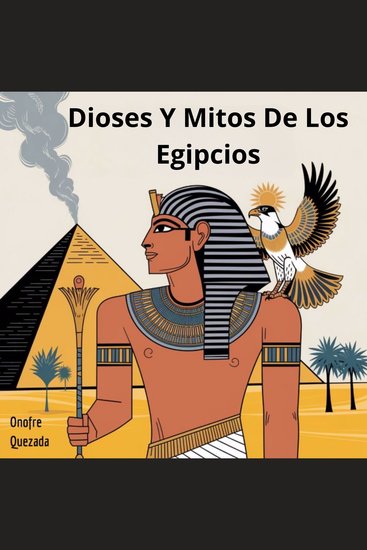
  • Dioses Y Mitos De Los Egipcios - cover

    Dioses Y Mitos De Los Egipcios

    Onofre Quezada

    • 0
    • 0
    • 0
    Dioses y Mitos de los Egipcios es un fascinante recorrido por el vasto y enigmático mundo de la mitología del antiguo Egipto. Desde los poderosos dioses creadores como Ra y Atum, hasta las deidades del inframundo como Osiris y Anubis, este libro desentraña los relatos que dieron forma a una de las civilizaciones más influyentes de la historia. 
    A través de relatos cautivadores, descubrirás el significado de los mitos egipcios, su impacto en la cultura y la religión, y cómo estas creencias influenciaron la vida cotidiana de los faraones y el pueblo egipcio. Con ilustraciones y descripciones detalladas, esta obra te transportará a un mundo donde la magia, la eternidad y el destino se entrelazan en historias llenas de misterio y sabiduría ancestral. 
    Si eres un apasionado de la historia, la mitología o simplemente sientes curiosidad por los secretos de los dioses egipcios, este libro será una lectura imprescindible.
    Ver libro
  • The Shocking Truth about Modern Education - cover

    The Shocking Truth about Modern...

    Zoey Fraisers

    • 0
    • 0
    • 0
    Education is often considered the most important tool for personal success and societal progress, promising to equip individuals with the knowledge and skills needed to navigate the complexities of life. It is believed to be the key to opportunity, growth, and empowerment. Yet, when we take a closer look at the state of modern education, we find a different reality—a system that is increasingly failing to meet the needs of today’s learners and society as a whole. Behind the promise of a well-rounded, enriching education lies a structure that often stifles creativity, disregards individuality, and fails to prepare students for the rapidly changing world around them. 
      
    At its core, the modern education system is built on an outdated framework that prioritizes uniformity and standardization over adaptability and critical thinking. The methods used to educate students today were designed in the industrial era, when the focus was on producing workers for factories rather than nurturing creative thinkers, innovators, and problem-solvers. While the world has evolved in countless ways since then—especially with the rise of technology and globalization—the classroom has remained largely unchanged. The result is a system that no longer serves the needs of diverse learners and, in many cases, actively hinders their potential. 
      
    This book aims to explore the hidden truths about modern education, shedding light on the deep-rooted issues that have long been overlooked or ignored. From the rise of standardized testing to the growing influence of corporate interests, we will examine how these forces have reshaped education into something that prioritizes compliance and efficiency over genuine learning and personal growth.
    Ver libro