Join us on a literary world trip!
Add this book to bookshelf
Grey
Write a new comment Default profile 50px
Grey
Subscribe to read the full book or read the first pages for free!
All characters reduced
The Ghost Pirates (Annotated) - cover

The Ghost Pirates (Annotated)

William Hope Hodgson

Publisher: ePembaBooks

  • 0
  • 0
  • 0

Summary

This edition includes the following editor's introduction: The sea as the origin of horror, an indispensable mark of William Hope Hodgson's literature


Originally published in 1909, “The Ghost Pirates” is a compelling and terrifying horror novel by English writer William Hope Hodgson. Hodgson is considered by many to be one of the best authors to ever write horror.

“The Ghost Pirates” is a powerful account of a doomed and haunted ship on its last voyage, and of the terrible sea-devils (of quasi-human aspect, and perhaps the spirits of bygone buccaneers) that besiege it and finally drag it down to an unknown fate. With its command of maritime knowledge, and its clever selection of hints and incidents suggestive of latent horrors in nature, this book at times reaches enviable peaks of power. - H.P. Lovecraft
Available since: 06/24/2022.


Other books that might interest you

  • Sis' Becky's Pickaninny - cover

    Sis' Becky's Pickaninny

    Charles W Chesnutt

    • 0
    • 0
    • 0
    The short story "Sis' Becky's Pickaninny" of "The Conjure Woman" now follows John as he reproaches McAdoo for all of his superstitious beliefs and how they lack foundation, commenting that these traditions are the reason why Southern Black people are destined for a life of continued acquiescence and little prosperity. This opinion stemmed from McAdoo's assertion that carrying a rabbit foot leads to good luck. John is concerned for Annie's health, since the main reason they moved to the countryside was to improve her health due to her current bouts of depression and anxiety. With this knowledge, McAdoo then relates the story of a young boy who was separated from his mother and orphaned due to a series of events, which could have all been avoided if the mother had simply carried a rabbit's foot. As the story goes, according to McAdoo, Sis' Becky's husband dies, upon which her master trades her in for a horse. Thus leaving her child, named Mose, orphaned and who grows sick, Aunt Peggy goes on to turn him into a mockingbird from time to time so that he can visit his mother. As part of her plan, Aunt Peggy lames the horse for which Sis Becky was traded, ultimately influencing Becky's master to trade her back, and reuniting her with her son once more. McAdoo claims that none of these events would have happened if Sis Becky would have had a rabbit foot with her, a moral that Annie once again understands. Over time, John notices that Annie grows to feel better, which he attributes to her simply surpassing her melancholy. One day, Annie asks John to grab her handkerchief from her blue dress, and as he goes to grab the handkerchief, John discovers a rabbit foot that McAdoo had placed in her room, which can be related to Annie's quick recovery from her ails.
    Show book
  • Bizeban - From their pens to your ears genius in every story - cover

    Bizeban - From their pens to...

    Moritz Jokai

    • 0
    • 0
    • 0
    Móric Jókay de Ásva was born on the 18th February 1825 in Komárom, then in the Kingdom of Hungary but now part of Slovakia.  
    Due to his timid and delicate constitution he was educated at home until the age of 10 and then sent away to complete his studies at the Calvinist college at Pápa. 
    At 12 his father died, and he was pushed to honour him by replicating his career as a lawyer.  He studied hard and completed the curriculum at Kecskemét and Pest.  He won his first case as a newly graduated lawyer. 
    But he found a career in law to be dull and, encouraged by the positive reaction to his first play, he moved to Pest in 1845.  There he published, first in a newspaper, and then as a novel ‘Hétköznapok’ (‘Working Days’).  It was acclaimed as a masterpiece.  To add to his promise he was appointed as the editor of Életképek, the leading Hungarian journal. 
    In 1848 he married the actress, Róza Laborfalvi.  That same year Europe was awash with revolutions and Jókai, a moderate Liberal, enthusiastically supported the nationalist cause and its decision to depose the Habsburg dynasty.  The attempt failed. 
    He was now classed as a political suspect and threw himself into his literary career, writing dozens of novels, many of them masterpieces, stories, essays and the like.  In total he wrote several hundred volumes, many of them in the local Magyar language which helped arrest its declining relevance in society.  
    By 1867 the political temperature had cooled, and he entered parliament as well as becoming the editor a government journal he had founded.   His skills were much admired and helped the government navigate through several difficult matters.   
    His wife died in 1886 but although grief-stricken he continued to work and to write.  
    In 1897 the king appointed him a member of the upper house.  Two years later he caused a minor scandal by marrying the young 20-year-old actress, Bella Nagy.  At the time he was 74.
    Show book
  • The Menorah - Jewish parents have differing views on their daughters marriage ideals - cover

    The Menorah - Jewish parents...

    Benjamin Rosenblatt

    • 0
    • 0
    • 0
    The bookshelves of American literature are incredible collections that have gathered together centuries of very talented authors.  From this continent their fame spread and whilst among their number many are now forgotten or neglected their talents endure.  Among them is Clark Ashton Smith.
    Show book
  • The Slithering Shadow - cover

    The Slithering Shadow

    Robert E. Howard

    • 0
    • 0
    • 0
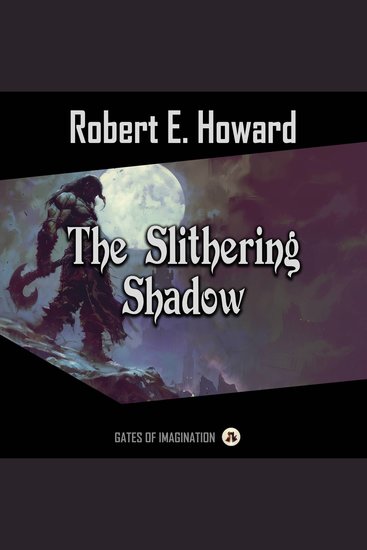
    This audiobook is narrated by an AI Voice.  
    In the mysterious and perilous world of Hyboria, Conan the Cimmerian roams the vast wastelands. Alongside the scantily clad Natala, he arrives at a forgotten city in a distant oasis. There, he uncovers dark secrets, and the Lovecraftian demon Thog becomes his adversary. Will Conan survive in this desolate land? “The Slithering Shadow” is a tale of adventure, magic, and an inevitable clash with supernatural evil.
    Show book
  • Black Canaan - cover

    Black Canaan

    Robert E. Howard

    • 0
    • 0
    • 0
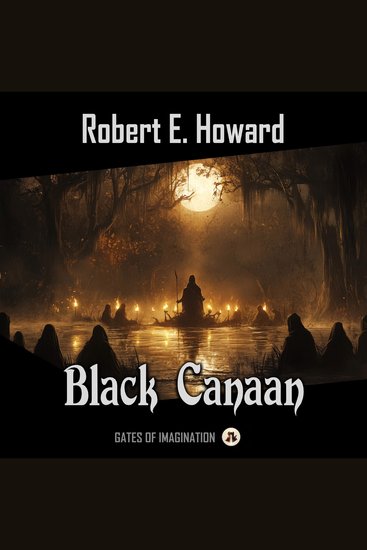
    This audiobook is narrated by an AI Voice.  
    In the dark depths of the Louisiana bayou, Kirby Buckner returns to his homeland, troubled by a mysterious warning of impending doom. In Grimesville, he confronts rising tensions between white townsfolk and the black community, fueled by the malevolent conjure man, Saul Stark. Enchanted by a mysterious quadroon girl, Buckner is drawn into a whirlwind of voodoo and supernatural forces. In this chilling tale of fear and power, Howard reveals the thin line between the human world and the realm of magic. Can Buckner save his town from the looming threat?
    Show book
  • For the Blood is the Life - A renowned and influential early gothic vampire tale set in Italy - cover

    For the Blood is the Life - A...

    F. Marion Crawford

    • 0
    • 0
    • 0
    Francis Marion Crawford was born on August 2nd, 1854 at Bagni di Lucca, Italy. An only son and a nephew to Julia Ward Howe, the American poet and writer of ‘The Battle Hymn of the Republic’.  
     
    His education began at St Paul's School, Concord, New Hampshire, then to Cambridge University; University of Heidelberg; and the University of Rome.  
     
    In 1879 Crawford went to India, to study Sanskrit and then edited The Indian Herald. In 1881 he returned to America to continue his Sanskrit studies at Harvard University. 
     
    At this time in Boston he lived at his Aunt Julia house and in the company of his Uncle, Sam Ward. His family was concerned about his employment prospects.  After a singing career as a baritone was ruled out, he was encouraged to write.  
     
    In December 1882 his first novel, ‘Mr Isaacs’, was an immediate hit which was amplified by ‘Dr Claudius’ in 1883.  
     
    In October 1884 he married Elizabeth Berdan. They went on to have two sons and two daughters. 
     
    Encouraged by his excellent start to a literary career he returned to Italy with Elizabeth to make a permanent home, principally in Sant' Agnello, where he bought the Villa Renzi that then became Villa Crawford.  
     
    In the late 1890s, he began to write his historical works: ‘Ave Roma Immortalis’ (1898), ‘Rulers of the South’ (1900) and ‘Gleanings from Venetian History’ (1905). The Saracinesca series is perhaps his best work. ‘Saracinesca’ was followed by ‘Sant’ Ilario’ in 1889, ‘Don Orsino’ in 1892 and ‘Corleone’ in 1897, that being the first major treatment of the Mafia in literature.  
     
    Francis Marion Crawford died at Sorrento on Good Friday 1909 at Villa Crawford of a heart attack.  
     
    Set in Italy, ‘For Blood is the Life’ draws us into a world usually beyond our senses.  With Crawford’s pen the uneasy, horrific world of vampires is now upon us.
    Show book