Join us on a literary world trip!
Add this book to bookshelf
Grey
Write a new comment Default profile 50px
Grey
Subscribe to read the full book or read the first pages for free!
All characters reduced
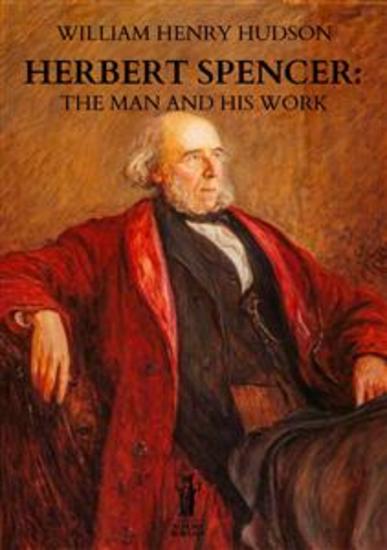
Herbert Spencer: The Man and his Work - cover

Herbert Spencer: The Man and his Work

William Henry Hudson

Publisher: Edizioni Aurora Boreale

  • 0
  • 0
  • 0

Summary

William Henry Hudson, professor of English Literature in the Leland Stanford Junior University, published his essay Herbert Spencer: The Man and his Work in February 1897 on the Popular Science Monthly magazine. We propose it again today to our readers, with the hope that it can contribute to making known and spreading the thoughts of Herbert Spencer, one of the greatest philosophers of the 19th century, but also an excellent psychologist, biologist, sociologist, and anthropologist.
Available since: 09/12/2023.

Other books that might interest you

  • Finding Judge Crater - A Life and Phenomenal Disappearance in Jazz Age New York - cover

    Finding Judge Crater - A Life...

    Stephen J. Riegel

    • 0
    • 0
    • 0
    On the night of August 6, 1930, Joseph Force Crater, a newly appointed judge and prominent figure in many circles of Manhattan, hailed a taxi in the heart of Broadway and vanished into thin air. Despite a decades-long international manhunt led by the New York Police Department's esteemed Missing Persons Bureau, the reason for Crater's disappearance remains a confounding mystery. In the early months of the investigation, evidence implicated and imperiled New York's top officials, including then-Governor Franklin D. Roosevelt and Mayor Jimmy Walker, as well as the city's Tammany Hall political machine, lawyers and judges, and a theater mogul. 


    Drawing on new sources, including NYPD case files and court records, and overlooked evidence discovered years later, Riegel pieces together the puzzle of what likely happened to Joseph Crater and why. To uncover the mystery, he delves into Crater's ascension into the scintillating and corrupt world of Manhattan in the Roaring Twenties and Jazz Age. In turn, the story of the judge's vanishing amid the Great Depression unfolds as a harbinger of the disappearance of his lost metropolis and its transformation into modern-day New York City.
    Show book
  • The Story Economy - How Sharing Your Truth Can Be Your Most Valuable Asset - cover

    The Story Economy - How Sharing...

    William Welser

    • 0
    • 0
    • 0
    How do you value your private data? What about your job? The truth is someone is selling your data, and your job may be among the countless others being lost to AI at record rates. Because of this abuse of technology among many others, most people have lost all agency over their technology, devices, and information. But technologist William Welser IV has a plan to help us regain control.Enter The Story Economy, a guide that provides fresh purchasing power in a world where opportunity feels harder and harder to grasp. Within, Welser outlines the need for an alternative economy where stories can become solutions to overwhelming new problems. His entirely new marketplace allows us to use our stories as currency, putting the data we've voluntarily given to good use—allowing us to purchase goods and services and giving us the power to see exactly where our data is going and to whom.In this exciting and sometimes scary world of AI, Big Tech is using all of its tools against us to create a society in which we're lonely, broke, and lost. We must take back our power and make the technology work for us to close the healthcare, education, and wealth divide—and in the process, foster self-awareness to help us become astute decision-makers and stay ahead of technology. The Story Economy provides the innovative blueprint to get started.
    Show book
  • The Holocaust Industry - Reflections on the Exploitation of Jewish Suffering - cover

    The Holocaust Industry -...

    Norman G. Finkelstein

    • 0
    • 0
    • 0
    This iconoclastic study was one of the most widely debated books of 2000. Finkelstein indicts with vigor and honesty those who exploit the tragedy of the Holocaust for their own personal political and financial gain. 


    This new edition includes updated material discussing the initial reception to the book's publication. In a controversial new study, Norman G. Finkelstein moves from an interrogation of the place the Holocaust has come to occupy in American culture to a disturbing examination of recent Holocaust compensation agreements. 


    Leaders of America's Jewish community were delighted that Israel was now deemed a major strategic asset and, Finkelstein contends, exploited the Holocaust to enhance this newfound status. Their interpretations of the tragedy are often at variance with historical events and are employed to deflect any criticism of Israel and its supporters. 


    Finkelstein contends that the main danger posed to the memory of Nazism's victims comes not from the distortions of Holocaust deniers but from prominent, self-proclaimed guardians of Holocaust memory. 


    The Holocaust Industry is all the more disturbing and powerful because the issues it deals with are so rarely discussed.
    Show book
  • The Occupied City - How Israel Shapes Palestinian Life - cover

    The Occupied City - How Israel...

    Davis Truman

    • 0
    • 0
    • 0
    East Jerusalem is more than a city; it is a battleground of maps, walls, and blueprints. In The Occupied City: How Israel Shapes Palestinian Life, readers are taken inside one of the world’s most contested urban landscapes, where every building permit, zoning law, and planning decision becomes a tool of power. 
    Drawing on years of research and first-hand interviews with Palestinian residents, urban planners, and human rights experts, this book exposes how Israeli urban planning policies restrict Palestinian access to housing, fracture communities, and rewrite the very geography of Jerusalem. It reveals how control is exercised not only through military presence but through bureaucratic procedures, economic pressures, and cultural erasure—quiet mechanisms that determine who gets to build, who is forced to leave, and whose story is allowed to endure. 
    At once rigorous and deeply human, The Occupied City gives voice to those living under the daily weight of planning systems designed to dispossess them. It uncovers the hidden architecture of occupation while also spotlighting acts of resilience, resistance, and visions for a more just future. 
    Essential reading for anyone seeking to understand the Israeli–Palestinian conflict beyond headlines, this book demonstrates how urban planning—often regarded as technical or neutral—is, in fact, one of the most powerful weapons in the struggle over land, rights, and survival.
    Show book

  • Camila's Story - Thrown Away Children - cover

    Camila's Story - Thrown Away...

    Louise Allen

    • 0
    • 0
    • 0
    Camila's Story is the 12th instalment in the popular Thrown Away Children series by Louise Allen.
    Show book
  • A Legacy of Discrimination - The Essential Constitutionality of Affirmative Action - cover

    A Legacy of Discrimination - The...

    Lee C. Bollinger, Geoffrey R. Stone

    • 0
    • 0
    • 0
    A timely defense of affirmative action policies that offers a more nuanced understanding of how centuries of invidious racism, discrimination, and segregation in the United States led to and justifies such policies from both a moral and constitutional perspective. 


    In A Legacy of Discrimination, leading constitutional scholars Lee C. Bollinger and Geoffrey R. Stone trace affirmative action's history and the legal challenges it has faced over the decades. They argue that in order to fully comprehend affirmative action's original intent and impact, we must reacquaint ourselves with the era in which it arose, beginning with the most important Supreme Court decision of the twentieth century, 1954's Brown v. Board of Education of Topeka, Kansas. Assessing this history, Bollinger and Stone introduce subsequent, and evolving, affirmative-action case law that had the intent and effect of constraining social, educational, and economic progress for Black people and other minority groups. They demonstrate how and why affirmative action policies stand on firm legal ground and must remain protected. Further, they explain why Americans must view affirmative action as a long-term moral commitment to secure justice, especially for Black Americans, after three and a half centuries of grave injustice that violates the most essential aspirations of our nation.
    Show book