Join us on a literary world trip!
Add this book to bookshelf
Grey
Write a new comment Default profile 50px
Grey
Subscribe to read the full book or read the first pages for free!
All characters reduced
Lincoln as I knew him - A reminiscence of President Lincoln’s bodyguard - cover

Lincoln as I knew him - A reminiscence of President Lincoln’s bodyguard

William Henry Crook

Publisher: Edizioni Aurora Boreale

  • 0
  • 0
  • 0

Summary

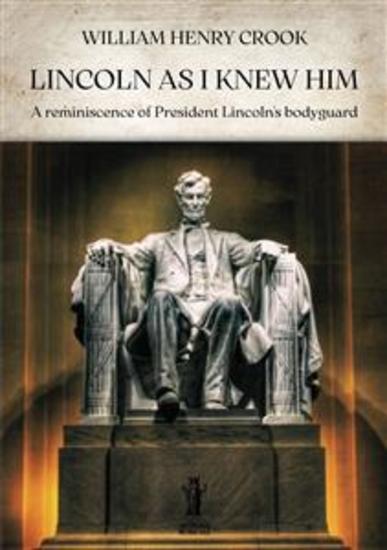
William Henry Crook (October 15, 1839 - March 13, 1915) was one of President Abraham Lincoln’s bodyguards in 1865. After Lincoln’s assassination (while Crook was off duty), he continued to work in the White House for a total of more than 50 years, serving 12 Presidents.Crook set his memoirs down on paper in the book Through Five Administrations: Reminiscences of Colonel William H. Crook, Body-Guard to President Lincoln, compiled and edited by Margarita Spalding Gerry and published for the first time in 1910. There are six administrations covered, however, from Lincoln to Chester A. Arthur, although James A. Garfield and Arthur are dealt with in a single chapter.Lincoln as I knew him is one of the most interesting reminiscences by William Henry Crook. It was published on the Harper’s Monthly Magazine in December 1917.
Available since: 01/14/2023.

Other books that might interest you

  • Battle of Fornovo The: The History of the Italian Wars’ First Major Battle - cover

    Battle of Fornovo The: The...

    Editors Charles River

    • 0
    • 0
    • 0
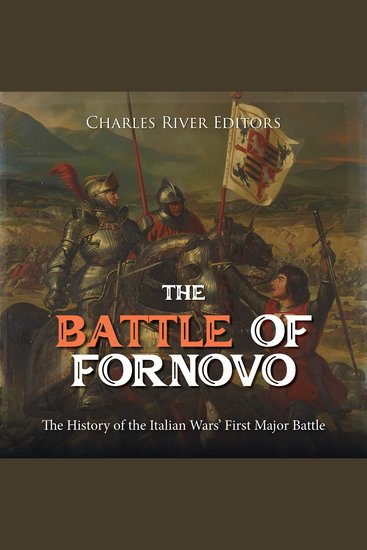
    In 1494, there were five sovereign regional powers in Italy: Milan, Venice, Florence, the Papal States and Naples. In 1536, only one remained: Venice. These decades of conflict precipitated great anxiety among Western thinkers, and Italians responded to the fragmentation, forevermore, of Latin Christendom, the end of self-governance for Italians, and the beginning of the early modern era in a myriad of ways. They were always heavily influenced by the lived experience of warfare between large Christian armies on the peninsula. 
    The diplomatic and military history of this 30-year period was a complex situation that one eminent Renaissance historian, Lauro Martines, has described as "best told by a computer, so many and tangled are the treatises, negotiations and battles." At the same time, the fighting went in tandem with the Renaissance and was influenced by it. Most historians credit the city-state of Florence as the place that started and developed the Italian Renaissance, a process carried out through the patronage and commission of artists during the late 12th century. If Florence is receiving its due credit, much of it belongs to the Medicis, the family dynasty of Florence that ruled at the height of the Renaissance. The dynasty held such influence that some of its family members even became Pope. 
    Meanwhile, plans for a French invasion were years in the making, and France’s young King Charles VIII, heavily influenced by chivalric tales and his men of finance, had begun his preparations for conquering Naples as a base from which to launch a crusade in 1491. Two key events were the catalysts for these plans. The first was the arrival of Cardinal Giuliano della Rovere at Avignon in May 1494.
    Show book
  • Detroit in World War II - cover

    Detroit in World War II

    Gregory D. Sumner

    • 0
    • 0
    • 0
    When President Roosevelt called for the country to be the great "Arsenal of Democracy," Detroit helped turn the tide against fascism with its industrial might. Locals were committed to the cause, putting careers and personal ambitions on hold. Factories were retooled from the ground up. Industrialist Henry Ford, First Lady Eleanor Roosevelt, aviator Charles Lindbergh, legendary boxer Joe Louis, future baseball Hall of Famer Hank Greenberg and the real-life Rosie the Riveters all helped drive the city that was "forging thunderbolts" for the front lines. With a panoramic narrative, author Gregory D. Sumner chronicles the wartime sacrifices, contributions, and everyday life of the Motor City.
    Show book
  • Roman Medicine and Science - Advances of Ancient Civilization - cover

    Roman Medicine and Science -...

    Rogan Fish

    • 0
    • 0
    • 0
    Roman medicine was a blend of practical knowledge, religious beliefs, and influences from earlier civilizations, particularly the Greeks and Etruscans. While early Roman healing methods were deeply rooted in superstition, the expansion of the empire led to the adoption of more systematic medical practices. Over time, Roman medicine evolved into a structured system that combined natural remedies, surgical techniques, and public health initiatives. 
    Greek influence played a significant role in shaping Roman medical knowledge. Before Rome conquered Greece, healing in the Roman Republic was often associated with household remedies and religious rituals. However, as Greek physicians such as Archagathus and later Galen entered Rome, their advanced knowledge in anatomy, surgery, and pharmacology became widely accepted. Many Roman physicians were either trained by Greek mentors or studied Greek medical texts. Hippocratic principles, which emphasized observation and diagnosis, became foundational in Roman medical education. 
    Despite the growing reliance on scientific methods, religion and superstition remained integral to Roman healing practices. The Romans believed that diseases could be divine punishments or warnings from the gods. Temples dedicated to deities like Aesculapius, the god of medicine, served as healing centers where the sick sought divine intervention. Priests and healers performed rituals and sacrifices to appease the gods and cure ailments. Additionally, charms, amulets, and incantations were commonly used to ward off illness. Even as medical science progressed, many Romans continued to rely on religious customs for healing.
    Show book
  • Increase focus and concentration meditation - A guided meditation - DST Hypno with Stu Newman - cover

    Increase focus and concentration...

    Stuart Newman

    • 0
    • 0
    • 0
    DST Hypno with Stu Newman is the perfect way to increase your focus and concentration through meditation.  
    With his unique approach, you will be able to tap into your inner power and strengthen your ability to stay focused on tasks at hand.  
    Not only that, but you will also learn how to use mindfulness techniques such as breathing exercises and visualization in order to help create a more relaxed state of mind which can lead towards greater clarity of thought.  
    By using DST Hypno with Stu Newman, you are sure get the most out of each session while having fun along the way!  
    Give it a try today for an improved focus and concentration level tomorrow!
    Show book
  • History of Chile - Colonialism Independence and Political Reform - cover

    History of Chile - Colonialism...

    Kelly Mass

    • 0
    • 0
    • 0
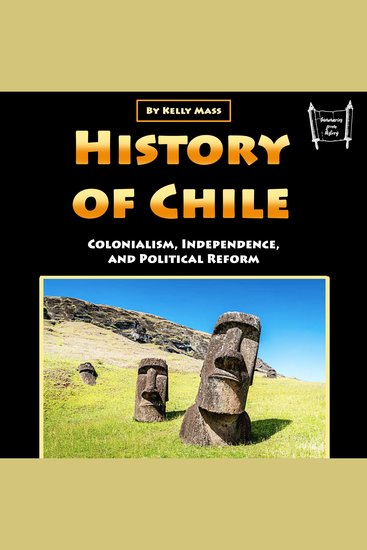
    The history of Chile spans thousands of years, with evidence suggesting that the region was inhabited as early as 10,000 years ago. Migrating Native Americans are believed to have settled in the fertile valleys and coastal areas, forming over a dozen distinct Amerindian cultures. These early inhabitants may have arrived via the Pacific coast in a rapid expansion predating the Clovis civilization or through trans-Pacific migration. Archaeological sites such as Monte Verde, Cueva del Milodón, and the Pali Aike Crater provide critical evidence of this early human activity. Monte Verde, in particular, predates the Clovis site by thousands of years, challenging traditional theories of the first human migrations to the Americas. 
    By the time of Spanish exploration in the 16th century, various indigenous groups occupied the land. The Mapuche, who inhabited south-central Chile, were the most significant and resilient, maintaining their independence through centuries of conflict with Spanish colonizers and later the Chilean state. Their resistance was emblematic of the challenges faced by Spanish conquistadors who arrived in 1540 under the leadership of Pedro de Valdivia. Despite fierce resistance, Valdivia founded Santiago in 1541, marking the beginning of Chile's colonial era. 
    Chile was part of the Spanish Empire from 1540 to 1818. During this period, the colony developed an economy centered on agriculture and the extraction of natural resources like saltpeter and, later, copper. While these resources bolstered the economy, they also led to over-reliance on commodity exports and tensions with neighboring countries. The War of the Pacific (1879–1884) exemplified such conflicts, as Chile battled Bolivia and Peru over control of the nitrate-rich Atacama Desert.
    Show book
  • The Divine Comedy Inferno - cover

    The Divine Comedy Inferno

    Dante Alighieri

    • 0
    • 0
    • 0
    Inferno (Italian: [iɱˈfɛrno]; Italian for "Hell") is the first part of Italian writer Dante Alighieri's 14th-century epic poem Divine Comedy. It is followed by Purgatorio and Paradiso. The Inferno tells the journey of Dante through Hell, guided by the ancient Roman poet Virgil. In the poem, Hell is depicted as nine concentric circles of torment located within the Earth; it is the "realm ... of those who have rejected spiritual values by yielding to bestial appetites or violence, or by perverting their human intellect to fraud or malice against their fellowmen". As an allegory, the Divine Comedy represents the journey of the soul toward God, with the Inferno describing the recognition and rejection of sin.An initial canto, serving as an introduction to the poem and generally considered to be part of the first cantica, brings the total number of cantos to 100.
    Show book