Join us on a literary world trip!
Add this book to bookshelf
Grey
Write a new comment Default profile 50px
Grey
Subscribe to read the full book or read the first pages for free!
All characters reduced
The Forgotten Man and Other Essays - cover

The Forgotten Man and Other Essays

William Graham Sumner

Publisher: DigiCat

  • 0
  • 0
  • 0

Summary

In "The Forgotten Man, and Other Essays," William Graham Sumner presents a compelling critique of societal and governmental interventions in the lives of individuals, emphasizing the concept of the 'forgotten man'—the ordinary citizen who bears the consequences of policies aimed at helping others. Sumner's literary style is marked by a blend of incisive argumentation and accessible prose, revealing an ethical and philosophical exploration of individualism versus collectivism. The essays reflect the intellectual currents of the late 19th century, particularly the rise of social Darwinism and classical liberal thought, urging readers to reconsider the balance between liberty and state responsibility in a rapidly industrializing society. William Graham Sumner, a prominent sociologist and economist, was deeply influenced by his experiences as a professor at Yale and his keen interest in social theory. A pioneer in applying Darwinian principles to social issues, Sumner's work is characterized by a sharp critique of altruism in social policy. His background and scholarly endeavors inform the essays' arguments, making them not merely theoretical but grounded in the realities of contemporary societal challenges. "The Forgotten Man, and Other Essays" is a must-read for those interested in the foundations of American economic thought and the historical context of individual rights. Sumner's thought-provoking arguments encourage readers to reflect on the implications of social policies and the importance of recognizing the often-overlooked individual amid collective action.
Available since: 06/03/2022.
Print length: 429 pages.

Other books that might interest you

  • Patrick Henry's Give Me Liberty or Give Me Death - cover

    Patrick Henry's Give Me Liberty...

    Patrick Henry

    • 0
    • 0
    • 0
    Patrick Henry’s Give Me Liberty or Give Me Death speech, delivered on March 23, 1775, is one of the most powerful orations in American history. Addressing the Virginia Convention, Henry’s passionate plea for freedom from British rule helped ignite the flames of the American Revolution. His bold declaration, “Give me liberty, or give me death!” has since become a symbol of the fight for independence and human rights. 
    Narrated by Gary Middleton, this audiobook brings Patrick Henry’s stirring words to life, capturing the intensity and urgency of the moment. Whether you’re a student of history or simply an admirer of powerful rhetoric, this speech is an essential listen for understanding the spirit of the American Revolution.
    Show book
  • Inventing the Future - Postcapitalism and a World Without Work - cover

    Inventing the Future -...

    Nick Srnicek, Alex Williams

    • 0
    • 0
    • 0
    This major new manifesto offers a "clear and compelling vision of a postcapitalist society" and shows how left-wing politics can be rebuilt for the twenty-first century (Mark Fisher, author of Capitalist Realism 


    Neoliberalism isn't working. Austerity is forcing millions into poverty and many more into precarious work, while the left remains trapped in stagnant political practices that offer no respite. 


    Inventing the Future is a bold new manifesto for life after capitalism. Against the confused understanding of our high-tech world by both the right and the left, this book claims that the emancipatory and future-oriented possibilities of our society can be reclaimed. Instead of running from a complex future, Nick Srnicek and Alex Williams demand a postcapitalist economy capable of advancing standards, liberating humanity from work and developing technologies that expand our freedoms. 


    This new edition includes a new chapter where they respond to their various critics.
    Show book
  • Being Cosmopolitan - A Political Approach - cover

    Being Cosmopolitan - A Political...

    Luke Ulas

    • 0
    • 0
    • 0
    What does it mean to be cosmopolitan? Typically, cosmopolitanism is understood as a broad moral orientation, involving some kind of commitment to global moral equality. On this understanding, to be cosmopolitan is simply to evidence that moral orientation oneself. By contrast, Being Cosmopolitan takes up a thoroughly political approach. The focus is on what it might mean, and what it is like, to be political in a distinctly cosmopolitan form. What it means to be cosmopolitan in this thoroughly political sense cannot involve appeal to any particular moral orientation, because politics is about, inter alia, the contestation of such orientations and commitments. Instead, this book offers an account that is based upon the internalization of particular kind of global "social imaginary," involving the imagination of a global public to which certain issues—or global public affairs—are understood to pertain. 


    Within which kind of global order is it possible, or comfortable, for a cosmopolitical agent to live? In answer to this question, the book argues against the viability of both a world of self-determining peoples, and of "pluralist" global visions—both of which are popular with moral cosmopolitan theorists.
    Show book
  • Speak Up: Insights from a Life of Leadership and Service - Unlock leadership secrets with engaging insights from "Speak Up" for greatness in life and service! - cover

    Speak Up: Insights from a Life...

    Grant Whitaker

    • 0
    • 0
    • 0
    Speak Up: Insights from a Life of Leadership and Service 
    Are you looking to advance your career and enrich your understanding through valuable insights from a life full of leadership and service? 
    In search of a detailed guide that provides all the necessary elements to transform lives through powerful insights from experience? 
    Your quest concludes here! 
    This audiobook is your ultimate companion for deepening your understanding, applying leadership principles, and engaging in practical exercises. With this, you're on the path to success. 
    Updated for current leadership and service dynamics. 
    Key features of this enlightening audiobook include: 
    - Profound insights about transforming lives through powerful experiences 
    - Detailed explanations from a lifetime of leadership and service 
    - Effective strategies for personal growth and professional development 
    Our audiobook stands out with its comprehensive coverage, which is crucial for your success. Concepts are examined thoroughly and with precision. 
    Please note that this audiobook is an independent resource designed for your benefit, unaffiliated with any official certifying body. 
    Crafted with a clear structure and straightforward language, our guide ensures smooth transitions between topics, eliminating complex jargon and presenting clear, precise content. 
    So, why wait? Click the BUY NOW button, secure your audiobook, and begin your journey to transformation through powerful insights!
    Show book
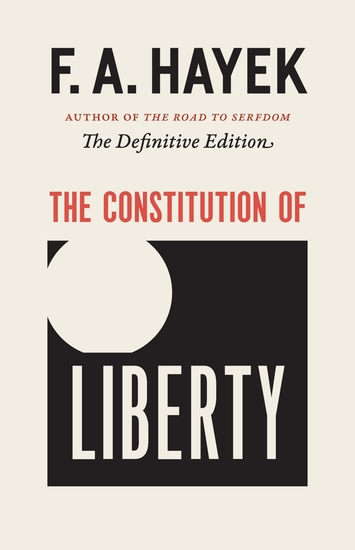
  • The Constitution of Liberty - The Definitive Edition - cover

    The Constitution of Liberty -...

    F.A. A. Hayek

    • 0
    • 0
    • 0
    “One of the great political works of our time . . . The twentieth-century successor to John Stuart Mill’s essay ‘On Liberty.’” —NewsweekConservatives and concerned citizens alike have grown increasingly fearful of big government. Enter Nobel Prize–winning economist and political theorist F. A. Hayek, whose passionate warning against empowering states with greater economic control, The Road to Serfdom, became an overnight sensation.The latest entry in the University of Chicago Press’s series of newly edited editions of Hayek’s works, The Constitution of Liberty is, like Serfdom, just as relevant to our present moment. The book is considered Hayek’s classic statement on the ideals of freedom and liberty, ideals that he believes have guided—and must continue to guide—the growth of Western civilization. Here Hayek defends the principles of a free society, casting a skeptical eye on the growth of the welfare state and examining the challenges to freedom posed by an ever expanding government—as well as its corrosive effect on the creation, preservation, and utilization of knowledge. In opposition to those who call for the state to play a greater role in society, Hayek puts forward a nuanced argument for prudence. Guided by this quality, he elegantly demonstrates that a free market system in a democratic polity—under the rule of law and with strong constitutional protections of individual rights—represents the best chance for the continuing existence of liberty.Striking a balance between skepticism and hope, Hayek’s profound insights are timelier and more welcome than ever before. This definitive edition of The Constitution of Liberty will give a new generation the opportunity to learn from his enduring wisdom.
    Show book
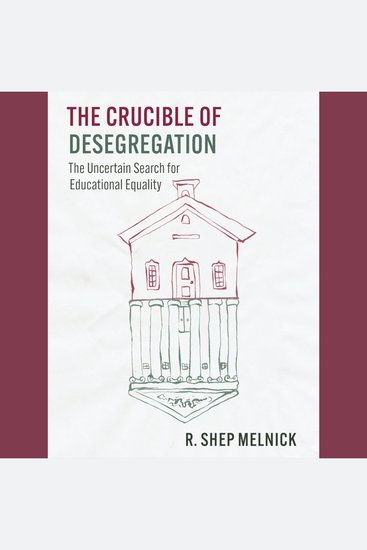
  • The Crucible of Desegregation - The Uncertain Search for Educational Equality - cover

    The Crucible of Desegregation -...

    R. Shep Melnick

    • 0
    • 0
    • 0
    Examines the patchwork evolution of school desegregation policy. 
     
    In 1954, the Supreme Court delivered the landmark decision of Brown v. Board of Education—establishing the right to attend a desegregated school as a national constitutional right—but the decision contained fundamental ambiguities. The Supreme Court has never offered a clear definition of what desegregation means or laid out a framework for evaluating competing interpretations. In The Crucible of Desegregation, R. Shep Melnick examines the evolution of federal school desegregation policy from 1954 through the termination of desegregation orders in the first decades of the twenty-first century, combining legal analysis with a focus on institutional relations, particularly the interactions between federal judges and administrators. Melnick argues that years of ambiguous, inconsistent, and meandering Court decisions left lower court judges adrift, forced to apply contradictory Supreme Court precedents in a wide variety of highly charged political and educational contexts. As a result, desegregation policy has been a patchwork, with lower court judges playing a crucial role and with little opportunity to analyze what worked and what didn’t. The Crucible of Desegregation reveals persistent patterns and disagreements that continue to roil education policy.
    Show book