Join us on a literary world trip!
Add this book to bookshelf
Grey
Write a new comment Default profile 50px
Grey
Subscribe to read the full book or read the first pages for free!
All characters reduced
The Age of Justinian and Theodora (Vol1&2) - History of Byzantine Empire in Sixth Century AD - cover

The Age of Justinian and Theodora (Vol1&2) - History of Byzantine Empire in Sixth Century AD

William Gordon Holmes

Publisher: DigiCat

  • 0
  • 0
  • 0

Summary

In "The Age of Justinian and Theodora (Vol. 1 & 2)", William Gordon Holmes intricately explores the complex socio-political landscape of the Byzantine Empire during the reign of Emperor Justinian I and his influential wife, Theodora. Holmes employs a rigorous historical narrative flavored with vivid characterizations and elaborate contextual analysis, illustrating the interplay between power, religion, and social reform. His meticulous attention to primary sources and contemporary accounts situates the work within the broader context of Byzantine studies, presenting a multifaceted view of an era often overshadowed by its predecessors and successors. William Gordon Holmes, a distinguished historian specializing in late antiquity and Byzantine history, draws from a wealth of academic training and personal interest in the Byzantine civilization. His extensive travels and research throughout the Mediterranean region have imbued him with a unique understanding of the era's cultural exchanges and governance. Holmes's passion for revealing the intricacies of Byzantine society motivates his detailed chronicling of Justinian and Theodora, which serves to demystify their controversial legacies and highlight their substantial contributions to history. This monumental work is highly recommended for scholars, students, and history enthusiasts who seek a comprehensive understanding of Byzantine governance, culture, and the dynamics of power. Holmes's engaging prose combined with meticulous research makes this a vital addition to the library of anyone interested in the complexities of one of history's most fascinating periods.
Available since: 11/25/2023.
Print length: 696 pages.

Other books that might interest you

  • Mars We Coming - Becoming More than Earthlings - cover

    Mars We Coming - Becoming More...

    lucayyofficial

    • 0
    • 0
    • 0
    This isn’t a book about rockets. 
    It’s about humanity. 
    In Mars, We Coming, the journey to another planet becomes something more than just science fiction or tech speculation — it becomes a mirror. A deeply personal, thought-provoking, first-person exploration of what it really means to leave Earth… and still be us. 
    From the silence of that first step on Martian soil to the invisible battles of the human mind in isolation, this book explores the dreams, fears, and fragile truths behind humanity’s greatest leap. It doesn’t just ask if we can go to Mars — it asks who we become if we do. 
    Thoughtful. Emotional. Raw. 
    Perfect for dreamers, futurists, and anyone wondering what’s next for our species.
    Show book
  • The Prince - cover

    The Prince

    Niccolo Machiavelli

    • 0
    • 0
    • 0
    Delve into the timeless wisdom and political acumen of Niccolò Machiavelli’s "The Prince," masterfully narrated by Daniel Pagone. Written in the early 16th century, "The Prince" remains one of the most influential political treatises ever penned, offering keen insights into power, leadership, and statecraft that continue to resonate in modern times. 
    Machiavelli's pragmatic approach to governance, often summarized by the phrase "the ends justify the means," provides a candid examination of how rulers can maintain power and navigate the complexities of political life. From the importance of military prowess to the manipulation of public perception, "The Prince" offers a blueprint for leaders in any era. 
    Daniel Pagone's engaging narration brings Machiavelli's text to life, capturing the nuance and intensity of this seminal work. His voice guides listeners through the intricate ideas and historical examples that Machiavelli employs to illustrate his theories, making this audiobook an accessible and thought-provoking experience. 
    Perfect for students of political science, history enthusiasts, or anyone interested in the art of leadership, "The Prince" is an essential addition to any audiobook collection. Experience Machiavelli’s enduring legacy and understand why his work remains a cornerstone of political literature.
    Show book
  • Last Slave Ship The: Book Summary & Analysis - cover

    Last Slave Ship The: Book...

    Alexander Pike

    • 0
    • 0
    • 0
    This content is an independent and unofficial summary created for informational and educational purposes only. It is not affiliated with, authorized, approved, licensed, or endorsed by the original author or publisher. All rights to the original work belong to its respective copyright holders. This summary is not intended to substitute the original book, but to offer a concise overview and interpretation of its main ideas.


    Buried beneath the muddy waters of the Mobile River lay a secret too powerful to remain hidden forever.
     
    The Last Slave Ship uncovers the haunting true story of the Clotilda—the final vessel to bring enslaved Africans to America, decades after the transatlantic trade was outlawed. But this is not just a story about a ship. It’s a story about survival, memory, and the extraordinary strength of a people who refused to be erased.
    Show book
  • Nathaniel Hawthorne: A short biography - 5 Minutes: Short on time - long on info! - cover

    Nathaniel Hawthorne: A short...

    5 Minutes, 5 Minute Biographies,...

    • 0
    • 0
    • 0
    Nathaniel Hawthorne, American writer of the 19th century: Life and work in a short biography! Everything you need to know, brief and concise. Infotainment, education and entertainment at its best!
    Show book
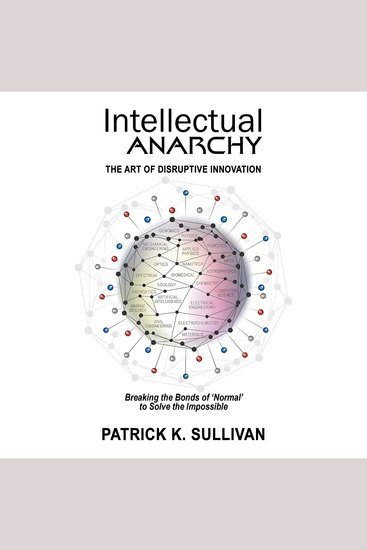
  • Intellectual Anarchy - The Art of Disruptive Innovation - cover

    Intellectual Anarchy - The Art...

    Patrick K Sullivan

    • 0
    • 0
    • 0
    So how do we move the future from the distant horizon to the present day? We need Intellectual Anarchy. 
    The accelerating challenges facing our planet—such as climate change, food scarcity, sustainable energy, overpopulation, nuclear proliferation, income inequality, and rising healthcare costs—are solvable. The question is not if, but when. 
    All these challenges directly impact our lives and our unwritten future. They have enormous economic consequences for humans and society. They also provide incredible opportunities for investors and innovators. This is a book about how we can find disruptive solutions to hard problems, problems so difficult that they can seem impossible. Problems of that magnitude demand radical new ideas—an incremental approach won’t work. Their solutions seemingly come out of left field, defying conventional wisdom, and overturning existing industries, practices, and business models. 
    This book details the Intellectual Anarchy methodology followed at Oceanit for generating disruptive solutions to these problems and taking them from the idea stage all the way to market—Mind-to-Market, including financing innovations to overcome the scarcity of venture capital anywhere away from the conventional tech hubs. 
    Oceanit operates from Hawai‘i, the most remote location in the world. Yet today Oceanit works across the world with just about everybody—the US government, Fortune 100 companies, and more than sixty universities—partnering and collaborating as we research, invent, and produce technology in energy, aerospace, life sciences, information technology, sustainability, and resiliency. 
    If Oceanit’s Intellectual Anarchy model works in Hawai‘i, it can work anywhere. 
    BOOK PDF FILE: drive.google.com/file/d/1_P9l1y5khTaO6bxavPnEzri-3ZByADNP/view
    Show book
  • Dangerous Medicine - The Story Behind Human Experiments with Hepatitis - cover

    Dangerous Medicine - The Story...

    Sydney A. Halpern

    • 0
    • 0
    • 0
    The untold history of America's mid-twentieth-century program of hepatitis infection research, its scientists' aspirations, and the damage the project caused human subjects 


    From 1942 through 1972, American biomedical researchers deliberately infected people with hepatitis. Government-sponsored researchers were attempting to discover the basic features of the disease and the viruses causing it, and to develop interventions that would quell recurring outbreaks. Drawing from extensive archival research and in-person interviews, Sydney Halpern traces the hepatitis program from its origins in World War II through its expansion during the initial Cold War years, to its demise in the early 1970s amid an outcry over research abuse. 


    The subjects in hepatitis studies were members of stigmatized groups—conscientious objectors, prison inmates, the mentally ill, and developmentally disabled adults and children. The book reveals how researchers invoked military and scientific imperatives and the rhetoric of a common good to win support for the experiments and access to recruits. Halpern examines the participants' long-term health consequences and raises troubling questions about hazardous human experiments aimed at controlling today's epidemic diseases.
    Show book