Join us on a literary world trip!
Add this book to bookshelf
Grey
Write a new comment Default profile 50px
Grey
Subscribe to read the full book or read the first pages for free!
All characters reduced
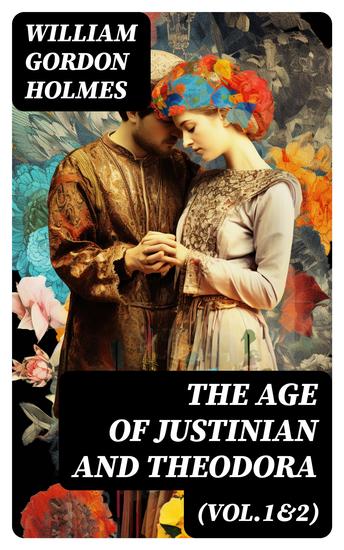
The Age of Justinian and Theodora (Vol1&2) - Enriched edition History of Byzantine Empire in Sixth Century AD - cover

The Age of Justinian and Theodora (Vol1&2) - Enriched edition History of Byzantine Empire in Sixth Century AD

William Gordon Holmes

Publisher: DigiCat

  • 0
  • 0
  • 0

Summary

In "The Age of Justinian and Theodora (Vol. 1 & 2)", William Gordon Holmes intricately explores the complex socio-political landscape of the Byzantine Empire during the reign of Emperor Justinian I and his influential wife, Theodora. Holmes employs a rigorous historical narrative flavored with vivid characterizations and elaborate contextual analysis, illustrating the interplay between power, religion, and social reform. His meticulous attention to primary sources and contemporary accounts situates the work within the broader context of Byzantine studies, presenting a multifaceted view of an era often overshadowed by its predecessors and successors. William Gordon Holmes, a distinguished historian specializing in late antiquity and Byzantine history, draws from a wealth of academic training and personal interest in the Byzantine civilization. His extensive travels and research throughout the Mediterranean region have imbued him with a unique understanding of the era's cultural exchanges and governance. Holmes's passion for revealing the intricacies of Byzantine society motivates his detailed chronicling of Justinian and Theodora, which serves to demystify their controversial legacies and highlight their substantial contributions to history. This monumental work is highly recommended for scholars, students, and history enthusiasts who seek a comprehensive understanding of Byzantine governance, culture, and the dynamics of power. Holmes's engaging prose combined with meticulous research makes this a vital addition to the library of anyone interested in the complexities of one of history's most fascinating periods.

In this enriched edition, we have carefully created added value for your reading experience:
- Hand‐picked Memorable Quotes shine a spotlight on moments of literary brilliance.
- Interactive footnotes clarify unusual references, historical allusions, and archaic phrases for an effortless, more informed read.
Available since: 11/25/2023.
Print length: 696 pages.

Other books that might interest you

  • Dutch History - The Age of Change in the Netherlands - cover

    Dutch History - The Age of...

    Kelly Mass

    • 0
    • 0
    • 0
    The following topics will be discussed in this combo of books: 
    1: In this book, we will shed more light on the Batavians, a people in history with much bravery, innovation, and determination to form a republic with freedom for its citizens, with opposing enemies they resisted. The Republic of the 7 United Netherlands was followed by the Batavian Republic. It started on January nineteenth, 1795, and ended on June fifth, 1806, with Louis I's succession to the Dutch throne. The political, financial, and social modifications that took place at the time of the Batavian Republic's short existence have left an enduring mark. The old Dutch Republic's confederal structure was completely changed by a unitary state. The constitution of 1798, which was developed for the first time in Dutch history, was really democratic. 
    2: The Netherlands had a great century in the 1600s, until it all ended about three-fourths along the way. Trading was all around, business was good. Their vast empire that reached across the world made money from spices, raw materials, metals, and so much more, with an extensive network of ships, merchants, and an entire army fleet. The Dutch Golden Era was a time in Dutch history varying circa from 1588 (the start of the Dutch Republic) to 1672 (the "Catastrophe Year"), throughout which Dutch trade, science, and art, and the Dutch armed force, were amongst the world's best. The Eighty Years' War, which ended in 1648, controls the first area. 
    3: Undoubtedly, Napoleon, the French revolutionist and emperor has left his mark on European history. His vast empire stretched all over the continent, his unique image and posture have been emulated by many, and his infamous defeat in Russia was a precursor of the defeat Hitler experienced for similar reasons.
    Show book
  • The Power of the Spoken Word - cover

    The Power of the Spoken Word

    Florence Scovel Shinn

    • 0
    • 0
    • 0
    "The Power of the Spoken Word" by Florence Scovel Shinn is a transformative guide that explores the profound impact of language and affirmations on our lives. As a pioneering figure in the New Thought movement, Shinn unveils the secrets of harnessing the creative power of spoken words to manifest positive outcomes and spiritual growth.
    In this illuminating work, Shinn emphasizes the idea that our words are powerful tools that shape our reality. Drawing on spiritual principles, she demonstrates how affirmations and positive declarations can influence our thoughts, actions, and circumstances. The book provides practical insights and real-life examples that illustrate the potency of conscious and intentional speech.
    Shinn's teachings extend beyond mere positive thinking, delving into the spiritual significance of our words and the vibrational energy they carry. Readers are guided to cultivate a mindset of abundance, love, and success through the intentional use of affirmations.
    "The Power of the Spoken Word" serves as a timeless manual for those seeking to transform their lives through the deliberate and mindful use of language. Florence Scovel Shinn's wisdom continues to inspire readers to speak their desires into existence and align their words with the universal principles that govern manifestation and well-being.
    Show book
  • Carolingians and the Moors The: The History of the Kingdoms that Fought for Control of Western Europe in the Middle Ages - cover

    Carolingians and the Moors The:...

    Charles River Editors

    • 0
    • 0
    • 0
    While the Moors have always been associated with Spain due to their lengthy stay on the Iberian Peninsula, the most famous battle they were involved in was actually fought in modern France. While the Franks were consolidating a kingdom there, Muslim forces were pushing out of North Africa and into the Iberian Peninsula in the early 8th century, and by the dawn of the 730s, the Umayyad dynasty had expanded its territory from the Atlantic to the Pyrenees, a series of seasonally snow-capped mountains in Europe that forms a border between the nations of Spain and France. This would lead to Charles Martel’s most famous military victory came at the Battle of Tours, also called the Battle of Poitiers, on October 10, 732. At this battle, a united Frankish force decisively defeated the invading Umayyad Caliphate, making it one of the most important in all the Middle Ages for stemming the advancement of the Islamic forces in Europe. 
    	Charles Martel was the forefather of the Carolingian dynasty, which carved out a major empire in Europe from 750-887, ushered in an important period in the Early Middle Ages. The Carolingians were in their time seen as the successors of ancient Rome in the West, and while they sought to reestablish the glory of antiquity, they’re remembered today for effectively founding the states that would become France and Germany. 	The Carolingians are also credited with creating the first Renaissance, the Carolingian Renaissance, centuries before the Italian Renaissance. Many of the great Latin classics survive today because of copies made during this period. In addition, the revisions made to written script at this time made texts easier to read, so much so that most of those changes remain in the modern system of writing. 
    Show book
  • I AM JEANNE - Who is the real Jeanne d'Arc? - cover

    I AM JEANNE - Who is the real...

    Mike Cavalli

    • 0
    • 0
    • 0
    The arrival of Jeanne D’Arc on to the earth plane and her subsequent adventures has left an un-erasable mark in the history books. 
    One of the greatest remote viewers of all time, the image of Jeanne D’Arc, the legend, visionary & clairvoyant, has weaved its magic transcending time itself.  
    Her strength, courage and compassion is recognised by protagonists, artists, musicians and even freedom fighters. She is a symbol against oppression and injustice. 
    But how did Jeanne D’Arc come to be? To unravel this mystery we must be prepared to unlearn everything that popular history has insisted we believe. Only then like a jigsaw puzzle adding piece by piece, we can obtain a clearer picture and by doing so rebuild the true character of Jeanne D’Arc, the saint, the visionary, the legend.
    Show book
  • Lessons from the Light - What Near-Death Experiences Teach Us about Living in the Here and Now - cover

    Lessons from the Light - What...

    PhD Kenneth Ring, Evelyn...

    • 0
    • 0
    • 0
    Unlike many other books on the subject of near-death experiences (NDEs), Lessons from the Light is intended mainly for those who have never had an NDE themselves but wish to learn from those who have. In clear language, the practical lessons for living and dying are to be found from the study of NDEs. Written by one of the foremost authorities on NDEs, Dr. Kenneth Ring, Lessons from the Light is a book for those who looking to gain knowledge and wisdom to enhance their own lives by incorporating the insights stemming from what many people have come to believe is the ultimate spiritual experience of our time. Listeners will discover for themselves what others have had nearly to die to learn, and how their own lives can blossom in ways that are typical for persons who have undergone NDEs directly. 


    Although Lessons from the Light recounts many moving stories of NDEs, it is not just another book filled with inspiring testimonies but has helpful guidance and practical exercises concerning how listeners can make use of this knowledge to live with greater self-insight, self-compassion, and concern for others, as well as to be better prepared for death, dying, and bereavement. Listeners can apply what they have learned to their own lives and absorb and internalize these lessons from the Light in such a way as to lead to deep personal and spiritual transformation.
    Show book
  • Gods and Legends - Exploring the Myths of Ancient Civilizations - cover

    Gods and Legends - Exploring the...

    Julia Blacksmith

    • 0
    • 0
    • 0
    Mythology has been an integral part of human civilization for thousands of years, shaping cultures, religions, and societal values. Across the world, ancient civilizations created elaborate myths to explain the mysteries of existence, from the origins of the universe to the forces of nature and the fate of the soul after death. These myths were more than just stories—they were the foundation of belief systems, influencing laws, traditions, and even the structure of governments. Whether told through oral traditions, inscribed on temple walls, or recorded in sacred texts, these legends provided meaning and guidance to those who followed them.  
      
    One of the most fascinating aspects of mythology is how civilizations separated by vast distances often shared similar themes. Myths of powerful gods, epic battles between good and evil, creation and destruction, and the hero’s journey appear in cultures across the globe. The Egyptian sun god Ra, the Greek titan Prometheus, and the Mesopotamian king Gilgamesh all embody different versions of the same fundamental human questions: Who are we? Where did we come from? What is our purpose? These universal themes suggest that myths were not just the product of imagination but reflections of the fears, aspirations, and wisdom of ancient societies. 
    Show book