Join us on a literary world trip!
Add this book to bookshelf
Grey
Write a new comment Default profile 50px
Grey
Subscribe to read the full book or read the first pages for free!
All characters reduced
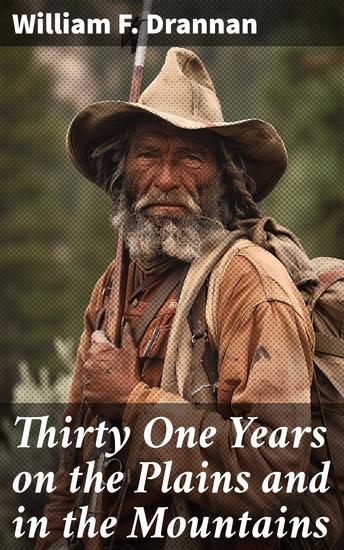
Thirty One Years on the Plains and in the Mountains - An Authentic Record of a Life Time of Hunting Trapping Scouting and Fighting in the Far West - cover

Thirty One Years on the Plains and in the Mountains - An Authentic Record of a Life Time of Hunting Trapping Scouting and Fighting in the Far West

William F. Drannan

Publisher: Good Press

  • 0
  • 0
  • 0

Summary

In "Thirty One Years on the Plains and in the Mountains," William F. Drannan offers a compelling autobiographical account of his life as a frontiersman during the tumultuous period of the American West. Written in a vivid narrative style, Drannan's work captures the rugged beauty and formidable challenges of frontier life, interweaving personal anecdotes with historical insights. The book reflects the spirit of adventure and exploration characteristic of 19th-century American literature while providing a firsthand perspective on the cultural and social dynamics of the time, including encounters with Native Americans, settlers, and the harsh realities of survival in a developing nation. Drannan himself was a man of many trades, including a scout, Indian fighter, and prospector. His experiences, which ranged from thrilling escapades to harrowing conflicts, inform his authentic voice throughout the book. Having navigated both the physical expanse and the moral complexities of the frontier, Drannan'Äôs perspective is shaped by a deep understanding of the land and its people, as well as a keen awareness of the historical shifts occurring in America during his lifetime. This book is recommended for readers interested in the intersection of personal narrative and historical context, particularly in relation to American expansionism. Drannan's candid recounting of his experiences offers valuable insights into the lives of those who shaped the frontier, making it a worthwhile read for historians, adventurers, and anyone captivated by the rich tapestry of the American West.
Available since: 12/22/2023.
Print length: 371 pages.

Other books that might interest you

  • Navy Dog - A Dog's Days in the US Navy - cover

    Navy Dog - A Dog's Days in the...

    Captain US Navy (ret) Neal J....

    • 0
    • 0
    • 0
    Having Seaman Jenna as the mascot on the USS Vandegrift was never meant to be a statement or symbolic act, or to put the crew on the radars of four-star admirals. Jenna came aboard unannounced, a Christmas gift that brought instant joy to the crew and transformed a gray ship into a home for 225 sailors. Her addition was not pre-approved by the chain of command—contrary to military protocol. Before long, Jenna became a phenomenon—the only dog on a Navy ship since World War II—despite the best efforts to keep her from the public eye. This orphaned Shiba Inu and the displaced crew shared countless adventures and trials during her five years on board. Jenna dodged being eaten in Korea (a country that still views dogs as edible fare), sidestepped Hawaii's strict quarantine law, avoided threats of being shot in Australia, charmed a Chinese admiral, and nearly initiated an international incident in Pakistan. Jenna became a symbol of the ship and of free will, and created a bond amongst the crew that remains strong decades later . . . long after her death. Neal Kusumoto is proud to say that he was the captain of that fine ship, blessed with a magnificent crew that included one special sea dog. Join Seaman Jenna as a part of the crew on her five-year adventure on the high seas.
    Show book
  • Touchy Subject - The History and Philosophy of Sex Education - cover

    Touchy Subject - The History and...

    Lauren Bialystok, Lisa M. F....

    • 0
    • 0
    • 0
    A case for sex education that puts it in historical and philosophical context. 
     
    In the United States, sex education is more than just an uncomfortable rite of passage: it’s a political hobby horse that is increasingly out of touch with young people’s needs. In Touchy Subject, philosopher Lauren Bialystok and historian Lisa M. F. Andersen unpack debates over sex education, explaining why it’s worth fighting for, what points of consensus we can build upon, and what sort of sex education schools should pursue in the future. 
     
    Andersen surveys the history of school-based sex education in the United States, describing the key question driving reform in each era. In turn, Bialystok analyzes the controversies over sex education to make sense of the arguments and offer advice about how to make educational choices today. Together, Bialystok and Andersen argue for a novel framework, Democratic Humanistic Sexuality Education, which exceeds the current conception of “comprehensive sex education” while making room for contextual variation. More than giving an honest run-down of the birds and the bees, sex education should respond to the features of young people’s evolving worlds, especially the digital world, and the inequities that put some students at much higher risk of sexual harm than others. Throughout the book, the authors show how sex education has progressed and how the very concept of “progress” remains contestable.
    Show book
  • Stakeknife's Dirty War - The Inside Story of Scappaticci the IRA's Nutting Squad and the British Spooks Who Ran the War - cover

    Stakeknife's Dirty War - The...

    Richard O'Rawe

    • 0
    • 0
    • 0
    Freddie Scappaticci was born in 1946 and raised in a deeply nationalist area of Belfast. When the Troubles broke out in 1969, he joined the Provisional IRA, where he quickly rose through the ranks, becoming commander of Belfast in 1984. 
     
    From the outside, Scappaticci appeared to be a dedicated volunteer, but inwardly, he had become disenchanted with the IRA and, in 1977, he started working for British intelligence. At the same time, he took up a leading role in a newly formed IRA Internal Security Unit (ISU), aka ‘The Nutting Squad’. He personally executed two suspected informers and condemned at least thirty-seven more to death. 
     
    Was he the serial killer that history portrays him? Undoubtedly. But it’s not that simple, because every time he passed the death penalty on an informer, he told his British intelligence handlers about the intended execution, giving them the opportunity to prevent the killing. 
     
    Did the tasking and co-ordinating group, the primary British intelligence organisation in Northern Ireland during the troubles, aid and abet the IRA in the mass-murder of British citizens? That is the question Richard O’Rawe poses in Stakeknife’s Dirty War. But O’Rawe goes further: he lays out a very compelling case that points to the TCGs running the IRA’s war from the mid-1980s to the 1994 ceasefire. Such was the British intelliegence penetration of the IRA, that Freddie Scappaticci, aka ‘Stakeknife’, was in control of all IRA operations in the Belfast Brigade area. This book will shock readers, and cause them to reevaluate everything they formerly held to be true about Stakeknife’s dirty war in Ireland.
    Show book
  • The Pharaohs of Ancient Egypt - Rulers of the Nile - cover

    The Pharaohs of Ancient Egypt -...

    Omar Khalil

    • 0
    • 0
    • 0
    The emergence of the pharaohs marked the beginning of one of history’s most iconic civilizations. In the early dynastic period around 3100 BCE, Egypt underwent a dramatic transformation as Upper and Lower Egypt were unified under a single ruler, traditionally identified as King Narmer or Menes. This unification not only established centralized rule but also laid the foundations for a dynastic tradition that would endure for millennia. The pharaoh, whose name means “great house,” came to be seen as both a political leader and a divine figure, embodying the will of the gods on earth. 
    As Egypt’s first kings consolidated power, they created administrative systems to manage resources, command armies, and oversee large-scale construction projects. Hierarchical governance emerged, with officials and scribes acting under the pharaoh’s authority to maintain order throughout the land. This new system allowed the pharaohs to centralize authority, control the fertile Nile Valley, and ensure the production and redistribution of grain and other goods, which became critical for sustaining a growing population and for asserting royal dominance. 
    Religious ideology played a key role in solidifying the power of the pharaohs. They were often depicted as the sons of deities, particularly associated with the sun god Ra and the sky god Horus. Temples were erected not just as places of worship, but as instruments of royal propaganda, showcasing the divine legitimacy of the ruler. Rituals, festivals, and monumental inscriptions reinforced the pharaoh’s sacred status and his role in maintaining ma’at, the cosmic order of balance and harmony.
    Show book
  • Things They Carried by Tim O'Brien The (Book Analysis) - Detailed Summary Analysis and Reading Guide - cover

    Things They Carried by Tim...

    Bright Summaries

    • 0
    • 0
    • 0
    Unlock the more straightforward side of The Things They Carried with this concise and insightful summary and analysis!This engaging summary presents an analysis of The Things They Carried by Tim O'Brien, a series of interconnected short stories set during the Vietnam War. O'Brien was drafted to fight in Vietnam when he was in his early 20s, and he has written extensively about the conflict in both fiction and nonfiction pieces. In The Things They Carried, he tries to make sense of his and his comrades' experiences during the war, which have an enduring effect on them and are never fully understood by those at home. As well as The Things They Carried, O'Brien is known for his novel Going After Cacciato and the autobiographical account If I Die in a Combat Zone, Box Me Up and Ship Me Home.Find out everything you need to know about The Things They Carried in a fraction of the time!This in-depth and informative reading guide brings you:• A complete plot summary• Character studies• Key themes and symbols• Questions for further reflectionWhy choose BrightSummaries.com?Available in print and digital format, our publications are designed to accompany you on your reading journey. The clear and concise style makes for easy understanding, providing the perfect opportunity to improve your literary knowledge in no time.See the very best of literature in a whole new light with BrightSummaries.com!
    Show book
  • My Music Man - cover

    My Music Man

    Dede Montgomery

    • 0
    • 0
    • 0
    As Dede Montgomery moves through grief to accept the death of her father, the stories in My Music Man shed light on change, acceptance, and forgiveness amid close personal relationships and Oregon’s natural landscapes.The reader is catapulted into autumn on the Willamette’s riverbank in the 1960s with the author and her brothers, where they discover their father’s own childhood stories and the intimate relationship he shares with the land. Tales about seven generations of family weave between time periods, held together by the constancy of place and colored by memories of picking berries and filberts, traveling through the West Linn locks, and swimming in the river on a hot summer day. Montgomery describes small-town life in a school where everyone knows everybody, and how it felt to be an only girl in what often felt like a never-ending sea of boys. Chapters depict stories about place, seasons, gender, relationships and recovery. This book is to be savored. Yet it's much more than a memoir - it's a multi-generational story, lovingly told, of a family deeply tied to Oregon's history. Additional written information such as photographs, family tree and references may be found on the author's website at https://dedemontgomery.com (My Music Man: Audio Book Supplement).
    Show book