Join us on a literary world trip!
Add this book to bookshelf
Grey
Write a new comment Default profile 50px
Grey
Subscribe to read the full book or read the first pages for free!
All characters reduced
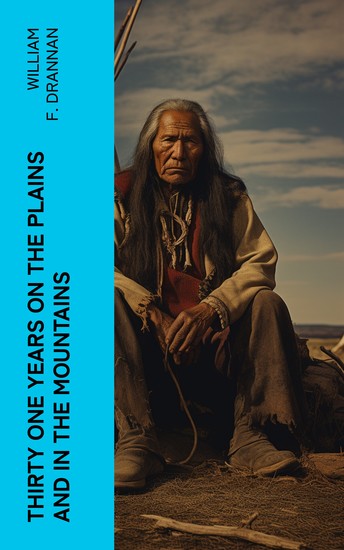
Thirty One Years on the Plains and in the Mountains - An Authentic Record of a Life Time of Hunting Trapping Scouting and Fighting in the Far West - cover

Thirty One Years on the Plains and in the Mountains - An Authentic Record of a Life Time of Hunting Trapping Scouting and Fighting in the Far West

William F. Drannan

Publisher: e-artnow

  • 0
  • 0
  • 0

Summary

Thirty-One Years on the Plains and in the Mountains is autobiographical account of Captain William F. Drannan, Scouts Chief. The author has narrated in his own blunt way the incidents of his life in the West. He starts out with the most notable events of his boyhood days, then come his flight and a trip, to St. Louis, hundreds of miles on foot, his accidental meeting with that most eminent man of his class, Kit Carson. The author also gives sketches of the springing into existence of many of the noted cities of the West, and the incidents connected therewith that have never been written before. This book represent one of the classics of frontier literature.
Available since: 12/11/2023.
Print length: 371 pages.
Other books that might interest you

  • Clitophon - The Unfinished Conversation – Plato’s Mysterious and Brief Challenge to Socrates’ Teaching - cover

    Clitophon - The Unfinished...

    Plato, Tim Zengerink

    • 0
    • 0
    • 0
    What if the most admired teacher in philosophy couldn’t show you how to live well? 
    In Clitophon, Plato gives voice to a disillusioned disciple. Clitophon, once captivated by Socrates’ speeches, now questions their value—arguing that Socrates inspires but never instructs. In this brief yet bold exchange, the roles of teacher and student are reversed. 
    This modern translation captures the tension, ambiguity, and unresolved nature of Plato’s shortest dialogue—offering a powerful look at the limits of inspiration without action. 
    What you'll discover inside: 
    •	A Direct Challenge to Socratic Philosophy – Clitophon accuses Socrates of failing to guide others to virtue 
    •	A Dialogue Unlike Any Other – Brief, mysterious, and unresolved—leaving interpretation open 
    •	The Limits of Inspiration – Explore the gap between admiration and transformation 
    •	A Clear, Thoughtful Translation – Perfect for anyone studying the role of philosophy in real-life virtue 
    Experience Clitophon, Plato’s most cryptic confrontation, and decide for yourself—can words alone lead to wisdom?
    Show book
  • Walking in My Joy - In These Streets - cover

    Walking in My Joy - In These...

    Jennifer Lewis

    • 0
    • 0
    • 0
    A new offering from the author of the hugely successful Mother of Black Hollywood. 
    Walking in My Joy is a collection of electric stories by the one and only, super hilarious Jenifer Lewis. Her commentary on what’s happening in the world today, told through her outrageous real-life adventures, will have you laughing out loud, while her insightful messages touch your soul. 
    A self-described “traveling fool and nature freak,” Jenifer takes readers with her all over the world, from Cape Town to Bali; Washington, DC, to the Serengeti; Mongolia to St. Petersburg; and Argentina to Antarctica to demonstrate how she walks in her joy by seeking pleasure in everyday encounters. Every step of the way you’ll be doubled over with laughter as she faints at the Obamas’ holiday party; awakens to a swollen face and has to go to the hospital during the height of the Covid pandemic; an alien visitation; a successful takedown of a conman; as well as meeting a handsome Maasai warrior and being chased by a Cape buffalo. 
    An actress, activist, and mental health advocate, Jenifer Lewis imparts ways to love yourself that will allow you to deflect negative energy and keep people who may come to take your joy in check. She stresses the importance of fully living to your greatest ambitions and taking the time to admire the world’s natural gifts. She also encourages embracing each other’s uniqueness as a way of finding societal healing. Walking in My Joy is a riveting and enthralling journey. 
    Supplemental enhancement PDF accompanies the audiobook.
    Show book
  • Always Trust Your Cape - How I Lived the American Dream - cover

    Always Trust Your Cape - How I...

    Donald Eugene Moore

    • 0
    • 0
    • 0
    I have an enormous amount of respect for people who consider themselves entrepreneurs. 
     
    People who, in most cases, take tremendous risks in hopes of experiencing tremendous rewards. Not only for themselves but for the world at large. 
     
    Entrepreneurs hire the most people, drive the economy, create innovation, promote research and development, while shaping new products and services. They solve problems with existing solutions, and technologies, while in most cases utilizing existing resources more effectively and more times than not on shoestring budgets. 
     
    I consider entrepreneurs to be the great pioneers of today's business world. If you are considering launching your own entrepreneurial journey, are well on your way, or anywhere in between, my passion and purpose in writing this book is to give you confidence!
    Show book
  • A Description of Acquaintance - The Letters of Laura Riding and Gertrude Stein 1927-1930 - cover

    A Description of Acquaintance -...

    Logan Esdale, Jane Malcolm

    • 0
    • 0
    • 0
    Gertrude Stein and Laura Riding enjoyed a fascinating if brief three-year friendship via correspondence between 1927 and 1930, and in A Description of Acquaintance, Logan Esdale and Jane Malcolm make the letters available to a larger audience for the first time. Riding and Stein are important figures in twentieth-century poetry and poetics and are considered progenitors of later movements such as L=A=N=G=U=A=G=E poetry. The editors contextualize their relationship and its time period with an introduction and supplementary materials, including pieces by Stein and Riding that exemplify their singular perspectives on modernism as well as their personal poetics. The book provides unique insight into Stein's and Riding's writing processes as well as the larger literary world around them, making it a must-listen for anyone interested in twentieth-century poetry.
    Show book
  • At Christmas Time - From their pens to your ears genius in every story - cover

    At Christmas Time - From their...

    Anton Chekhov

    • 0
    • 0
    • 0
    Anton Pavlovich Chekhov was born on 29th January 1860 in Taganrog, on the south coast of Russia.  
    His family life was difficult; his father was strict and over-bearing but his mother was a passionate story-teller, a subject Chekhov warmed to. As he later said; ‘our talents we got from our father, but our soul from our mother’.  
    At school Chekhov was distinctly average. At 16 his father mis-managed his finances and was declared bankrupt. His family fled to Moscow. Chekhov remained and eked out a living by various means, including writing and selling short sketches to newspapers, to finish his schooling. That completed and with a scholarship to Moscow University obtained he rejoined his family. 
    He was able to help support them by selling satirical sketches and vignettes of Russian lifestyles and gradually obtained further commissions. In 1884, he qualified as a physician and, although it earned him little, he often treated the poor for free, he was fond of saying ‘Medicine is my lawful wife, and literature is my mistress.’ 
    His own health was now an issue as he began to cough up blood, a symptom of tuberculosis.  Despite this his writing success enabled him to move the family into more comfortable accommodation.  
    Chekhov wrote over 500 short stories which included many, many classics including ‘The Kiss’ and ‘The Lady with a Dog’.  His collection ‘At Dusk’ won him the coveted Pushkin Prize when was only 26.  
    He was also a major playwright beginning with the huge success of ‘Ivanov’ in 1887.   
    In 1892 Chekhov bought a country estate north of Moscow. Here his medical skills and money helped the peasants tackle outbreaks of cholera and bouts of famine. He also built three schools, a fire station and a clinic.  It left him with less time for writing but the interactions with real people gained him detailed knowledge about the peasantry and their living conditions for his stories.  
    His most famous work, ‘The Seagull’ was received disastrously at its premiere in St Petersburg. It was later restaged in Moscow to highlight its psychological aspects and was a huge success. It led to ‘Uncle Vanya’, ‘The Three Sisters’ and ‘The Cherry Orchard’.  
    Chekhov suffered a major lung hemorrhage in 1897 while visiting Moscow. A formal diagnosis confirmed tuberculosis and the doctors ordered changes to his lifestyle.  
    Despite a dread of weddings the elusive literary bachelor quietly married the actress Olga Knipper, whom he had met at rehearsals for ‘The Seagull’, on 25th May 1901. 
    By May 1904 with his tuberculosis worsening and death imminent he set off for the German town of Badenweiler writing cheerful, witty letters to his family and assuring them his health was improving.  
    On 15th July 1904 Anton Chekhov died at Badenweiler.  He was 44.
    Show book
  • A Life Worth Living - cover

    A Life Worth Living

    Simon Ingram

    • 0
    • 0
    • 0
    Sometimes, looking at your past can give you the strength to move forward. As the classic symptoms of Parkinsons disease began to take control of Simon's life, he became a shadow of his former self. After months of fighting to keep the disease in check, Simon finally found the strength to tell his family and even managed to book an appointment with a neurologist. Sadly, at a time when he needed an experienced health care professional to help him fight his corner, what he got was a cold, uncaring man who clearly had no time for his situation. However, his initial assessment proved to be 100% accurate; at just 36 years of age, Simon was told he had Parkinsons disease. The desire to produce a written account of his life for his immediate family and friends led to A Life Worth Living. Ingram looks back at his life, often with humour and pathos, and decides that the way to keep going is to appreciate the life he has led. The only way to fight is to appreciate what battles he has already fought and won. After all, what else makes a life worth living? Ingram's first-hand account of his life from his early childhood to teen years to his first signs of the debilitating disease give an insider's look at not just a 'disease' but a man.
    Show book