Join us on a literary world trip!
Add this book to bookshelf
Grey
Write a new comment Default profile 50px
Grey
Subscribe to read the full book or read the first pages for free!
All characters reduced
Thirty One Years on the Plains and in the Mountains - An Authentic Record of a Life Time of Hunting Trapping Scouting and Fighting in the Far West - cover

Thirty One Years on the Plains and in the Mountains - An Authentic Record of a Life Time of Hunting Trapping Scouting and Fighting in the Far West

William F. Drannan

Publisher: Musaicum Books

  • 0
  • 0
  • 0

Summary

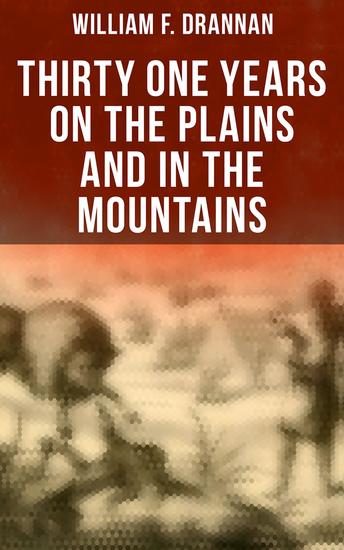
William F. Drannan's 'Thirty One Years on the Plains and in the Mountains' is a riveting first-hand account of a life lived on the American frontier. Drannan's narrative style is vivid and engaging, pulling the reader into a world of adventure, danger, and survival. His descriptions of the landscapes, native peoples, and daily challenges faced by early pioneers provide a valuable glimpse into a crucial period of American history. The book is a valuable primary source for scholars of Western expansion and those interested in the experiences of frontiersmen. Drannan's eye for detail and his ability to convey the excitement and hardships of life in the wilderness make this book a gripping read. William F. Drannan was a skilled frontiersman and scout, whose own experiences provide the foundation for this memoir. His intimate knowledge of the Plains and Mountains lends authenticity to his narrative, allowing readers to fully immerse themselves in the world he describes. Drannan's deep connection to the land and its inhabitants shines through in his writing, offering a unique perspective on Western history. I highly recommend 'Thirty One Years on the Plains and in the Mountains' to anyone interested in the history of the American West, as well as to those who enjoy compelling tales of adventure and survival. Drannan's memoir is a captivating read that sheds light on a fascinating and essential aspect of American culture.
Available since: 01/04/2022.
Print length: 371 pages.

Other books that might interest you

  • The Sociology of Religion - How Faith and Belief Systems Shape Social Life - cover

    The Sociology of Religion - How...

    Fred Grandsen

    • 0
    • 0
    • 0
    Religion has long been a fundamental aspect of human society, influencing cultures, shaping social norms, and providing meaning to people’s lives. The sociology of religion examines how faith and belief systems function within society, analyzing their impact on individuals, communities, and institutions. Unlike theological approaches that focus on the truth or divinity of religious doctrines, sociologists study religion as a social phenomenon, investigating its role in maintaining social order, fostering group identity, and driving social change. 
    One of the key concerns in the sociology of religion is understanding how religious beliefs and practices are shaped by broader social structures. Religious traditions do not exist in isolation; they are influenced by historical contexts, political systems, and economic conditions. For example, the rise of industrialization and urbanization has been linked to shifts in religious affiliation, with some societies experiencing a decline in traditional religious practices while others see the emergence of new forms of spirituality. 
    Sociologists also explore the role of religion in social cohesion and conflict. Many theorists, including Émile Durkheim, argue that religion serves as a unifying force, bringing people together through shared rituals, moral values, and collective worship. In this sense, religion helps to reinforce social bonds and provide a sense of belonging. However, religion can also be a source of division, contributing to sectarian conflicts, discrimination, and political struggles. The study of religious pluralism and interfaith relations highlights both the possibilities for coexistence and the challenges posed by religious diversity.
    Show book
  • Archaic Humans: The History of the Different Prehistoric Species in the Genus Homo - cover

    Archaic Humans: The History of...

    Editors Charles River

    • 0
    • 0
    • 0
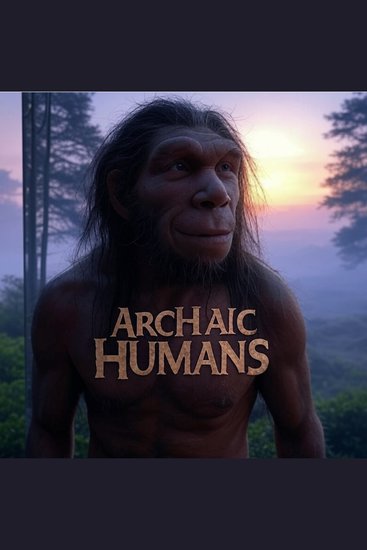
    The evolutionary path from the original primates to modern man is a long one and has taken many twists and turns, but naturally, as the fossil record grows, scientists gain a more complete understanding of our own mental and physical history in terms of genetics and anatomy. However, the correct order and relationships of the various specimen types are difficult to pin down. Many representative samples have been found in such minute amounts as to not preclude anomalies. They have been discovered in various stages of wear. Modern features did not occur simultaneously or uniformly, taking millions of years to become manifest in later types. Up to the present day’s Homo sapiens, examples of the main types have been hybrids of older and more modern features. 
    	One of the earliest species of the genus Homo to be discovered is Homo habilis, which basically means “handy man.” The name comes from the belief at the time of its discovery that this species was the first to start using stone tools. The first fossils to be uncovered in Olduvai Gorge were from the same stratigraphic layer as simple stone tools. Fossils of the crania and postcranial skeleton for this species have been found in both eastern and southern Africa and date to around 2.5–1.6 million years ago.  
    	Features of Homo erectus suggest an evolution toward modern humans, and the features which separate Homo erectus from the other Homo species are found in the skull. The size of the brain was approximately 900 cc, making it larger than the brain size of Homo habilis. Homo erectus would not have the largest brain capacity of the Homo genus during its existence, with the emergence of Homo heidelbergensis approximately 800,000 years ago. The larger brain size may not matter much when the size of the brain is considered with the size of the body, which also increased. 
    Show book
  • Simon's Alphabet Adventure - cover

    Simon's Alphabet Adventure

    Deborah Stephney

    • 0
    • 0
    • 0
    Simon, the main character, always wondered why the people of his land were always so sad.  He learned they were sad because their alphabet letters were blown away in a terrible storm.  They had no way to write about the beautiful people, places and things in their land! Simon decided he was going to take a journey to find the lost alphabet letters.  The question is, will he be able to find them and bring them back home so the people of his land will be happy again? Come along on Simon's journey to find out!
    Show book
  • Parenting Well After Childhood Abuse - Be a Great Parent Even if Yours Were Crap - cover

    Parenting Well After Childhood...

    Geanne Meta

    • 0
    • 0
    • 0
    She found her voice and you can listen to her telling her truth. 
    Parenting is hard. It’s even harder when you had a crappy childhood. It’s important that you learn all you can to overcome what you absorbed as a child. 
    Some days you’ll feel good about the job you're doing. Other days will be tough. Really tough. There will be chaos, accidents and crying. The goal is to be stable enough to handle the tough times. Listen to this book to learn new ways to behave so that what happened to you doesn’t have to affect your children. 
    Geanne Meta is a survivor of childhood sexual abuse and talks about her relationship with her parents with complete honesty. Her passion is to help children have better lives and believes helping their parents to heal is the first step. 
    This audiobook provides a roadmap to break the cycles of denial, shame, self-destructive behaviors and anger to become a healthier person for your family. There are also practical parenting tips for raising confident, honest, emotionally healthy children.
    Show book
  • The Man Nobody Killed - Life Death and Art in Michael Stewart's New York - cover

    The Man Nobody Killed - Life...

    Elon Green

    • 0
    • 0
    • 0
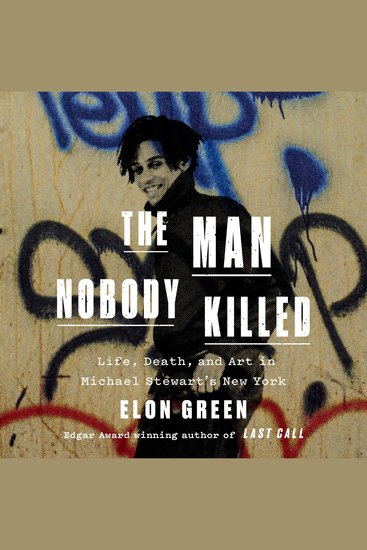
    “A powerful reclamation.”—AudioFileThe first comprehensive audiobook about Michael Stewart, the young Black artist and model who was the victim of a fatal assault by police in 1983, from Elon Green, the Edgar Award-winning author of Last Call.This program, read by multi Audie award-winning narrator Dion Graham, features a bonus conversation between the author and gallerist Patrick Fox, who rented Michael Stewart studio space in New York City.At twenty-five years old, Michael Stewart was a young Black aspiring artist, deejay, and model, looking to make a name for himself in the vibrant downtown art scene of the early 1980’s New York City. On September 15, 1983, he was brutally beaten by New York City Transit Authority police for allegedly tagging a 14th Street subway station wall.Witnesses reported officers beating him with billy clubs and choking him with a nightstick. Stewart arrived at Bellevue Hospital hog-tied with no heartbeat and died after thirteen days in a coma. This was, at that point, the most widely noticed act of police brutality in the city's history. The Man Nobody Killed recounts the cultural impact of Michael Stewart’s life and death.The Stewart case quickly catalyzed movements across multiple communities. It became a rallying cry, taken up by artists and singers including Madonna, Keith Haring, Spike Lee, and Jean-Michel Basquiat, tabloid legends such as Jimmy Breslin and Murray Kempton, and the pioneering local news reporter, Gabe Pressman. The Stewart family and the downtown arts community of 1980s New York demanded justice for Michael, leading to multiple investigations into the circumstances of his wrongful death.Elon Green, the Edgar Award–winning author of Last Call, presents the first comprehensive narrative account of Michael Stewart's life and killing, the subsequent court proceedings, and the artistic aftermath. In the vein of The Short and Tragic Life of Robert Peace and His Name is George Floyd, Green brings us the story of a promising life cut short and a vivid snapshot of the world surrounding this loss. A tragedy set in stark contrast against the hope, activism, and creativity of the 1980’s New York City art scene, The Man Nobody Killed serves as a poignant reminder of recurring horrors in American history and explores how, and for whom, the justice system fails.A Macmillan Audio production from Celadon Books.
    Show book
  • Stories from Kathasaritasagara series -3 - From Various sources - cover

    Stories from Kathasaritasagara...

    Anusha HS

    • 0
    • 0
    • 0
    The book Kathasaritsagara has been created by Soma Deva. It consists of 21,500 shlokas. 
    This book Kathasaritsagara has been divided into 18 lambakaas, and those 18 lambakaas are still more divided into 125 Tharanga's. 
    Some lambakaas are very big, while some are very small. 
    If there are 115 Shlokas in the 11th Lambaka, there are around 4925 Shlokas in 12th Lambaka. 
    During ancient times from the mouth of Lord Shiva, this story got birth. Those who listen to this story will experience all sorts of worldly pleasures. They will be blessed by Lord Shiva and at last reach jnana Loka by the blessings of lord shiva.
    Show book