Join us on a literary world trip!
Add this book to bookshelf
Grey
Write a new comment Default profile 50px
Grey
Subscribe to read the full book or read the first pages for free!
All characters reduced
Fast Slow - cover

Fast Slow

William F. Brown

Translator A AI

Publisher: Publifye

  • 0
  • 0
  • 0

Summary

Fast Slow explores the captivating science of motion, revealing the physics behind the diverse speeds of animals, vehicles, and humans. It examines how everything moves, from the leisurely pace of a snail to the breakneck velocity of a jet plane. Interestingly, the book highlights how aerodynamic design significantly impacts vehicle performance, while evolutionary adaptations allow animals to achieve remarkable feats of locomotion.

 
The book progresses from fundamental concepts like velocity and acceleration to more complex topics such as animal locomotion, vehicle engineering, and human movement. It demonstrates how factors like mass, friction, and energy expenditure govern speed. Readers will discover how understanding these principles can lead to innovations in transportation and improvements in athletic performance.

 
Fast Slow uniquely integrates scientific principles with real-world examples, making complex ideas accessible to a broad audience interested in science and physics. By bridging historical context with current research, the book provides a valuable framework for appreciating the mechanics of motion and its applications across various disciplines.
Available since: 03/06/2025.
Print length: 74 pages.


Other books that might interest you

  • Science Olympiad All Chapters Combined MCQ Class 7 - cover

    Science Olympiad All Chapters...

    Priti Singhal

    • 0
    • 0
    • 0
    Welcome to the "Science Olympiad All Chapters Combined MCQ Class 7" 
    This book is specially crafted to ignite the spark of curiosity and foster a love for science in young minds. Designed with the unique needs of first graders in mind, it provides a comprehensive introduction to fundamental scientific concepts through engaging, age-appropriate content. 
    Our primary goal is to make learning science an enjoyable and enriching experience. The book is filled with colorful illustrations, real-life examples, and interactive exercises that help children understand and relate to the world around them. Each chapter is carefully structured to build on prior knowledge, ensuring a steady progression in learning.
    Show book
  • A Poison Like No Other - How Microplastics Corrupted Our Planet and Our Bodies - cover

    A Poison Like No Other - How...

    Matt Simon

    • 0
    • 0
    • 0
    It's in our food, our clothes, and our homes. It's microplastic and it's everywhere—including our own bodies. Scientists are just beginning to discover how these tiny particles threaten health, but the studies are alarming. 


    In A Poison Like No Other, Matt Simon reveals a whole new dimension to the plastic crisis. Dealing with discarded plastic is bad enough, but when it starts to break down, the real trouble begins. The very thing that makes plastic so useful and ubiquitous—its toughness—means it never really goes away. It just gets smaller and smaller: eventually small enough to enter your lungs or be absorbed by crops or penetrate a fish's muscle tissue before it becomes dinner. 


    Unlike other pollutants, microplastics represent a cocktail of toxicity: plastics contain at least 10,000 different chemicals. Those chemicals are linked to diseases from diabetes to hormone disruption to cancers. 


    A Poison Like No Other is the first book to fully explore this public health threat. As Simon learns from these researchers, there is no easy fix. But we will never curb our plastic addiction until we begin to recognize the invisible particles all around us.
    Show book
  • Freud - Inventor of the Modern Mind - cover

    Freud - Inventor of the Modern Mind

    Peter D. Kramer

    • 0
    • 0
    • 0
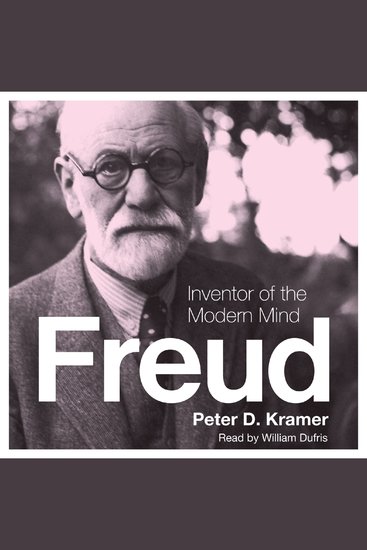
    Sigmund Freud’s life bridged the nineteenth and twentieth centuries, and his reputation and influence have endured, even intensified, in the twenty-first. Often referred to as “the father of psychoanalysis,” Freud did, in fact, conceive of many of its defining characteristics: he was the original advocate of the “talking cure,” and discovered--or, some argue, invented--the human unconscious.  
    Kramer’s take on Freud is at once critical and sympathetic: he recognizes what is archaic in Freud’s work and also what endures, interpreting him as not only a pioneer, but a writer whose work will survive among the classics of our literature.
    Show book
  • Constructing Canine Consent - Conceptualising and adopting a consent-focused relationship with dogs - cover

    Constructing Canine Consent -...

    Erin Jones

    • 0
    • 0
    • 0
    The concept of canine consent is far more than simply a buzzword in modern dog training practices. In its current form, consent is a distinctly human concept, designed by humans and for humans. Looking beyond species boundaries can help us not only consider concepts of canine consent and autonomy, but it can also help us to apply these concepts in our everyday interactions with dogs, which is fundamental for any professional working with dogs as well as for everyday dog caregivers. This canine-indexed definition of consent includes a model of five major categories: Touch/interaction-based consent, cooperative care using learned consent behaviors, activity consent, consent-based learning, and substitutive consent. These categories involve a two-way communication system, integration of salient choices, teaching consent behaviors and incorporating existing training protocols that adhere to the Humane Hierarchy of best practices, and an evaluation of dependent decision-making in extenuating circumstances. This book aims to merge the existing literature and new understandings about canine consent to paint a complete picture. It will challenge the current expectations of dogs and dog behavior in our society with an intention of considering their perspectives, experiences, and emotional needs.
    Show book
  • Quantum Computing for Beginners - Unveiling the Future of Technology and Transforming Computational Horizons - cover

    Quantum Computing for Beginners...

    Steve Abrams

    • 0
    • 0
    • 0
    Embark on a journey into the fascinating world of quantum computing with Quantum Computing for Beginners: Unveiling the Future of Technology and Transforming Computational Horizons. This comprehensive guide is designed to make the complex principles of quantum mechanics accessible to everyone, from curious enthusiasts to aspiring professionals. 
    Discover the fundamental concepts that distinguish quantum computing from classical computing, including qubits, superposition, and entanglement. Delve into the mathematics that underpins quantum theory, and explore how these principles are applied to create powerful quantum algorithms like Shor's and Grover's. 
    Learn about the various types of quantum hardware, from superconducting circuits to trapped ions, and understand the importance of quantum error correction. Get hands-on with quantum programming through user-friendly languages and development kits, and follow step-by-step examples to write your first quantum programs. 
    Explore the revolutionary applications of quantum computing in fields such as cryptography, optimization, drug discovery, and artificial intelligence. Understand the technical challenges that researchers face, and consider the ethical and societal implications of this transformative technology. 
    Quantum Computing for Beginners provides a clear, engaging introduction to one of the most exciting frontiers of modern science. With this book, you'll gain the knowledge and confidence to understand and participate in the quantum revolution. 
     
    Show book
  • Astronomy For Beginners - cover

    Astronomy For Beginners

    Hereward Carrington

    • 0
    • 0
    • 0
    Look upward and begin an unforgettable journey through the universe. 
     
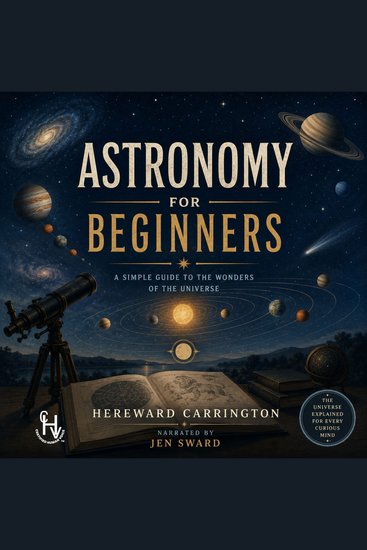
    Written for curious readers without advanced scientific training, Astronomy for Beginners offers an approachable introduction to the planets, stars, and celestial phenomena that fill the night sky. 
     
    Hereward Carrington begins with the Sun and the worlds of our solar system, exploring Mercury, Venus, Earth, Mars, Jupiter, Saturn, Uranus, Neptune, and the Moon. He then ventures farther into space to examine constellations, meteors, comets, nebulae, the Milky Way, stellar distances, star colors, double stars, variable stars, and clusters. 
     
    The book also introduces the instruments and methods that transformed astronomy, including telescopes, photography, and spectrum analysis, while explaining eclipses, gravitation, tides, and historical theories about the formation of the solar system. 
     
    Originally published in 1925 as Little Blue Book No. 895, this compact work offers modern listeners a fascinating glimpse into how astronomy was explained to the general public during the early twentieth century. 
     
    Narrated by Jen Sward, Astronomy for Beginners is an engaging listen for science enthusiasts, lifelong learners, and anyone curious about the history of humanity’s exploration of the heavens. 
     
    Publisher’s note: This audiobook is presented as a historical popular-science work. Some theories, terminology, measurements, and descriptions reflect scientific knowledge available in 1925 and may differ from current astronomical understanding.
    Show book