¡Acompáñanos a viajar por el mundo de los libros!
Añadir este libro a la estantería
Grey
Escribe un nuevo comentario Default profile 50px
Grey
Suscríbete para leer el libro completo o lee las primeras páginas gratis.
All characters reduced
History of the Colony of Queensland - cover

History of the Colony of Queensland

William Coote.

Editorial: DigiCat

  • 0
  • 0
  • 0

Sinopsis

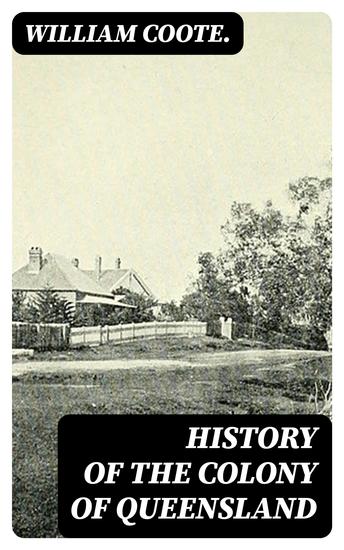
William Coote's "History of the Colony of Queensland" offers an intricate and nuanced exploration of Queensland's formative years, capturing the complexity of colonial life and the myriad influences that shaped its development. Through meticulous research and vivid prose, Coote delves into political, social, and economic themes, situating Queensland within the broader narrative of Australian history. His literary style artfully balances descriptive passages with analytical insights, providing readers with a rich context that underscores the interplay between indigenous cultures and European settlement during the 19th century. William Coote, a figure deeply immersed in the historical discourse of Australia, draws upon his extensive knowledge of the region's political landscape and colonial dynamics. His background as a historian and a keen observer of societal changes gave him a unique perspective, enabling him to compile a narrative that does not merely recount events but also challenges prevailing assumptions about colonialism. Coote's passion for uncovering the intricacies of human experience is evident throughout the work, reflecting his dedication to scholarly rigor and historical accuracy. For readers interested in Australian history, Coote's "History of the Colony of Queensland" is an indispensable resource that illuminates the complexities of colonial expansion and indigenous resistance. This book serves as both a vital academic reference and an engaging narrative, making it suitable for scholars, students, and anyone captivated by the true stories of Australia's past.
Disponible desde: 22/11/2022.
Longitud de impresión: 318 páginas.
Otros libros que te pueden interesar

  • Inner Child Integration Meditation Reinvent yourself Audio Meditation Course - from separation to union soul fragments neglect abandonment self-healing tools calm your triggers free inner cage - cover

    Inner Child Integration...

    Shining Mind

    • 0
    • 0
    • 0
    Do you feel weighed down by unresolved childhood trauma, and unable to move forward in your personal development? The lingering effects of past experiences can create a sense of stagnation, preventing you from living your life to its fullest potential. This emotional burden can manifest as repeated patterns of negative behavior, emotional distress, and an overall sense of being stuck, making it difficult to achieve personal growth and inner peace. 
    The persistent influence of unhealed inner child wounds can lead to feelings of frustration and helplessness, impacting your relationships, career, and overall well-being. If you are tired of being held back by these emotional scars and long for a profound transformation, our "Inner Child Integration Meditation Reinvent Yourself Audio Meditation Course" can guide you. 
    In this audiobook, we will:Be your coach, providing guidance and support tailored to your emotional needsHelp you raise your self-esteem, allowing you to break free from past patterns and cyclesFacilitate a profound emotional transformation, empowering you to reinvent yourselfEquip you with powerful meditative techniques to integrate your inner child and elevate your sense of self-worth 
    Embark on a transformative journey towards emotional freedom and self-discovery with our "Inner Child Integration Meditation Reinvent Yourself Audio Meditation Course." Discover the power within you to heal past wounds and embrace a new reality filled with peace, clarity, and personal growth. It's time to let go of the past and step into a future where you can thrive, feeling liberated, empowered, and aligned with your true self.
    Ver libro
  • Chat GPT for Students - How to Become an A+ Student Using Chat GPT - cover

    Chat GPT for Students - How to...

    Jlyn Bautista

    • 0
    • 0
    • 0
    Unlock the secrets to mastering every subject with precision and finesse. From decoding complex theories to acing exams with confidence, this book covers it all. Discover proven study strategies tailored to your learning style, and harness the power of effective time management to maximize productivity without burning out. 
    But excellence isn't just about grades—it's about holistic growth. This book delves into the art of critical thinking, empowering you to question, analyze, and innovate. Cultivate your curiosity, hone your research skills, and unleash your creative potential to tackle any academic challenge head-on. 
    Furthermore, this guide isn't just about individual achievement; it's about fostering a supportive academic community. Learn how to collaborate effectively with peers, seek mentorship from professors, and contribute meaningfully to group projects and discussions. 
    In this book you'll find: 
    Proven study techniques tailored to diverse learning styles 
    Strategies for effective time management and stress reduction 
    Tips for mastering exams, essays, and presentations with finesse 
    Techniques for enhancing critical thinking and problem-solving skills 
    Guidance on building meaningful relationships within your academic community 
    Resources for seeking mentorship and professional development opportunities 
    Whether you're a high school student aiming for top honors or a university scholar striving for academic excellence, "Chat GPT for Students" is your indispensable companion on the journey to becoming an A+ student. Let this book be your beacon as you navigate the seas of scholarship and emerge victorious, ready to conquer any academic challenge that comes your way!
    Ver libro
  • Education: Does God Have An Opinion? - A Biblical Apologetic for Christian Education & Homeschooling - cover

    Education: Does God Have An...

    Israel Wayne

    • 0
    • 0
    • 0
    Education: Does God Have an Opinion? is a Scriptural guide designed to help you disciple and educate your children in agreement with God’s Word. Many Christians believe God doesn’t care about how children are schooled or the methods of education that are employed. This book uses the Bible to prove otherwise. 
     
    Author and speaker, Israel Wayne, faithfully applies the teaching of Scripture to the issue of education to see what God has to say about this vital topic. Within these pages, Christian parents will find a truly biblical philosophy of education and learn to strategically and systematically apply it to core subjects. 
     
    There is almost no topic that is as relevant to the future of Christianity or as controversial as the education of children. Students in school classrooms spend thousands of hours being instructed by people who are not their parents. Truths about God, the Gospel of Jesus Christ, and the inerrancy of the Bible are most often stripped from the curricula used to teach them. The anti-God misinformation campaign of public schools works directly against the faith you are responsible to build into your children’s lives through discipleship. There is almost no way to calculate the power and influence this has on your family and their eternity. 
     
    The future of your child’s education and, therefore, his or her life is ultimately in your hands as a parent. Education: Does God Have an Opinion? will give you discernment helping you understand how the One True God sees the issue of education.
    Ver libro
  • The Princes in the Tower - Solving History's Greatest Cold Case - cover

    The Princes in the Tower -...

    Philippa Langley

    • 0
    • 0
    • 0
    Philippa Langley took the world by storm when, against all the odds and a seven-year investigation, she discovered the grave of King Richard III (1452-1485) in a Leicester car park. A king finally laid to rest, the rediscovery and reburial of Richard III was watched by an estimated global audience of over 366 million. 
     
    Now, Langley reveals the findings of a remarkable new research initiative: ‘The Missing Princes Project’. In the summer of 1483, Edward V (aged 12) and his brother Richard Duke of York (aged 9), disappeared from the Tower of London. For over 500 years, history has judged that they were murdered on the orders of their uncle Richard III. 
     
    Following years of intensive research in UK, American and European archives, astonishing new archival discoveries have been uncovered that change what we know about the fate of the Princes in the Tower. Established by Langley in 2016, ‘The Missing Princes Project’ employed the methods of a cold-case police enquiry. Using investigative methodology, it aimed to place this most enduring of mysteries under a forensic microscope for the first time. 
     
    In The Princes in the Tower: Solving History's Greatest Cold Case, Langley records the painstaking investigative work and research of the project. By questioning received wisdom, she and her team shed light upon one of history's greatest miscarriages of justice, revealing a phenomenal untold story.
    Ver libro
  • Navigating the Age of Chaos - A Sense-Making Guide to a BANI World That Doesn't Make Sense - cover

    Navigating the Age of Chaos - A...

    Angela F. Williams, Bob...

    • 0
    • 0
    • 0
    The world we once described as volatile and uncertain has shifted into something far more chaotic: BANI, or brittle, anxious, nonlinear, and incomprehensible. In Navigating the Age of Chaos, Jamais Cascio, the originator of the visionary BANI framework, unpacks the tools and perspectives needed to navigate our increasingly turbulent era.Joined by coauthors Bob Johansen and Angela F. Williams, Cascio provides real-world examples, practical strategies, and rich insights to help leaders, organizations, and individuals not just survive but thrive in the chaos. This book will help listeners recognize, adapt to, and excel in a world changing with unprecedented speed and intensity.Breaking down the BANI framework, listeners will discover how to tackle each aspect of a BANI world:Brittle—Recognize fragility in systems and strategies to build resilience.Anxious—Address widespread anxiety with empathy and attentiveness.Nonlinear—Navigate unpredictable scenarios with adaptive, improvisational thinking.Incomprehensible—Find clarity in overwhelming complexity through webs of connection.Positive BANI—Reframe chaos into actionable opportunities for growth.
    Ver libro
  • Moors The: The History of the Muslims Who Lived in North Africa and Europe during the Middle Ages - cover

    Moors The: The History of the...

    Editors Charles River

    • 0
    • 0
    • 0
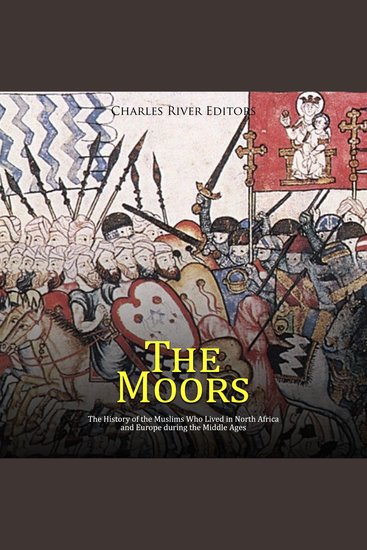
    The term Moor is a historical rather than an ethnic name. It is an invention of European Christians for the Islamic inhabitants of Maghreb (North Africa), Andalusia (Spain), Sicily and Malta, and was sometimes use to designate all Muslims. It is derived from Mauri, the Latin name for the Berbers who lived in the Roman province of Mauretania, which ranged across modern Algeria and Morocco. Saracen was another European term used to designate Muslims, though it usually referred to the Arabic peoples of the Middle East and derives from an ancient name for the Arabs, Sarakenoi. The Muslims of those regions no more refer to themselves by that term than those of North Africa call themselves Moors. Maghreb, or al-Maghreb, is a historical term used by Arabic Muslims for the territory of coastal North Africa from Alexandria to the Atlantic Coast. It means “The West” and is used in opposition to Mashrek, “The East,” used to refer to the lands of Islam in the Middle East and north-eastern Africa. The Berbers refer to the region in their own language as Tamazgha. In a limited, precise sense it can also refer to the Kingdom of Morocco, the proper name of which is al-Mamlakah al-Maghribiyyah, “Kingdom of the West.” 
    The history of the Spanish Peninsula is closely bound to that of the Moors. The term “Spain” was not in wide use until the region was united by the monarchs of Aragon and Castile, and the Moors called the lands they ruled in the Iberian Peninsula Al-Andalus, traditionally thought to be an Arabic transliteration of Vandal, the Germanic tribe which briefly ruled the region in the early fifth century. The English name Andalusia derives from the Spanish Andalucia, which is still used by Spain to name its southern region. Not surprisingly, three religions attempting to coexist during medieval times resulted in nearly incessant conflicts.
    Ver libro