Join us on a literary world trip!
Add this book to bookshelf
Grey
Write a new comment Default profile 50px
Grey
Subscribe to read the full book or read the first pages for free!
All characters reduced
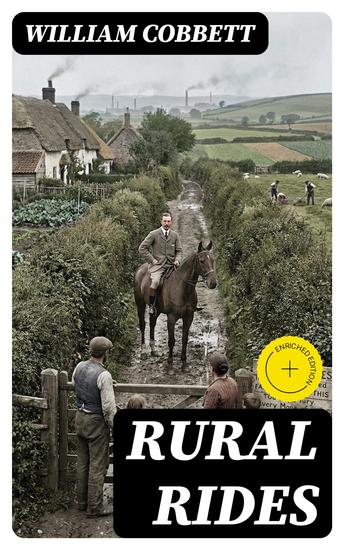
Rural Rides - Enriched edition - cover

Rural Rides - Enriched edition

William Cobbett

Publisher: DigiCat

  • 0
  • 0
  • 0

Summary

In "Rural Rides," William Cobbett employs a rich, descriptive, and conversational style to chronicle his travels through the English countryside in the early 19th century. The work is not merely a travelogue; it is a profound exploration of rural life, social conditions, and the agrarian economy during a time of significant change. Cobbett's acute observations in his encounters with local inhabitants vividly capture the complexities of village life while critiquing the socio-political landscape, highlighting issues such as land ownership and the impact of industrialization on agrarian communities. William Cobbett was an influential journalist, political reformer, and staunch advocate for the rural working class, motivated by his own experiences as a farmer and a participant in the struggles of the common man. Born in 1763, his passionate belief in the virtues of agrarianism and his disdain for urbanization shaped his writings. "Rural Rides" was penned during a tumultuous period in England, a time when the Industrial Revolution threatened traditional farming livelihoods, and Cobbett's work reflects his commitment to preserving rural culture and advocating for the rights of the agrarian populace. This book is a must-read for anyone interested in the historical context of rural life in England, the intricacies of political reform, and the art of eloquent prose. Cobbett's keen insights and vivid descriptions make "Rural Rides" not only an informative text but also a delightful literary journey into the heart of 19th century England. Whether you are a scholar of social history or a lover of literature, Cobbett's reflections will resonate deeply with readers today.

In this enriched edition, we have carefully created added value for your reading experience:
- A comprehensive Introduction outlines these selected works' unifying features, themes, or stylistic evolutions.
- A Historical Context section situates the works in their broader era—social currents, cultural trends, and key events that underpin their creation.
- A concise Synopsis (Selection) offers an accessible overview of the included texts, helping readers navigate plotlines and main ideas without revealing critical twists.
- A unified Analysis examines recurring motifs and stylistic hallmarks across the collection, tying the stories together while spotlighting the different work's strengths.
- Reflection questions inspire deeper contemplation of the author's overarching message, inviting readers to draw connections among different texts and relate them to modern contexts.
- Lastly, our hand‐picked Memorable Quotes distill pivotal lines and turning points, serving as touchstones for the collection's central themes.
Available since: 08/01/2022.
Print length: 634 pages.

Other books that might interest you

  • Pictures from Italy - cover

    Pictures from Italy

    Charles Dickens

    • 0
    • 0
    • 0
    'It is a place that 'grows upon you' every day. There seems to be always something to find out in it.'
    
    Written in 1846, Pictures from Italy remains one of Dickens's most dazzling travelogues, chronicling his time through some of the most beautiful corners of Italy.
    
    Blending luscious vivid imagery, social commentary and compelling personal narrative, Dickens recounts his time in Rome, Venice, Florence, Naples and more. An avid admirer of the country's architecture, art and landscapes, and fascinated by its history, Dickens also offers profound meditations on Italy's social and political struggles. A unique insight into nineteenth-century Italian culture, Pictures from Italy elegantly explores the complex relationship between the country's people, heritage and political unrest. This audiobook is skilfully read by Jonathan Keeble.
    Charles Dickens (1812 – 1870) was an English writer and social critic. He is regarded by many as the greatest novelist of the Victorian era. His works enjoyed unprecedented popularity during his lifetime and, by the twentieth century, critics and scholars had recognized him as a literary genius. His novels and short stories are widely read, performed and adapted today.
    Show book
  • Kamakura Shogunate - Samurai Power and the Mongol Invasions - cover

    Kamakura Shogunate - Samurai...

    Rolf Hedger

    • 0
    • 0
    • 0
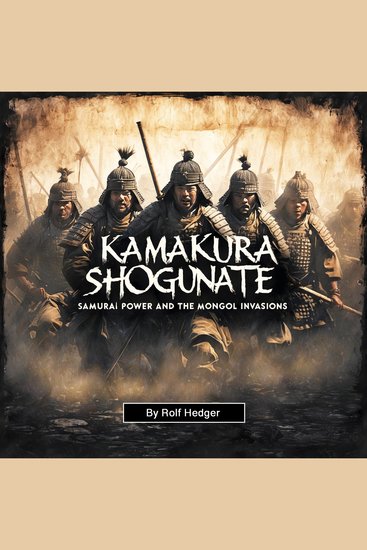
    The rise of the Kamakura Shogunate marks a pivotal moment in Japanese history, transitioning from the aristocratic Heian period to the feudal system dominated by the samurai. This era began with the victory of Minamoto no Yoritomo, who, after the Genpei War (1180-1185), established a new form of governance centered in Kamakura, a small coastal town far from the imperial capital of Kyoto. 
    The Genpei War was a civil conflict between the Taira and Minamoto clans, which ultimately ended with the defeat of the Taira in the Battle of Dan-no-ura in 1185. Minamoto no Yoritomo, the leader of the Minamoto clan, emerged as the victor, but his triumph was not simply a personal or clan-based success. Yoritomo's victory laid the foundation for a shift in the political landscape of Japan. The Taira had represented the old courtly aristocracy that governed Japan through the imperial system, but the rise of the Minamoto signaled the beginning of samurai dominance and a move toward military rule. 
    In 1192, Yoritomo was granted the title of shogun by the emperor, an act that formalized his military authority. This title, meaning "generalissimo" or "commander of the army," was traditionally given to military leaders in times of war but had never been used as the primary governing title before. This marked the official beginning of the Kamakura Shogunate, a military dictatorship that would rule Japan for over a century. Though the emperor remained the nominal ruler, Yoritomo’s power was based in Kamakura, far from the imperial court, which shifted the balance of power from the capital to the military elite.
    Show book
  • Economic Crises in Argentina - A Historical Perspective - cover

    Economic Crises in Argentina - A...

    Anya Solace

    • 0
    • 0
    • 0
    Argentina's economic history is a complex and dynamic narrative marked by periods of growth, instability, and deep financial crises. Understanding the evolution of Argentina’s economy requires an examination of its historical context, social dynamics, and key events that have shaped its economic trajectory. From its colonial beginnings to its role in the global economy today, Argentina's economy has been influenced by various internal and external factors, ranging from agricultural production and international trade to political movements and international debt. 
    At the time of its independence in 1816, Argentina had a relatively underdeveloped economy, largely reliant on agriculture, particularly the production of beef and grain. The country’s early economic struggles were compounded by frequent political instability and power struggles, which hindered the development of a cohesive economic strategy. The 19th century witnessed Argentina's agricultural sector become a central pillar of its economy, with exports to Europe fueling growth. However, the country faced several economic setbacks, including trade imbalances, debt accumulation, and conflicts over territorial disputes. 
    The 20th century brought about significant shifts in Argentina’s economic landscape. The country experienced a wave of industrialization, which was supported by government policies aimed at reducing dependency on foreign markets. However, despite periods of prosperity, Argentina’s economy remained vulnerable to global economic trends and the volatility of international trade. The early decades of the 20th century saw periods of rapid growth alongside recurring recessions, and in the mid-1900s, Argentina began experiencing the first of many major economic crises.
    Show book
  • Turkey Travel Guide - Captivating Adventures through Rich History Turkish Delights Turkish Landmarks Hidden Gems and More - cover

    Turkey Travel Guide -...

    Captivating Travels

    • 0
    • 0
    • 0
    Unlock the Wonders of Turkey with Maps, Easy-to-follow QR Codes, and over 90 Images
    
    Embark on an extraordinary journey through Turkey, a country where the echoes of ancient empires resonate alongside the pulse of modern life. This comprehensive travel guide is your passport to exploring a land rich in history, natural beauty, and cultural experiences.
    
    From the iconic minarets of Istanbul, where East truly meets West, to the otherworldly "fairy chimneys" of Cappadocia, and the sun-drenched beaches of the Mediterranean, Turkey promises an adventure unlike any other.
    
    This meticulously crafted book goes beyond the surface, offering deep insights into each unique region.
    
    Here's just a fraction of what you can expect inside: 
    
    - Discover the archaeological marvels of the Aegean Coast, including the legendary city of Ephesus. 
    - Delve into the spiritual heart of Central Anatolia, home to the Whirling Dervishes and the stunning Pamukkale. 
    - Venture to the untamed beauty and deep history of Eastern and Southeastern Anatolia. 
    - Explore the lush landscapes and unique culture of the Black Sea region. 
    - And much, much more! 
     
    
    Whether you dream of soaring above Cappadocia in a hot air balloon, wandering through ancient cities, bargaining in historic bazaars, or simply relaxing by the turquoise sea, this guide is your trusted companion. Experience the warmth of Turkish hospitality and create unforgettable memories.
    
    Your ultimate Turkish adventure begins here! Click Add to Cart. 
     
    Show book
  • Rome Travel Guide: The Perfect Travel Guide for an Unforgettable Stay in Rome: Including Insider Tips and Money-Saving Advice - cover

    Rome Travel Guide: The Perfect...

    Roman Hünsche

    • 0
    • 0
    • 0
    Rome. What do you associate with this city? - Do you think Rome is the Eternal City? The city that you feel has always been there? The city that fascinated and accompanied you in your Latin lessons?Is Rome for you the city where the ancient Romans strolled across the Roman Forum and gladiators fought fierce battles in the Colosseum? Would you like to get to know the city where the great emperors such as Caesar or Augustus ruled and do you dream of one day walking in the footsteps of Romulus and Remus, the founding fathers of Rome?Or do you think: Rome? - That's the Holy City, where the Pope resides and which has long attracted and enthralled pilgrims, so that you always feel like you're missing out on something 'divine' and 'healing' if you've never been there?Thomas Mann once said: 'See Venice and die'. But let's be honest, wouldn't he have been much better off saying: 'See Rome and die'? Because there's something about this city that you never forget once you've been there.
    Show book
  • Benin Empire - Art Warfare and the Kingdom of Bronze - cover

    Benin Empire - Art Warfare and...

    Rolf Hedger

    • 0
    • 0
    • 0
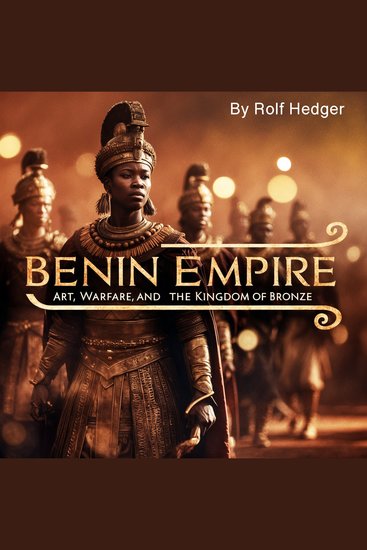
    The Benin Empire, one of the most powerful and influential kingdoms in West Africa, flourished for over 1,000 years. Its capital, Benin City, located in present-day southern Nigeria, was an epicenter of art, culture, and political power. The empire’s historical significance extends beyond its impressive architectural feats, remarkable artistry, and military prowess, as it was also a hub of trade and diplomacy. 
    The origins of the Benin Empire can be traced back to the early 11th century, with a history deeply intertwined with the Kingdom of Ife, from which the Benin people are believed to have descended. The development of the kingdom was largely shaped by its early rulers, the Obas, whose leadership and vision helped lay the foundation for the Benin Empire. The Benin monarchy, a vital institution in the kingdom, solidified the rule of the Obas and their divine connection to the people. 
    At its peak, the Benin Empire extended its influence over a vast region in West Africa, establishing a complex political and social structure. The monarchy not only commanded political and military power but also served as a central force in religious and cultural life. The empire was renowned for its rich heritage in art, including the world-famous Benin Bronzes, which showcased the advanced craftsmanship and symbolic significance of Benin artisans. These bronzes, intricate sculptures, and plaques, which depicted scenes of royalty, warriors, and historical events, remain symbols of the empire’s grandeur.
    Show book