¡Acompáñanos a viajar por el mundo de los libros!
Añadir este libro a la estantería
Grey
Escribe un nuevo comentario Default profile 50px
Grey
Suscríbete para leer el libro completo o lee las primeras páginas gratis.
All characters reduced
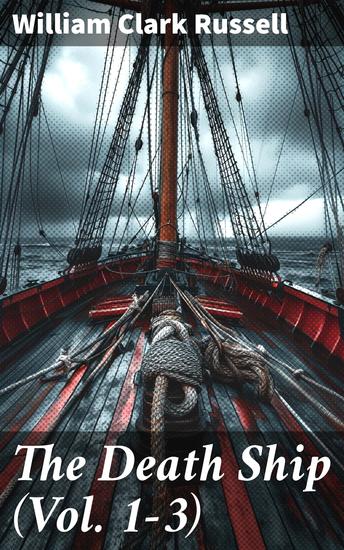
The Death Ship (Vol 1-3) - A Strange Story (Sea Adventure Novel) - cover

The Death Ship (Vol 1-3) - A Strange Story (Sea Adventure Novel)

William Clark Russell

Editorial: Good Press

  • 0
  • 0
  • 0

Sinopsis

In "The Death Ship," William Clark Russell presents a gripping maritime tale that delves into the perils of the sea and the psychological struggles of those who navigate it. Written in a vivid, descriptive style characteristic of Victorian nautical fiction, the narrative intricately weaves elements of adventure, suspense, and tragedy. Russell's meticulous attention to detail captures the essence of life at sea, while his exploration of themes such as despair, mortality, and the strength of the human spirit contextualizes the book within the broader literary tradition of 19th-century seafaring stories, inviting readers to reflect on the existential challenges faced by mariners. William Clark Russell, a sailor turned author, draws upon his own experiences at sea, having spent years in the British merchant navy. This profound connection to maritime life deeply informs his writing, allowing Russell to convincingly convey the tumultuous emotions and grueling reality of life aboard a ship. His other works further explore similar themes, establishing him as one of the pivotal figures in nautical literature during a period marked by both fascination and apprehension toward the ocean. "The Death Ship" is a must-read for lovers of historical fiction and nautical tales alike. It not only captivates with its dramatic storytelling but also invites readers to ponder the deeper questions of existence rooted in the vastness of the sea. Russell's ability to render the sea both a beautiful and fearsome entity makes this epic tale a compelling addition to any literary collection.
Disponible desde: 18/12/2023.
Longitud de impresión: 384 páginas.

Otros libros que te pueden interesar

  • Account of Some Strange Disturbances in Aungier Street An - Irish author Le Fanu brings us a timeless classic and true example of a haunted house story - cover

    Account of Some Strange...

    Sheridan Le Fanu

    • 0
    • 0
    • 0
    Joseph Thomas Sheridan Le Fanu was born on August 28th, 1814, at 45 Lower Dominick Street, Dublin, into a literary family with Huguenot, Irish and English roots 
     
    The children were tutored but, according to his brother William, the tutor taught them little if anything. Le Fanu was eager to learn and used his father's library to educate himself about the world. He was a creative child and by fifteen had taken to writing poetry. 
     
    Accepted into Trinity College, Dublin to study law he also benefited from the system used in Ireland that he did not have to live in Dublin to attend lectures, but could study at home and take examinations at the university as and when necessary. 
     
    This enabled him to also write and by 1838 Le Fanu's first story The Ghost and the Bonesetter was published in the Dublin University Magazine. Many of the short stories he wrote at the time were to form the basis for his future novels.  Indeed, throughout his career Le Fanu would constantly revise, cannabilise, embellish and re-publish his earlier works to use in his later efforts. 
     
    Between 1838 and 1840 Le Fanu had written and published twelve stories which purported to be the literary remains of an 18th-century Catholic priest called Father Purcell. Set mostly in Ireland they include classic stories of gothic horror, with grim, shadowed castles, as well as supernatural visitations from beyond the grave, together with madness and suicide. One of the themes running through them is a sad nostalgia for the dispossessed Catholic aristocracy of Ireland, whose ruined castles stand in mute salute and testament to this history.  
     
    On 18 December 1844 Le Fanu married Susanna Bennett, the daughter of a leading Dublin barrister. The union would produce four children.  Le Fanu was now stretching his talents across the length of a novel and his first was The Cock and Anchor published in 1845. 
     
    A succession of works followed and his reputation grew as well as his income.  Unfortunately, a decade after his marriage it became an increasing source of difficultly. Susanna was prone to suffer from a range of neurotic symptoms including great anxiety after the deaths of several close relatives, including her father two years before.  
     
    In April 1858 she suffered an "hysterical attack" and died in circumstances that are still unclear. The anguish, profound guilt as well as overwhelming loss were channeled into Le Fanu’s work.  Working only by the light of two candles he would write through the night and burnish his reputation as a major figure of 19th Century supernaturalism. His work challenged the focus on the external source of horror and instead he wrote about it from the perspective of the inward psychological potential to strike fear in the hearts of men.  
     
    A series of books now came forth: Wylder's Hand (1864), Guy Deverell (1865), The Tenants of Malory (1867), The Green Tea (1869), The Haunted Baronet (1870), Mr. Justice Harbottle (1872), The Room in the Dragon Volant (1872) and In a Glass Darkly. (1872). 
     
    But his life was drawing to a close.  Joseph Thomas Sheridan Le Fanu died in Merrion Square in his native Dublin on February 7th, 1873, at the age of 58.  
     
    In this famous story two college students rent rooms in Dublin’s Aungier Street once owned by a brutal hanging judge who seems to still haunt both place and mind…..
    Ver libro
  • The Goophered Grapevine - cover

    The Goophered Grapevine

    Charles W. Chesnutt

    • 0
    • 0
    • 0
    The Goophered Grapevine is the first short story from The Conjure Woman, published in The Atlantic in August 1887, told to the narrator by Julius McAdoo, a former enslaved man who lives on the plantation that the narrator, John, and his wife, Annie, visit one day. Set in Patesville, North Carolina, John and Annie moved there for an improvement in his wife's health and to seek other business opportunities. Knowing that the couple wanted to purchase the property, McAdoo advises them not to do so, informing them that when Dugal McAdoo, the previous master, purchased the property, it was very rich in wine production because of its vineyards. To protect his grapes from being stolen, Master McAdoo consulted with a conjure woman, Aunt Peggy, who placed a curse on the vineyard and warned the slaves that whoever stole them, would die within a year. Henry, a new slave, did not know of the curse, and when he ate the grapes, he was cursed to age when the leaves of the vines withered and once the vines died, so did Henry. Suffering the loss of his slaves and his vineyard, Master McAdoo left the vineyard abandoned after the war to the current state in which the couple found it. McAdoo warns the couple against purchasing the property due to it still being cursed, but the narrator buys the vineyard regardless.
    Ver libro
  • Angèle au Couvent - A young girls search for happiness in art is challenged by her religious commitments and society - cover

    Angèle au Couvent - A young...

    Mary Butts

    • 0
    • 0
    • 0
    Mary Frances Butts was born on 13th December 1890 in Poole, Dorset. 
     
    Her early years were spent at Salterns, an 18th-century house overlooking Poole Harbour.  Sadly in 1905 her father died, and she was sent for boarding at St Leonard's school for girls in St Andrews. 
     
    Her mother remarried and, from 1909, Mary studied at Westfield College in London, and here, first became aware of her bisexual feelings.  She was sent down for organising a trip to Epsom races and only completed her degree in 1914 when she graduated from the London School of Economics.  By then Mary had become an admirer of the occultist Aleister Crowley and she was given a co-authorship credit on his ‘Magick (Book 4)’. 
     
    In 1916, she began the diary which would now detail her future life and be a constant reference point for her observations and her absorbing experiences. 
     
    During World War I, she was doing social work for the London County Council in Hackney Wick, and involved in a lesbian relationship.  Life changed after meeting the modernist poet, John Rodker and they married in 1918. 
     
    In 1921 she spent 3 months at Aleister Crowley's Abbey of Thelema in Sicily; she found the practices dreadful and also acquired a drug habit.  Mary now spent time writing in Dorset, including her celebrated book of short stories ‘Speed the Plough’ which saw fully develop her unique Modernist prose style. 
     
    Europe now beckoned and several years were spent in Paris befriending many artists and writing further extraordinary stories.   
     
    She was continually sought after by literary magazines and also published several short story collections as books. Although a Modernist writer she worked in other genres but is essentially only known for her short stories.  Mary was deeply committed to nature conservation and wrote several pamphlets attacking the growing pollution of the countryside. 
     
    In 1927, she divorced and the following year her novel ‘Armed with Madness’ was published.  A further marriage followed in 1930 and time was spent attempting to settle in London and Newcastle before setting up home on the western tip of Cornwall.  By 1934 the marriage had failed. 
     
    Mary Butts died on 5th March 1937, at the West Cornwall Hospital, Penzance, after an operation for a perforated gastric ulcer. She was 46. 
     
    In ‘Angèle Au Couvent’ Butts takes up the story of a young school girl desperate for friendships but wrestling with her fluid interpretation of religion.
    Ver libro
  • Tales From the Cosmotron Volume 1 - cover

    Tales From the Cosmotron Volume 1

    Scott Reeves

    • 0
    • 0
    • 0
    Introducing Tales From the Cosmotron — an enthralling audiobook series that beckons listeners into a realm of boundless imagination and extraordinary narratives. Each volume in this captivating series unveils a collection of spellbinding science fiction and fantastical short stories, reminiscent of the classic allure of "The Twilight Zone" reimagined through immersive audio experiences. 
    Volume 1 invites listeners to embark on an exhilarating journey through the uncharted expanses of the Cosmotron, where the laws of reality bend and warp with each tale spun. From the depths of space to the corridors of the mind, these stories delve into the enigmatic and the extraordinary, exploring themes of mystery, wonder, and the unknown. 
    Tales From the Cosmotron promises to captivate audiences with its blend of otherworldly intrigue and timeless storytelling. Whether you're a seasoned aficionado of science fiction or a curious traveler seeking adventure, prepare to lose yourself in the boundless expanse of the Cosmotron, where every tale is a doorway to infinite possibility.
    Ver libro
  • The Hunger - cover

    The Hunger

    A.D. Starrling

    • 0
    • 0
    • 0
    Discover the origin of the love story behind Empire.  
    1695. Spanish Netherlands.  
    The war between King Louis XIV and the League of Augsberg reaches a pivotal moment at the Siege of Namur.  
    When the besieged French army starts to mount an increasingly fierce resistance, Bastian immortal Conrad Greene and his company of elite intelligence operatives are sent to Liège to track down the traitor supplying the enemy with stocks of a new, powerful gunpowder.  
    Frustrated at every turn, an unexpected visit from Conrad’s superior results in a surprising addition to his team. Can the captain resist his all-consuming attraction for immortal Laura Hartwell long enough to solve the mystery of the gunpowder plot?  
    The Hunger is a short story set in the riveting world of A.D. Starrling’s award-winning supernatural thriller series Seventeen.
    Ver libro
  • 3 Stories - Set On Ships - A trio of classic tales perfect for a commute walk or quiet night in - cover

    3 Stories - Set On Ships - A...

    Arthur Conan Doyle, Ambrose...

    • 0
    • 0
    • 0
    There is something about the number 3.    
     
    The Ancient Greeks believed 3 was the perfect number, and in China 3 has always been a lucky number, and they know a thing or two.   
     
    Most religions also have 3 this and 3 that and, of course, in these more modern times, three’s a crowd may be too many, except when it’s a ménage à trois.  It seems good things usually come in threes. 
     
    Whatever history and culture says WE think 3, a hat-trick of stories, is a great number to explore themes and literary avenues that classic authors were so adept at creating. 
     
    From their pens to your your ears.
    Ver libro