Join us on a literary world trip!
Add this book to bookshelf
Grey
Write a new comment Default profile 50px
Grey
Subscribe to read the full book or read the first pages for free!
All characters reduced
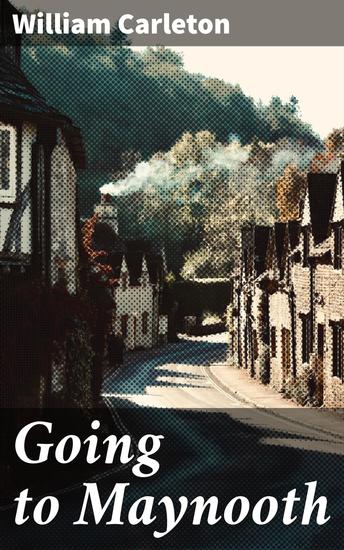
Going to Maynooth - A Tale of Faith Education and Prejudice in 19th Century Ireland - cover

Going to Maynooth - A Tale of Faith Education and Prejudice in 19th Century Ireland

William Carleton

Publisher: Good Press

  • 0
  • 0
  • 0

Summary

In "Going to Maynooth," William Carleton crafts a richly woven narrative that explores the intricate tapestry of Irish rural life in the 19th century. Through a blend of humor and poignant social commentary, Carleton offers readers a keen insight into the struggles and aspirations of the Irish peasantry. The novel is characterized by its vivid descriptions and authentic dialects, reflecting the author's commitment to capturing the essence of Irish culture during a tumultuous period marked by the tensions of nationalism and religious identity, particularly in the context of the Maynooth seminary debates. William Carleton, born into a peasant family in County Tyrone, drew from his own experiences and observations of rural existence, which deeply informed his writing. His background steeped in the challenges and triumphs of Irish life, coupled with his personal encounters with clergy and educational institutions, profoundly influenced his portrayal of social issues, particularly the role of education in shaping individual and community destinies. Carleton's works were often steeped in the complex interplay of sectarianism and local traditions, positioning him as a pivotal figure in Irish literature. "Going to Maynooth" is an essential read for those interested in the intersection of education, religion, and social dynamics in Ireland. It offers both historical insight and relatable themes of ambition and identity, making it a compelling choice for readers seeking to understand the nuances of Irish literature and the cultural landscape of the time.
Available since: 08/12/2023.
Print length: 124 pages.

Other books that might interest you

  • A Rare Recording of William Butler Yeats Reading His Poetry - cover

    A Rare Recording of William...

    William Butler Yeats

    • 0
    • 0
    • 0
    The following are the live recordings of William Butler Yeats reading and discussing the inspiration behind three of his most famous poems, "The Lake Island of Innisfree," "The Fiddler of Dooney," and "Song of the Old Mother." Yeats made these three recordings in 1932, 1934, and on October 28, 1937 when he was 72. 
     
    "The Lake Island of Innisfree" is a twelve-line poem comprising three quatrains, written in 1888 and first published in the National Observer in 1890. The poem is featured in Irish passports. "The Fiddler of Dooney" was first published in 1892. The word "Dooney" refers to Dooney Rock, a small hill overlooking Lough Gill near Sligo. The central theme of poem is the celebration of life and the joy that comes from living it to the fullest. "Song of the Old Mother" first appeared in The Wind Among the Reeds anthology, published in 1899. Written in first person, the poem echoes Yeats' fascination with the Irish peasantry, explaining the difficult chores and struggles of an aged, unfortunate woman.
    Show book
  • He - Understanding Masculine Psychology - cover

    He - Understanding Masculine...

    Robert A. Johnson

    • 0
    • 0
    • 0
    Robert A. Johnson's classic work exploring the differences between man and woman, female and male—newly reissued. 


    What does it really mean to be a man? What are some of the landmarks along the road to mature masculinity? And what of the feminine components of a man's personality? 


    Women have developed, over the centuries, considerable expertise in the technique of adapting to men, and for good reason, but that is not the same as truly understanding them. The transition from male childhood to real manhood is a complicated struggle, and explored in this book. 


    As timely today as when it was first published, He provides a fascinating look into male identity and how female dynamics influence men.
    Show book
  • The Lost Southern Chefs - A History of Commercial Dining in the Nineteenth-Century South - cover

    The Lost Southern Chefs - A...

    Robert F. Moss

    • 0
    • 0
    • 0
    In recent years, food writers and historians have begun to retell the story of southern food. Heirloom ingredients and traditional recipes have been rediscovered, the foundational role that African Americans played in the evolution of southern cuisine is coming to be recognized, and writers are finally clearing away the cobwebs of romantic myth that have long distorted the picture. The story of southern dining, however, remains incomplete. 


    The Lost Southern Chefs begins to fill that niche by charting the evolution of commercial dining in the nineteenth-century South. Robert F. Moss punctures long-accepted notions that dining outside the home was universally poor, arguing that what we would today call "fine dining" flourished throughout the region as its towns and cities grew. 


    Most important, Moss tells the forgotten stories of the people who drove this culinary revolution. These men and women fully embodied the title "chef," directing large staffs, staging elaborate events for hundreds of guests, and establishing supply chains for the very best ingredients from across the expanding nation. These chefs and entrepreneurs became embroiled in the pitched political battles of Reconstruction and Jim Crow, and then their names were all but erased from history.
    Show book
  • New Zealand Wars The: The History and Legacy of the British Empire’s Conflicts with the Indigenous Māori - cover

    New Zealand Wars The: The...

    Editors Charles River

    • 0
    • 0
    • 0
    In 1769, Captain James Cook’s historic expedition in the region would lead to an English claim on Australia, but before he reached Australia, he sailed near New Zealand and spent weeks mapping part of New Zealand’s coast. Thus, he was also one of the first to observe and take note of the indigenous peoples of the two islands. His instructions from the Admiralty were to endeavor at all costs to cultivate friendly relations with tribes and peoples he might encounter, and to regard any native people as the natural and legal possessors of any land they were found to occupy. Cook, of course, was not engaged on an expedition of colonization, so when he encountered for the first time a war party of Māori, he certainly had no intention of challenging their overlordship of Aotearoa, although he certainly was interested in discovering more about them. 
    Taking into account similarities of appearance, customs and languages spread across a vast region of scattered islands, it was obvious that the Polynesian race emerged from a single origin, and that origin Cook speculated was somewhere in the Malay Peninsula or the “East Indies.” In this regard, he was not too far from the truth. The origins of the Polynesian race have been fiercely debated since then, and it was only relatively recently, through genetic and linguistic research, that it can now be stated with certainty that the Polynesian race originated on the Chinese mainland and the islands of Taiwan, the Philippines, Malaysia and Indonesia. Oceania was, indeed, the last major region of the Earth to be penetrated and settled by people, and Polynesia was the last region of Oceania to be inhabited. The vehicle of this expansion was the outrigger canoe, and aided by tides and wind patterns, a migration along the Malay Archipelago, and across the wide expanses of the South Pacific, began sometime between 3000 and 1000 BCE, reaching the western Polynesian Islands in about 900 BCE.
    Show book
  • A Rare Recording of US Naval Rear Admiral and Computer Pioneer Grace Hopper Volume 1 - cover

    A Rare Recording of US Naval...

    Grace Hopper

    • 0
    • 0
    • 0
    Grace Brewster Hopper (December 9, 1906 to January 1, 1992) was an American computer scientist, mathematician, and United States Navy rear admiral. A pioneer of computer programming, Hopper was the first to devise the theory of machine-independent programming languages and used this theory to develop the FLOW-MATIC programming language and COBOL, an early high-level programming language still in use today. She was also one of the first programmers on the Harvard Mark I computer. She is credited with writing the first computer manual, "A Manual of Operation for the Automatic Sequence Controlled Calculator." The following audio recording is from a 1982 presentation.
    Show book
  • The Mysterious Deaths of Famous Historical Figures - Unsolved Cases Strange Circumstances and Conspiracies from History - cover

    The Mysterious Deaths of Famous...

    Dale Wilson

    • 0
    • 0
    • 0
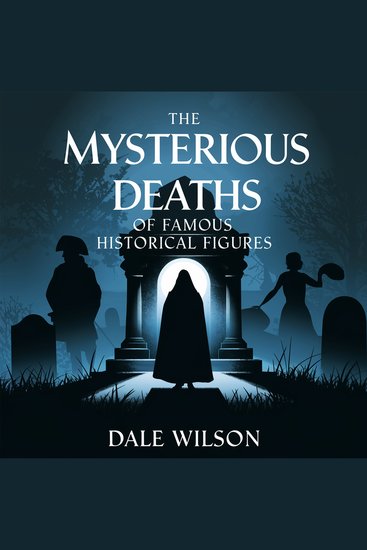
    From emperors to poets, some of history’s most influential figures met their end under strange, suspicious, or unexplained circumstances. Were they victims of foul play, secret assassinations, or just tragic coincidences? 
    This audiobook explores declassified documents, historical accounts, and forensic evidence to uncover the truth behind Napoleon’s poisoning rumors, the bizarre final days of Edgar Allan Poe, the mysterious death of Tutankhamun, and many more. 
    The Mysterious Deaths of Famous Historical Figures is a must-listen for history lovers, conspiracy theorists, and true crime fans who love unraveling history’s greatest puzzles.
    Show book