Join us on a literary world trip!
Add this book to bookshelf
Grey
Write a new comment Default profile 50px
Grey
Subscribe to read the full book or read the first pages for free!
All characters reduced
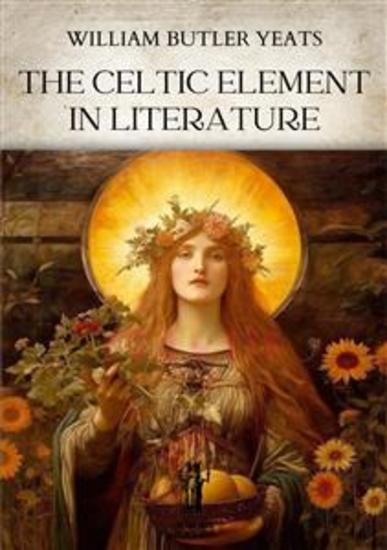
The Celtic Element in Literature - cover

The Celtic Element in Literature

William Butler Yeats

Publisher: Edizioni Aurora Boreale

  • 0
  • 0
  • 0

Summary

William Butler Yeats (1865-1939) was an Irish poet, dramatist, writer and initiate, and one of the foremost figures of 20th-century literature. He was a driving force behind the Irish Literary Revival, and along with Lady Gregory founded the Abbey Theatre, serving as its chief during its early years. He was awarded the 1923 Nobel Prize in Literature, and later served two terms as a Senator of the Irish Free State.
The Yeats’ essay The Celtic Element in Literature, written in 1897, was included in 1903 in the collection of Yeats’ non-fiction works and essays Ideas of Good and Evil, published in London by A.H. Bullen. It is one of the masterpieces of literary criticism by the great Irish author and, at the same time, one of the most important studies on the Celtic roots of a substantial part of European literature. In it Yeats not only demonstrates a profound knowledge of the history of literature, but also manages to read and interpret its most hidden secrets through his profound knowledge of symbols and archetypes, derived from his lifelong membership in the Hermetic Order of the Golden Dawn, a secret society dedicated to the study and practice of occult hermeticism and metaphysics.
Available since: 05/31/2024.

Other books that might interest you

  • The Olive Branch from Palestine - cover

    The Olive Branch from Palestine

    Jerome M. Segal

    • 0
    • 0
    • 0
    The Olive Branch from Palestine provides a new narrative of the Palestinian effort to end the Israeli-Palestinian conflict and offers a bold plan for ending this conflict today, a proposal that focuses on Palestinian agency and the power of the Palestinians to bring about the two-state solution, even in the absence of a fully committed Israeli partner. In part 1, Jerome Segal provides an analytical and historical study of the 1988 Palestinian Declaration of Independence, a remarkable act of unilateral peacemaking through which the PLO accepted the legitimacy of the 1947 Partition Resolution and thereby redefined Palestinian nationalism. In part 2, he proposes a new strategy in which, outside of negotiations, the Palestinians would advance, in full detail, the end-of-claims/end-of-conflict peace plan they are prepared to sign, one that powerfully addresses the Palestinian refugee question and is supported by the refugees themselves yet does not undermine Israel as a Jewish-majority state. Extended Edition with Maps
    Show book
  • Scripting Empire - Broadcasting the BBC and the Black Atlantic - cover

    Scripting Empire - Broadcasting...

    James Procter

    • 0
    • 0
    • 0
    Scripting Empire recovers the literary and cultural history of West Indian and West African writing at the BBC in order to rethink the critical mid-century decades of shrinking British sovereignty, late modernism, and mass migration to the metropole. Between the 1930s and the 1960s, a remarkable group of black Atlantic artists and intellectuals became producers, editors, and freelancers at the corporation. Operating at the interface of a range of literary and broadcast genres, this loose network of African Caribbean writers and thinkers prompt a reassessment of the aesthetic, formal, and political fallout of decolonization between the outbreak of World War II and the first airings of post-colonial independence. 


    Scripting Empire works comparatively across dozens of different programs spanning the General Overseas Service, Home Service, Light Program, and Third Program. Drawing upon a transnational archive of materials, including scripts, correspondence, periodicals, visual records, and sound recordings, it seeks to reposition the cultural contribution of West Indians and West Africans within a more pervasive and porous account of radio transmission, the legacy of which extends well beyond broadcasting.
    Show book
  • Learn Chinese Idioms with Stories: Volume 2 - An Easy Guide with Meaning & Story - cover

    Learn Chinese Idioms with...

    Letitia Wu

    • 0
    • 0
    • 0
    More wisdom. More stories. More Chinese you’ll never forget. 
    Discover the meaning behind 10 powerful Chinese idioms through story and sound. 
    Even if you don’t speak Chinese yet, you can enjoy the journey. 
    Each idiom includes: 
    • A vivid, short story 
    • A clear explanation in simple English 
    • A cultural insight or life lesson 
    • Easy memory tips 
    • And a few example sentences — perfect if you’re ready to try using the idioms yourself! 
    Whether you’re a beginner, advanced learner, or simply curious about Chinese culture, this audiobook helps you: 
    ✔︎ Understand how Chinese people think 
    ✔︎ Learn real expressions, naturally 
    ✔︎ Enjoy meaningful stories, anytime 
    No textbook needed. Just press play.
    Show book
  • Aliens – The Origin of Man - cover

    Aliens – The Origin of Man

    Raphael Terra

    • 0
    • 0
    • 0
    This audiobook has been recorded using Text to speech (TTS). 
     
    Did man rise up from the protoplasmic crud and evolve over millions of years or are his origins from within the world of the X-Files? Was planet Earth visited and populated by an ancient God-like race of super aliens who spawned a new species of servants? Are humans simply the result of biological engineering that we are now just discovering is possible? 
     
    The fact is, these ancient alien astronauts can be shown to have not only spawned mankind as a genetic species, but also to have originated our very religions and belief systems. They are the gods of ancient times. They are the holy warrior heroes in their silver chariots flying across the sky. They wielded mighty weapons of mass destruction. And now, thousands of years later we are rediscovering this truth. 
     
    We have very strong historical evidence that they came. We have thousands of stories in myths and religious texts speaking of aliens visiting Earth, creating mankind, ruling over them for millennia and even mating with them. We even know that a series of great battles ensued between the originators and their offspring. All of this gave rise to our world religions and it is in the sacred texts and historical writings that we shall discover the truth about the aliens that made us. 
     
    These alien astronauts are the very roots of humanity itself.
    Show book
  • Gallus - Scotland England and the 1967 World Cup Final - cover

    Gallus - Scotland England and...

    Michael McEwan

    • 0
    • 0
    • 0
    There are two kinds of people in this world. Those who insist that football is just a game, and those who know better. Take the April 1967 clash between England and Scotland. Wounded by their biggest rivals winning the World Cup just nine months earlier, Bobby Brown's Scots travelled to Wembley on the mother of all missions. Win and they would take a huge step towards qualifying for the 1968 European Championship, end England’s formidable 19-game unbeaten streak, and, best of all, put Sir Alf Ramsey’s men firmly back in their box. Lose? Well, that was just unthinkable.  
    
    Meanwhile, off the pitch, the winds of change were billowing through Scotland. Nationalism, long confined to the margins of British politics, was starting to penetrate the mainstream, gaining both traction and influence. Was England’s World Cup victory a defining moment in the Scottish independence movement? Or did it consign Scotland to successive generations of myopic underachievement?
    
    Michael McEwan, author of The Ghosts of Cathkin Park, returns to 1967 to explore a crucial ninety minutes in the rebirth of a nation.
    Show book
  • Great Expectations - cover

    Great Expectations

    Charles Dickens

    • 0
    • 0
    • 0
    In this unflaggingly suspenseful story of aspirations and moral redemption, humble, orphaned Pip, a ward of his short-tempered older sister and her husband, Joe, is apprenticed to the dirty work of the forge but dares to dream of becoming a gentleman. And, indeed, it seems as though that dream is destined to come to pass — because one day, under sudden and enigmatic circumstances, he finds himself in possession of "great expectations." In telling Pip's story, Dickens traces a boy's path from a hardscrabble rural life to the teeming streets of 19th-century London, unfolding a gripping tale of crime and guilt, revenge and reward, and love and loss. Its compelling characters include Magwitch, the fearful and fearsome convict; Estella, whose beauty is excelled only by her haughtiness; and the embittered Miss Havisham, an eccentric jilted bride. 
    Great Expectations, written in Dickens' final decade of life, received widespread acclaim and worldwide admiration. It was his final great novel, and many critics consider it to be his best. Readers and critics alike commended it for its excellent plot, which rises above the melodrama of some of his earlier works, as well as its three-dimensional, psychologically realistic characters, which are far deeper and more engaging than the one-note caricatures of earlier novels. "In none of his other works," noted the reviewer in the 1861 Atlantic, "does he evince a shrewder insight into real life, and a cheaper perception and knowledge of what is called the world." 
     Swinburne thought the novel was the best in all of English fiction, with flaws "as nearly imperceptible as spots on the sun or shadows on a sunlit sea." Shaw considered it Dickens' "most completely perfect book." This low-cost edition encourages current readers to experience Dickens' timeless masterwork, which is brimming with colorful characters, unexpected narrative twists, and Dickens' vivid depiction of mid-Victorian England.
    Show book