Join us on a literary world trip!
Add this book to bookshelf
Grey
Write a new comment Default profile 50px
Grey
Subscribe to read the full book or read the first pages for free!
All characters reduced
History of the Mayflower Voyage and the Destiny of Its Passengers - cover

History of the Mayflower Voyage and the Destiny of Its Passengers

William Bradford, Azel Ames, Achievement Bureau of Military and Civic

Publisher: e-artnow

  • 0
  • 0
  • 0

Summary

The Mayflower was an English ship that transported the first English Puritans, known today as the Pilgrims, from Plymouth, England to the New World in 1620. There were 102 passengers. The culmination of the voyage in the signing of the Mayflower Compact was an event which established a rudimentary form of democracy, with each member contributing to the welfare of the community. Contents:  The Mayflower Ship's Log  The Name — "Mayflower"  The Mayflower's Charter and the Adventurers  The Officers and Crew of the Mayflower  The Mayflower's Passengers  History of Plymouth Plantation  Mayflower Descendants and Their Marriages for Two Generations After the Landing  Ye Compacte Signed in Ye Cabin of Ye Mayflower Ye 11 of November Anno Dominie 1620  A Short History of the Church of the Pilgrim Founders of New England  The Mayflower Passengers Their Children and Grandchildren  About the Mayflower  Mayflower Structure and Layout  Early History  Voyage  Later History  Second Mayflower  Place in History …
Available since: 12/14/2023.
Print length: 776 pages.

Other books that might interest you

  • Ballers of the New School - Race and Sports in America - cover

    Ballers of the New School - Race...

    Thabiti Lewis

    • 0
    • 0
    • 0
    Ballers of the New School is one of the first and best books to come along that effectively explains contemporary athletes and the public response to them.  It asks readers to consider the role of race in the sweaty as well as the sweat-free zones of sport. It challenges the well-worn narrative of sport as America's most significant site of racial progress by scrutinizing the true role of sport in mobilizing and shaping definitions, social relations, and public life.American sport culture performs and propagates rituals, symbols, and expressions of fear and difference that sustain racism, and notions of racial supremacy and block bridges to racial progress.  
     The text encourages a restructuring of the power of the racial subtexts thrust into sporting arenas, upon the bodies of athletes of color, and into the mind and hearts of spectators via the racial contract.  The book's impetus is for readers to emerge with more truthful narratives, more honest dialogues, better American values, better social relations, and hopefully, using this new vision of sports culture as a model, real change.
    Show book
  • The Magical Path In The Musical Forest - Come Join Our Musical Journey - cover

    The Magical Path In The Musical...

    Julie Kirchhubel

    • 0
    • 0
    • 0
    The Magical Path In the Musical ForestWhat happens when three children find themselves in a forest on their way to the Big Concert – and why are thereso many sounds coming from the surrounding trees? Be prepared for a fun series of adventures along the way asmusical instruments are brought to life. Enjoy the humour and wait for the special surprise at the end!
    Show book
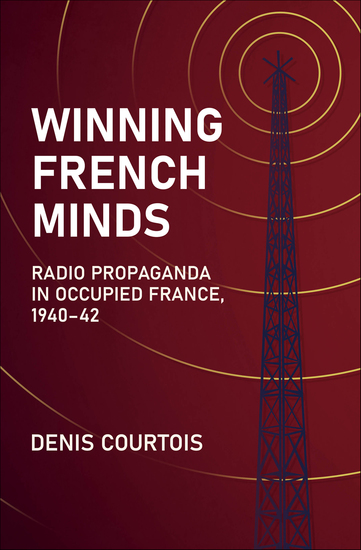
  • Winning French Minds - Radio Propaganda in Occupied France 1940–42 - cover

    Winning French Minds - Radio...

    Denis Courtois

    • 0
    • 0
    • 0
    "...every chapter of Winning French Minds delivered something new, not only because French language radio being a less-frequented area of study, but also due to the author's ability to tie these radio efforts to events surrounding the French people and events unfolding on the European geopolitical stage." — World War II DatabaseWorld War II was very much a war of the radios. A relatively new technology, radio as a tool was exploited by all of the participants of the war to win the hearts and minds of the people and to steer public opinion.  The period 1940 to 1942 was the most volatile of the war, with the Nazis capturing large parts of western Europe and dominating on the Eastern front. At this time France was separated into two nominally independent zones, and public opinion could easily have been swayed in favor of the New German Order. This could have had potentially disastrous consequences for any future Allied attempt to liberate Europe, and so the battle for French minds was launched using the new technology of radio.  This narrative of that campaign develops chronologically through a series of topics including major military incidents, youth, food, family, psychological warfare, sports and work, as presented by different radio stations – in particular Radiodiffusion, controlled by Vichy France; Radio Paris, controlled by the Nazis; and the BBC – offering a systematic comparative analysis of radio propaganda messages and building a vivid picture of the evolution of broadcasts in the context of the complex political and social impact of the war on the French population.  Using original primary sources from archives in Britain and France, broadcast recordings, radio magazines, and interviews conducted by British Intelligence with those arriving from France during the war, this is a fascinating and unique insight into wartime radio propaganda from 1940 to 1942.
    Show book
  • Driving to Treblinka - cover

    Driving to Treblinka

    Diana Wichtel

    • 0
    • 0
    • 0
    As a young child Diana Wichtel lives in Vancouver, Canada. Her mother is a Catholic New Zealander, her father a Polish Jew who miraculously survived the Holocaust by jumping through the window of a train bound for the Treblinka death camp. When Diana' s thirteen, her life changes dramatically: her mother whisks her and her two siblings to New Zealand to live. Their father is to follow. She never sees him again. Many years later she sets out to discover what happened to him. The search becomes an obsession as she painstakingly uncovers information about his large Warsaw family and their fate at the hands of the Nazis, scours archives across the world for clues to her father' s disappearance, and visits the places he lived. This unforgettable narrative is also a deep reflection on the meaning of family, the trauma of loss, and the insistence of memory. It asks the question: Is it better to know, or more bearable not to?
    Show book
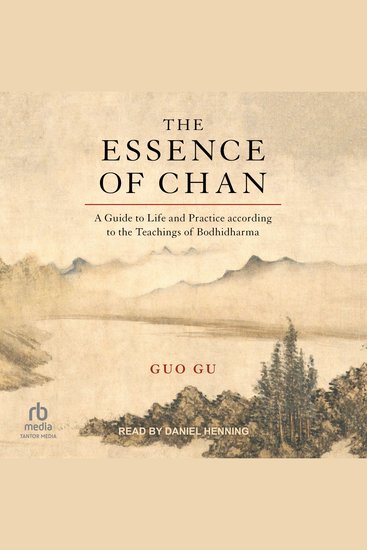
  • The Essence of Chan - A Guide to Life and Practice according to the Teachings of Bodhidharma - cover

    The Essence of Chan - A Guide to...

    Guo Gu

    • 0
    • 0
    • 0
    Clear and illuminating commentary on one of Bodhidharma's most important texts—designed to help Chan practitioners apply timeless and essential advice to their practice 


    Legend has it that more than a thousand years ago an Indian Buddhist monk named Bodhidharma arrived in China. His approach to teaching was unlike that of any of the Buddhist missionaries who had come to China before him. He confounded the emperor with cryptic dialogues, traveled the country, lived in a cave in the mountains, and eventually paved the way for a unique and illuminating approach to Buddhist teachings that would later spread across the whole of East Asia in the form of Chan—later to be known as Seon in Korean, Thien in Vietnamese, and Zen in Japanese. 


    This book, a translation and commentary on one of Bodhidharma's most important texts, explores Bodhidharma's revolutionary teachings in English. Guo Gu weaves his commentary through modern and relatable contexts, showing that this centuries-old wisdom is just as crucial for life now as it was when it first came to be. Masterfully translated and accompanied by helpful insights to supplement daily practice, The Essence of Chan is the perfect guide for those new to Chan, those returning, or those who have been practicing for years.
    Show book
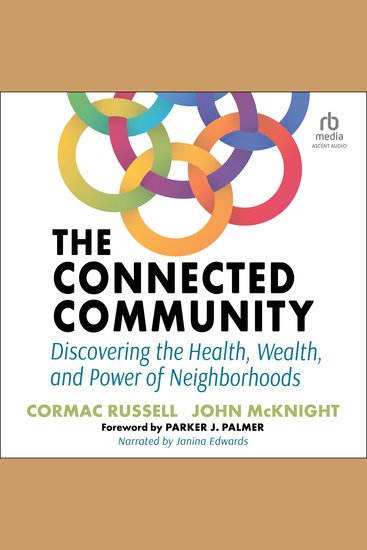
  • The Connected Community - Discovering the Health Wealth and Power of Neighborhoods - cover

    The Connected Community -...

    Cormac Russell, John McKnight,...

    • 0
    • 0
    • 0
    Find out how to uncover the hidden talents, assets, and abilities in your neighborhood and bring them together to create a vibrant and joyful community. It takes a village! 
     
    We may be living longer, but people are more socially isolated than ever before. As a result, we are hindered both mentally and physically, and many of us are looking for something concrete we can do to address problems like poverty, racism, and climate change. What if solutions could be found on your very doorstep or just two door knocks away? 
     
    Cormac Russell is a veteran practitioner of asset-based community development (ABCD), which focuses on uncovering and leveraging the hidden resources, skills, and experience in our neighborhoods. He and John McKnight, the cooriginator of ABCD, show how anyone can discover this untapped potential and connect with his or her neighbors to create healthier, safer, greener, more prosperous, and welcoming communities. They offer a wealth of illustrative examples from around the world that will inspire you to explore your own community and discover its hidden treasures. 
     
    You will learn to take action on what you already deeply know-that neighborliness is not just a nice-to-have personal characteristic but essential to living a fruitful life and a powerful amplifier of community change and renewal.
    Show book