Join us on a literary world trip!
Add this book to bookshelf
Grey
Write a new comment Default profile 50px
Grey
Subscribe to read the full book or read the first pages for free!
All characters reduced
My Antonia - cover

My Antonia

Willa Cather

Publisher: Bu Classics Books

  • 0
  • 0
  • 0

Summary

Return to the sweeping prairies of Nebraska in a nostalgic memoir of childhood and the immigrant experience on the American frontier. The narrator recalls his bond with a Bohemian girl who becomes the symbol of the land’s fertility, strength, and indomitable spirit. Through evocative descriptions of the changing seasons and the hardships of pioneer life, the novel paints a picture of resilience that is both personal and mythic. It is a deeply moving classic that captures the bittersweet nature of memory and the roots that bind us to a place.
Available since: 01/29/2026.
Print length: 319 pages.

Other books that might interest you

  • Emma (Volume 2) - cover

    Emma (Volume 2)

    Jane Austen

    • 0
    • 0
    • 0
    Emma (Volume 2), by Jane Austen, is a novel about youthful hubris and the perils of misconstrued romance. The story takes place in the fictional village of Highbury and the surrounding estates of Hartfield, Randalls, and Donwell Abbey and involves the relationships among individuals in those locations consisting of "3 or 4 families in a country village".
    Show book
  • A Journey to the Center of the Earth - cover

    A Journey to the Center of the...

    Jules Verne

    • 0
    • 0
    • 0
    Embark on an extraordinary expedition in this timeless science fiction masterpiece by Jules Verne. A Journey to the Center of the Earth takes you deep below the Earth's surface on a thrilling adventure filled with wonder, danger, and discovery. 
    Follow Professor Lidenbrock, his nephew Axel, and their intrepid guide, Hans, as they navigate mysterious caverns, encounter prehistoric creatures, and uncover ancient secrets hidden beneath the Earth's crust. With vivid descriptions and relentless excitement, this audiobook brings Verne's visionary imagination to life, offering a story that will captivate listeners of all ages. 
    Perfect for fans of exploration, science, and daring escapades, A Journey to the Center of the Earth is a voyage you won't soon forget.
    Show book
  • Jack and Jill - cover

    Jack and Jill

    Louisa May Alcott

    • 0
    • 0
    • 0
    Jack Minot and Janey Pecq are best friends who live next door to each other. They are always seen together, so Janey gets the nickname of Jill, to mimic the old rhyme. The two do go up a hill one winter day— and then suffer a terrible accident. Seriously injured in a sledding accident, they recover from their physical injuries, while learning life lessons along with their many friends. They are helped along their journey to recovery by various activities created by their mothers.
    Show book
  • The Mysterious Stranger - cover

    The Mysterious Stranger

    Mark Twain

    • 0
    • 0
    • 0
    The Mysterious Stranger was published posthumously in 1916. At the time of writing, Twain had suffered a series of physical, economic, and emotional losses.
    
    In this chilling tale, a stranger named Satan visits an old Austrian town to convince the religious faithful that there is no God, and "nothing exists; all is a dream."
    Show book
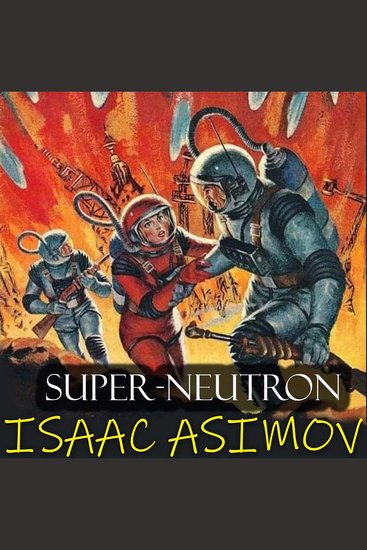
  • Super-Neutron - cover

    Super-Neutron

    Isaac Asimov

    • 0
    • 0
    • 0
    "Super-Neutron" is a science fiction short story by American writer Isaac Asimov, originally published in the September 1941 issue of Astonishing Stories, and included in the 1972 collection The Early Asimov.
    Show book
  • Candide - cover

    Candide

    Voltaire

    • 0
    • 0
    • 0
    Candide is characterised by its sarcastic tone, as well as by its erratic, fantastical and fast-moving plot. A picaresque novel with a story similar to that of a more serious bildungsroman, it parodies many adventure and romance clichés, the struggles of which are caricatured in a tone that is mordantly matter-of-fact. Still, the events discussed are often based on historical happenings, such as the Seven Years' War and the 1755 Lisbon earthquake. As philosophers of Voltaire's day contended with the problem of evil, so too does Candide in this short novel, albeit more directly and humorously.    Voltaire ridicules religion, theologians, governments, armies, philosophies, and philosophers through allegory; most conspicuously, he assaults Leibniz and his optimism. Voltaire's men and women point his case against optimism by starting high and falling low. A modern could not go about it after this fashion. He would not plunge his people into an unfamiliar misery. He would just keep them in the misery they were born to. But such an account of Voltaire's procedure is as misleading as the plaster cast of a dance.    Look at his procedure again. Mademoiselle Cunégonde, the illustrious Westphalian, sprung from a family that could prove seventy-one quarterings, descends and descends until we find her earning her keep by washing dishes in the Propontis. The aged faithful attendant, victim of a hundred acts of rape by negro pirates, remembers that she is the daughter of a pope, and that in honor of her approaching marriage with a Prince of Massa-Carrara all Italy wrote sonnets of which not one was passable. We do not need to know French literature before Voltaire in order to feel, although the lurking parody may escape us, that he is poking fun at us and at himself. His laughter at his own methods grows more unmistakable at the last, when he caricatures them by casually assembling six fallen monarchs in an inn at Venice.    A modern assailant of optimism would arm himself with social pity. There is no social pity in "Candide." Voltaire, whose light touch on familiar institutions opens them and reveals their absurdity, likes to remind us that the slaughter and pillage and murder which Candide witnessed among the Bulgarians was perfectly regular, having been conducted according to the laws and usages of war. Had Voltaire lived today he would have done to poverty what he did to war. Pitying the poor, he would have shown us poverty as a ridiculous anachronism, and both the ridicule and the pity would have expressed his indignation.
    Show book