Join us on a literary world trip!
Add this book to bookshelf
Grey
Write a new comment Default profile 50px
Grey
Subscribe to read the full book or read the first pages for free!
All characters reduced
Rogers-isms the Cowboy Philosopher on the Peace Conference - cover

Rogers-isms the Cowboy Philosopher on the Peace Conference

Will Rogers

Publisher: DigiCat

  • 0
  • 0
  • 0

Summary

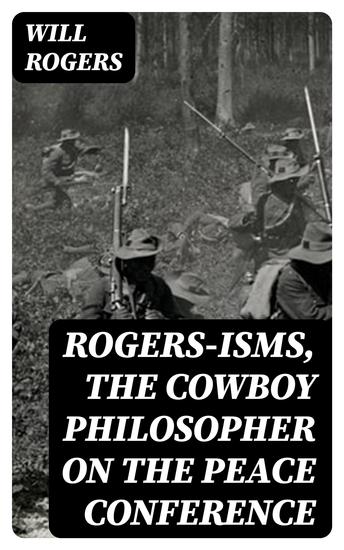
In "Rogers-isms, the Cowboy Philosopher on the Peace Conference," Will Rogers employs his signature blend of humor and wit to reflect on the complexities of international diplomacy in the wake of World War I. Drawing from his experiences as a performer and commentator, Rogers captures the absurdities and challenges of the peace process, utilizing a conversational style infused with folksy wisdom that engages readers while provoking thought. This collection of reflections, published in 1919, serves as both a critique and an endorsement of political figures and their decisions, highlighting the dissonance between public opinion and bureaucratic action during a tumultuous period in history. Will Rogers, a self-proclaimed "Cowboy Philosopher," emerged as a beloved cultural icon through his insightful commentary on contemporary issues. His unique perspective, shaped by his upbringing in Oklahoma and experiences in vaudeville and film, allowed him to translate complex political ideas into relatable concepts for the everyday American. The sincerity and clarity of his messages resonated with a broad audience, reflecting the collective sentiments of a nation grappling with the aftermath of conflict. Rogers' work remains relevant today, making his observations essential reading for anyone interested in politics, philosophy, or the human condition. "Rogers-isms" not only delights with its humor but also challenges readers to consider the broader implications of peace and governance. This book is a treasure trove for scholars, students, and anyone seeking insight into the societal mindset of post-war America.
Available since: 09/16/2022.
Print length: 11 pages.
Other books that might interest you

  • William Powell and Myrna Loy: The Lives and Careers of One of Classical Hollywood’s Most Iconic Duos - cover

    William Powell and Myrna Loy:...

    Editors Charles River

    • 0
    • 0
    • 0
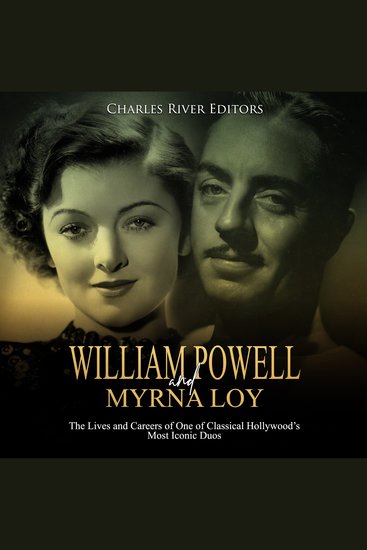
    It is something of a cliché to say that an actor’s life was like a movie he or she might have starred in, but in the case of Myrna Loy, the cliché is true. It is easy to picture her as a little girl, riding the range with her rancher father, sitting around the table and participating charmingly in family discussions of current events. It is not hard to imagine the camera panning to her first and then second visits to Hollywood, her backlot tour, and starry-eyed decision to become an actress. There would have to be some drama, which the story of her father’s untimely death would provide, along with some sort of deathbed promise made to him to care for the rest of the family. Her mother would be brave but resolute as she moved her young family to California. The lighting on set would brighten and the tempo of the background would pick up as she walked down the Los Angeles streets. Then, her big break would come. The camera would show her first comical meeting with William Powell and then a spinning scene of ticket after ticket being sold to their new picture, The Thin Man.  
    While older silent film stars like Charlie Chaplin and Buster Keaton reached the peak of Hollywood, some actors born near the beginning of the 20th century were ready to capitalize. Though actors like Humphrey Bogart and Cary Grant remain household names, and actresses like Greta Garbo are still widely remembered, few had careers that enjoyed the success of William Powell. In a career spanning several decades, Powell would receive three Oscar nominations for Best Actor for critically acclaimed movies, so it is somewhat ironic that he is mostly remembered today for his association with the more famous Myrna Loy. One thing that helped Powell’s career along in the old days when Hollywood would only cast white actors in major roles, no matter what the nationality of the character was supposed to be, were his dark good looks.
    Show book
  • Phonics & Spellings For Kids (Age 3-6) - Count and Spell Numbers (1-50) - cover

    Phonics & Spellings For Kids...

    Sophie Davis

    • 0
    • 0
    • 0
    This book is to help teach kids how to count and spell numbers in a fun way. 
    Do you want to Introduce your child to numbers and spellings? 
    Then scroll down and click the buy button now.
    Show book
  • Amy Winehouse: A short biography - 5 Minutes: Short on time - long on info! - cover

    Amy Winehouse: A short biography...

    5 Minutes, 5 Minute Biographies,...

    • 0
    • 0
    • 0
    Amy Winehouse, brilliant singer and tragic figure: Life and work in a short biography! Everything you need to know, brief and concise. Infotainment, education and entertainment at its best!
    Show book
  • Niccolò Machiavelli - The Prince and the Power - cover

    Niccolò Machiavelli - The Prince...

    Hector Davidson

    • 0
    • 0
    • 0
    Niccolò Machiavelli, the Renaissance political thinker and diplomat, remains one of the most influential figures in political philosophy, and his ideas continue to shape modern discussions on leadership, power, and governance. His most famous work, The Prince, has long been recognized as a manual for rulers navigating the complexities of political life, emphasizing pragmatic strategies over idealistic visions of statecraft. In the centuries since its publication, Machiavelli’s work has both captivated and provoked scholars, politicians, and leaders, and his theories remain as relevant today as when they were first written. 
    At the heart of Machiavelli's philosophy is his focus on the practical realities of political power. Unlike many political theorists who are concerned with how politics should be ideally structured, Machiavelli emphasized how politics actually works. The Prince offers rulers advice on how to secure and maintain power, often advocating methods that defy traditional moral or ethical considerations. His famous assertion that “the ends justify the means” has become synonymous with political maneuvering that prioritizes results over values, positioning him as both a realist and a controversial figure in political thought. 
    Machiavelli’s impact extends beyond just the realm of politics. His ideas on leadership, human nature, and the strategic use of power have influenced not only political theory but also military strategy, business practices, and even popular culture. His work on statecraft speaks to a deep understanding of human behavior, and his insights into the manipulation of public perception, the nature of fear and loyalty, and the balancing of power dynamics have resonated across various disciplines. Whether used to guide national leadership or inform business strategy, Machiavellian principles are often invoked when discussing tactics for navigating complex, power-driven environments.
    Show book
  • Getting Me Cheap - How Low-Wage Work Traps Women and Girls in Poverty - cover

    Getting Me Cheap - How Low-Wage...

    Amanda Freeman, Lisa Dodson

    • 0
    • 0
    • 0
    Many Americans take comfort and convenience for granted. We eat at nice restaurants, order groceries online, and hire nannies to care for kids. 


    Getting Me Cheap is a riveting portrait of the lives of the low-wage workers—primarily women—who make this lifestyle possible. Sociologists Lisa Dodson and Amanda Freeman follow women in the food, health care, home care, and other low-wage industries as they struggle to balance mothering with bad jobs and without public aid. While these women tend to the needs of well-off families, their own children frequently step into premature adult roles, providing care for siblings and aging family members. 


    Based on years of in-depth field work and hundreds of eye-opening interviews, Getting Me Cheap explores how America traps millions of women and their children into lives of stunted opportunity and poverty in service of giving others of us the lives we seek. Destined to rank with works like Evicted and Nickle and Dimed for its revelatory glimpse into how our society functions behind the scenes, Getting Me Cheap also offers a way forward—with both policy solutions and a keen moral vision for organizing women across class lines.
    Show book
  • Strange Religion - How the First Christians Were Weird Dangerous and Compelling - cover

    Strange Religion - How the First...

    Nijay K. Gupta

    • 0
    • 0
    • 0
    The first Christians were weird. Just how weird is often lost on today's believers. 


    Within Roman society, the earliest Christians stood out for the oddness of their beliefs and practices. They believed unusual things, worshiped God in strange ways, and lived a unique lifestyle. They practiced a whole new way of thinking about and doing religion that would have been seen as bizarre and dangerous when compared to Roman religion and most other religions of the ancient world. 


    Award-winning author, blogger, speaker, and New Testament teacher Nijay Gupta traces the emerging Christian faith in its Roman context in this accessible and engaging book. Christianity would have been seen as radical in the Roman world, but some found this new religion attractive and compelling. The first Christians dared to be different, pushed the boundaries of what was acceptable, transformed how people thought about religion, and started a movement that grew like wildfire. This book shows how the example of the earliest Christians can offer today's believers encouragement and hope.
    Show book