Join us on a literary world trip!
Add this book to bookshelf
Grey
Write a new comment Default profile 50px
Grey
Subscribe to read the full book or read the first pages for free!
All characters reduced
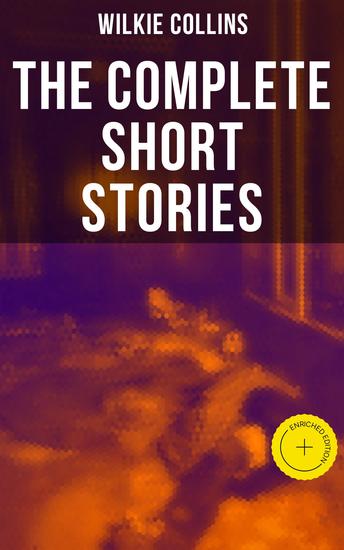
The Complete Short Stories of Wilkie Collins - Enriched edition After The Dark Mr Wray's Cash Box The Queen of Hearts A House To Let The Haunted House… - cover

The Complete Short Stories of Wilkie Collins - Enriched edition After The Dark Mr Wray's Cash Box The Queen of Hearts A House To Let The Haunted House…

Wilkie Collins

Publisher: Musaicum Books

  • 0
  • 0
  • 0

Summary

In 'The Complete Short Stories of Wilkie Collins', readers are treated to a collection of captivating tales that exemplify Collins' mastery of the mystery and suspense genres. His intricate plots, rich character development, and clever use of narrative technique showcase his unique literary style, which was ahead of its time in the 19th century. These short stories explore themes of love, betrayal, and the supernatural, providing a fascinating glimpse into Victorian society. Collins' brilliant storytelling and attention to detail make each story a gripping and thought-provoking read. Fans of classic literature will appreciate the historical and literary context in which these stories are set, as well as the timeless themes that continue to resonate with readers today. Wilkie Collins' keen observations of human behavior and society's norms add depth and complexity to his tales, making them both entertaining and intellectually stimulating. His ability to craft suspenseful narratives with unexpected twists and turns will keep readers engaged from start to finish. 'The Complete Short Stories of Wilkie Collins' is a must-read for those who appreciate literary classics and enjoy exploring the darker side of human nature.

In this enriched edition, we have carefully created added value for your reading experience:
- A comprehensive Introduction outlines these selected works' unifying features, themes, or stylistic evolutions.
- The Author Biography highlights personal milestones and literary influences that shape the entire body of writing.
- A Historical Context section situates the works in their broader era—social currents, cultural trends, and key events that underpin their creation.
- A concise Synopsis (Selection) offers an accessible overview of the included texts, helping readers navigate plotlines and main ideas without revealing critical twists.
- A unified Analysis examines recurring motifs and stylistic hallmarks across the collection, tying the stories together while spotlighting the different work's strengths.
- Reflection questions inspire deeper contemplation of the author's overarching message, inviting readers to draw connections among different texts and relate them to modern contexts.
- Lastly, our hand‐picked Memorable Quotes distill pivotal lines and turning points, serving as touchstones for the collection's central themes.
Available since: 12/06/2017.
Print length: 3600 pages.

Other books that might interest you

  • History of Hungary - Details about the Hungarian Economy Origins and Background - cover

    History of Hungary - Details...

    Kelly Mass

    • 0
    • 0
    • 0
    The history of ancient Hungary begins well before the arrival of the Hungarians themselves, tracing back to the Iron Age and the early cultural developments in the Carpathian Basin. Around 800 BC, the Iron Age began to shape this region, with the emergence of "Thraco-Cimmerian" artifact types that suggested a significant overlap between the pre-Scythian cultures (Novocherkassk culture) and the pre-Celtic Hallstatt culture. This cultural intermingling marked the beginning of a complex interplay between indigenous peoples and incoming groups. 
    The Hallstatt Culture and Early Inhabitants 
    By around 750 BC, the Hallstatt culture, named after the archaeological site in Austria, had spread across much of Europe, including the western region of Transdanubia. This culture is renowned for its advancements in metalworking, especially iron, and the production of distinctive pottery and burial practices. As the Hallstatt people settled in this area, they influenced the local populations, leading to a rich blend of traditions and customs. During this period, early Greek ethnographic sources mention tribes such as the Agathyrsi and Sigynnae, believed to inhabit the Carpathian Basin and surrounding territories, which reflects the growing interactions between various ethnic groups.
    Show book
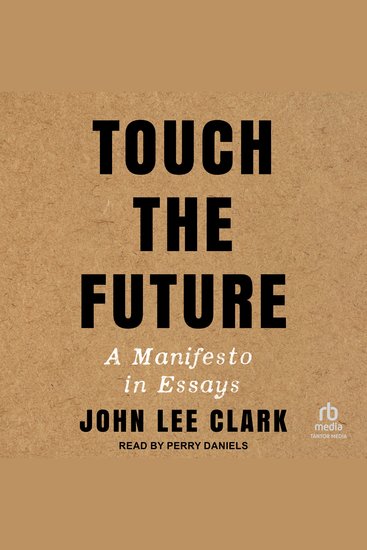
  • Touch the Future - A Manifesto in Essays - cover

    Touch the Future - A Manifesto...

    John Lee Clark

    • 0
    • 0
    • 0
    A revelatory collection of essays on the DeafBlind experience, and a manifesto on the power and untapped potential of touch. 


    Born Deaf into an ASL-speaking family and blind by adolescence, John Lee Clark learned to embrace the possibilities of his tactile world. He is on the frontlines of the Protactile movement, which gave birth to an unprecedented tactile language and a way of life based on physical connection. 


    In a series of paradigm-shifting essays, Clark reports on seismic developments within the DeafBlind community. In "Against Access," he interrogates the prevailing advocacy for "accessibility" that recreates a shadow of a hearing-sighted experience. In the National Magazine Award–winning "Tactile Art," he describes his relationship to visual art and encounters with tactile sculpture. He advocates for "Co-Navigation," a new way of guiding that respects DeafBlind agency and offers a brief history of the term "DeafBlind." As warm and witty as he is radical and inspiring, Clark welcomes listeners into the exciting Protactile landscape and celebrates the hidden knowledge that can be gained through touch.
    Show book
  • Shifters in the Night - 4 Book Bundle - cover

    Shifters in the Night - 4 Book...

    Jane Fox

    • 0
    • 0
    • 0
    A bulging four book bundle of MM gay shape-shifting goodness!Hunted by Moonlight: Wolf shifter first time for a straight guy.Fight the Alpha: Omega gets moody and dominated!Entered by the Dragon: Dragon shifter first time for a straight guy.Mounted by the Alien Demon: Supernatural science fiction - gay men in space!
    Show book
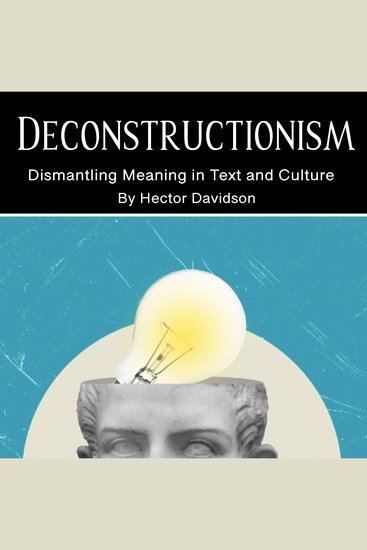
  • Deconstructionism - Dismantling Meaning in Text and Culture - cover

    Deconstructionism - Dismantling...

    Hector Davidson

    • 0
    • 0
    • 0
    Deconstructionism emerged in the late 20th century as a philosophical and literary movement that fundamentally questioned the nature of meaning, language, and interpretation. It is primarily associated with the work of French philosopher Jacques Derrida, who, in the 1960s and 1970s, began to develop ideas that would challenge long-held assumptions in philosophy, literary theory, and critical thought. The movement was a response to structuralism, which sought to uncover the underlying structures that govern language and society. In contrast, deconstruction aimed to show that meaning is inherently unstable and that texts and concepts can never be fully fixed or understood in a singular, unchanging way. 
      
    The foundational work of Jacques Derrida is central to deconstructionism. His concept of différance (a term he coined in 1968) highlighted the ways in which meaning is always deferred and never fully attainable. Derrida’s analysis of language showed that words and concepts derive meaning not from a stable, inherent essence, but from their relationships with other words. In this sense, meaning is always in flux, and any attempt to pin it down is doomed to fail. Derrida’s critique of binary oppositions—such as presence/absence, speech/writing, and truth/falsehood—argued that these pairs are not neutral but are hierarchically structured, with one term always subordinating the other. Through works like De la grammatologie (1967) and La Voie et le Voice (1967), Derrida redefined how we understand texts, insisting that they are always open to multiple interpretations.
    Show book
  • How to Find Happiness - An Ancient Guide to the Good Life - cover

    How to Find Happiness - An...

    Marcus Tullius Cicero, Katharina...

    • 0
    • 0
    • 0
    Does happiness come from the pursuit of pleasure or moral virtue? A vivid new translation of Cicero’s exploration of a timeless question“Of course, we all want to be happy.” So wrote the Roman statesman, orator, and philosopher Marcus Tullius Cicero. He and his fellow Greek and Roman philosophers agreed that the secret to happiness—or what they called the “good life”—is pursuing the “greatest good.” The only problem is that they couldn’t agree on what the greatest good is. Cicero addressed this dilemma by composing a set of dialogues, On the Greatest Good and Evil (De finibus bonorum et malorum), in which he pitted advocates of different philosophical approaches to happiness against one another. Notably, these include the Epicureans (who believe that the greatest good is pleasure) and the Stoics (according to whom it is moral virtue). Rather than choosing sides, Cicero considers the pros and cons of the different philosophies, ultimately leaving it to his readers to make up their own minds. In How to Find Happiness, Katharina Volk offers a vivid new translation of selections from Cicero’s work, complete with an introduction and the original Latin text on facing pages. The result is a lively and engaging debate that invites each of us to discover our own path to happiness.
    Show book
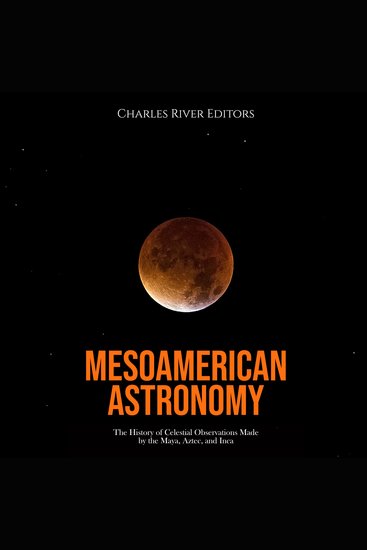
  • Mesoamerican Astronomy: The History of Celestial Observations Made by the Maya Aztec and Inca - cover

    Mesoamerican Astronomy: The...

    Editors Charles River

    • 0
    • 0
    • 0
    For the Maya, astronomy was not a purely scientific pursuit but intimately linked to religious, mythological, and ideological elements that were of the highest importance. The celestial realm held a sacred nature, as did the many gods and goddesses that dwelt there, so for all Mesoamerican cultures, astronomy was a fundamental part of their everyday lives. Thus, astronomy was present in their calendars, religion, and even agriculture, and in close relation to astronomy, the concept of time was also an essential part of their worldview.  
    The Aztec recorded many of the astronomical events they observed in codices and hieroglyphic inscriptions, but the main evidence of their deep astronomical knowledge comes from their calendar system. This information was then used to plan the orientation of buildings and ceremonial centers, which were aligned to sunrises or sunsets corresponding to special dates, such as solstices or equinoxes. Observational calendars were also used to schedule agricultural activities, as well as rituals, festivals, and celebrations. 
    Though the Spanish physically conquered them in quick fashion, the culture and legacy of the Inca Empire has continued to endure throughout the centuries in both Europe and South America, due in no small part to the fact they were one of the most advanced and sophisticated cultures on the continent. The sun was the main element present in the Inca worldview, so Inti, the sun god, was worshipped above all others and, even though the different parts of the empire were allowed to practice their individual beliefs, they were encouraged to venerate the sun. The connection with the sun even extended to their kings since they were considered to be the sons of the sun. Naturally, this meant astronomy was a key component of the Incas’ beliefs, and in addition to the sun, the Inca observed the moon, stars, constellations, and some planets, all of which became integral parts of their cosmology.
    Show book