Join us on a literary world trip!
Add this book to bookshelf
Grey
Write a new comment Default profile 50px
Grey
Subscribe to read the full book or read the first pages for free!
All characters reduced
Little Novels - cover

Little Novels

Wilkie Collins

Publisher: DigiCat

  • 0
  • 0
  • 0

Summary

Wilkie Collins's "Little Novels" presents a compelling collection of short stories that showcases his mastery of suspense and intricate plotting, hallmarks of his celebrated Gothic style. The book includes six tales, each encapsulating potent themes of love, deception, and the supernatural, reflecting Collins's keen interest in the darker sides of human nature. Crafted in a naturalistic tone characteristic of the Victorian era, these narratives engage with contemporary social issues while simultaneously captivating the reader with innovative storytelling techniques, including unreliable narrators and cliffhanger endings. Wilkie Collins, a contemporary and close associate of Charles Dickens, was a pioneer of the detective and mystery genres. His extensive experience in law and the theatre significantly influenced his narrative structures and character development. Collins's life experiences, colored by social reform and personal struggles, imbue "Little Novels" with a psychological depth that was ahead of its time, offering insights into the complexities of Victorian society. Readers keen on uncovering the psychological intricacies of relationships and social critiques will find "Little Novels" an enriching exploration of human motives and societal norms. With Collins's deft storytelling and atmospheric prose, this collection is a must-read for enthusiasts of Gothic literature and early crime fiction.
Available since: 09/16/2022.
Print length: 358 pages.
Other books that might interest you

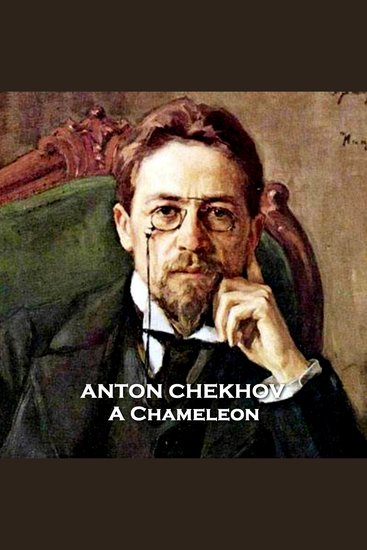
  • A Chameleon - From their pens to your ears genius in every story - cover

    A Chameleon - From their pens to...

    Anton Chekhov

    • 0
    • 0
    • 0
    Anton Pavlovich Chekhov was born on 29th January 1860 in Taganrog, on the south coast of Russia.  
    His family life was difficult; his father was strict and over-bearing but his mother was a passionate story-teller, a subject Chekhov warmed to. As he later said; ‘our talents we got from our father, but our soul from our mother’.  
    At school Chekhov was distinctly average. At 16 his father mis-managed his finances and was declared bankrupt. His family fled to Moscow. Chekhov remained and eked out a living by various means, including writing and selling short sketches to newspapers, to finish his schooling. That completed and with a scholarship to Moscow University obtained he rejoined his family. 
    He was able to help support them by selling satirical sketches and vignettes of Russian lifestyles and gradually obtained further commissions. In 1884, he qualified as a physician and, although it earned him little, he often treated the poor for free, he was fond of saying ‘Medicine is my lawful wife, and literature is my mistress.’ 
    His own health was now an issue as he began to cough up blood, a symptom of tuberculosis.  Despite this his writing success enabled him to move the family into more comfortable accommodation.  
    Chekhov wrote over 500 short stories which included many, many classics including ‘The Kiss’ and ‘The Lady with a Dog’.  His collection ‘At Dusk’ won him the coveted Pushkin Prize when was only 26.  
    He was also a major playwright beginning with the huge success of ‘Ivanov’ in 1887.   
    In 1892 Chekhov bought a country estate north of Moscow. Here his medical skills and money helped the peasants tackle outbreaks of cholera and bouts of famine. He also built three schools, a fire station and a clinic.  It left him with less time for writing but the interactions with real people gained him detailed knowledge about the peasantry and their living conditions for his stories.  
    His most famous work, ‘The Seagull’ was received disastrously at its premiere in St Petersburg. It was later restaged in Moscow to highlight its psychological aspects and was a huge success. It led to ‘Uncle Vanya’, ‘The Three Sisters’ and ‘The Cherry Orchard’.  
    Chekhov suffered a major lung hemorrhage in 1897 while visiting Moscow. A formal diagnosis confirmed tuberculosis and the doctors ordered changes to his lifestyle.  
    Despite a dread of weddings the elusive literary bachelor quietly married the actress Olga Knipper, whom he had met at rehearsals for ‘The Seagull’, on 25th May 1901. 
    By May 1904 with his tuberculosis worsening and death imminent he set off for the German town of Badenweiler writing cheerful, witty letters to his family and assuring them his health was improving.  
    On 15th July 1904 Anton Chekhov died at Badenweiler.  He was 44.
    Show book
  • Little Brother - cover

    Little Brother

    Mary E. Mann

    • 0
    • 0
    • 0
    Mary E. Mann does not flinch. In Little Brother, she leads us by the hand into a world where hunger is constant, sorrow is routine, and the arrival of a child is met with neither joy nor mourning—just another mouth, another burden, another resignation. Yet even in this bleakness, life goes on, in ways both unsettling and eerily familiar. A stark, unflinching glimpse into the realities of the forgotten, this story is as haunting as it is quietly devastating.
    Show book
  • Not to Be Taken - cover

    Not to Be Taken

    Anthony Berkeley

    • 0
    • 0
    • 0
    In the comfortable English Dorsetshire village of Anneypenny in the 1930s, fruit farmer Douglas Sewell – narrator of the story – sees his friend John die in agony. The death certificate states gastric ulcers but the post mortem’s revealing of poison punctures Anneypenny’s idyllic backdrop. Soon every friend and neighbour seems to harbour something suspicious. Douglas challenges his readers, or listeners, to answer the key questions before throwing out several scenarios and turning them upside-down in a tantalising path to the truth. 
    A journalist as well as a novelist, Anthony Berkeley was a founding member of the Detection Club and one of crime fiction’s greatest innovators. He was one of the first to predict the development of the ‘psychological’ crime novel.
    Show book
  • Cursed Curiosities - 10 Tales of Haunted Relics - cover

    Cursed Curiosities - 10 Tales of...

    Algernon Blackwood, A. M....

    • 0
    • 0
    • 0
    A collection of classic works concerning items that harbour sinister secrets and unusual powers. 
    Contents: 
    "The Artist and the Door" by Dorothy Quick 
    The house and contents had been exorcised of evil... 
    "The Ghoul Gallery" by Hugh B. Cave 
    An eldritch horror that leaped out of the black night. 
    "The Haunted Dolls' House" by M. R. James 
    An antique dolls’ house, complete with a family of figurines. 
    "Lethe" by Harold G. Shane 
    The strange fascination of an old oil painting. 
    "The Magic Mirror" by Algernon Blackwood 
    A devil-mirror famed for bringing both death and riches. 
    "The Ring" by J. M. Fry 
    A series of startling happenings beset the man who wore that ring. 
    "The Screaming Skull" by F. Marion Crawford 
    A curious, haunted skull. 
    "The Shining Pyramid" by Arthur Machen 
    Mysterious stones that begin to appear on the edge of a man's land. 
    "The Waxwork" by A. M. Burrage 
    A journalist spends the night alone in a wax museum. 
    "The Willow Landscape" by Clark Ashton Smith 
    Concerning the curious nature of an ancient painting.
    Show book
  • Emma (Volume 2) - cover

    Emma (Volume 2)

    Jane Austen

    • 0
    • 0
    • 0
    Emma (Volume 2), by Jane Austen, is a novel about youthful hubris and the perils of misconstrued romance. The story takes place in the fictional village of Highbury and the surrounding estates of Hartfield, Randalls, and Donwell Abbey and involves the relationships among individuals in those locations consisting of "3 or 4 families in a country village".
    Show book
  • Dorothy and the Wizard of Oz - cover

    Dorothy and the Wizard of Oz

    L. Frank Baum

    • 0
    • 0
    • 0
    Journey back to the magical land of Oz with L. Frank Baum’s "Dorothy and the Wizard of Oz." When an earthquake transports Dorothy, her cat, and her cousins to the strange land of the Mangaboos, they reunite with the beloved Wizard. Together, they navigate through wondrous kingdoms filled with vegetable people, invisible creatures, and formidable challenges. Rich with imagination and adventure, this enchanting tale celebrates friendship, bravery, and the endless wonders of Baum’s extraordinary world.
    Show book