Join us on a literary world trip!
Add this book to bookshelf
Grey
Write a new comment Default profile 50px
Grey
Subscribe to read the full book or read the first pages for free!
All characters reduced
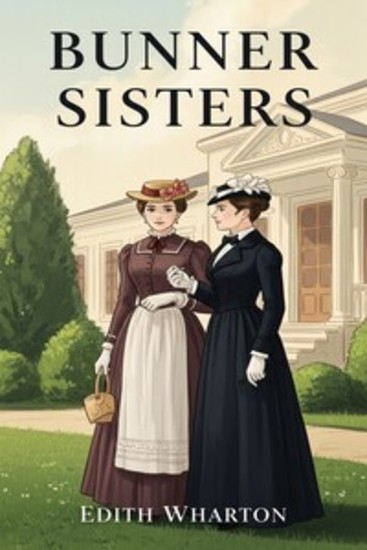
Bunner Sisters - cover

Bunner Sisters

Edith Wharton

Publisher: Bu Classics Books

  • 0
  • 0
  • 0

Summary

In the dim corners of a small New York shop, two sisters cling to a quiet existence of modest labor and mutual devotion. Their fragile peace is shattered when a charming clockmaker enters their lives, sparking hope that quickly unravels into heart-wrenching sacrifice. Exploring the stark realities of the working class, this narrative strips away the glamour of the Gilded Age to reveal a raw portrait of loss. It is a haunting examination of how selflessness can lead to the deepest solitude.
Available since: 03/04/2026.
Print length: 122 pages.

Other books that might interest you

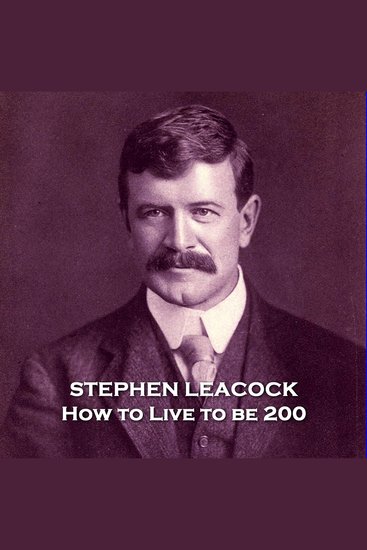
  • How to Live to be 200 - From their pens to your ears genius in every story - cover

    How to Live to be 200 - From...

    Stephen Leacock

    • 0
    • 0
    • 0
    Stephen P H Butler Leacock FRSC was born on 30th December 1869 in Swanmore, near Southampton, England.  He was the third of eleven children. 
    The family emigrated to Canada in 1876, settling on a 100-acre farm in Sutton, Ontario.  There Leacock was home-schooled until, funded by his grandfather, he was enrolled into the elite private school Upper Canada College in Toronto.  Academically he was very strong.  In 1887, at age 17, he became head boy and then proceeded on to the University of Toronto to study languages and literature.  Despite completing two years of study in only one, he was obliged to leave the university because his father, an alcoholic, had abandoned the family and finances could not be stretched to continue his attendance.  Leacock now enrolled in a three-month course at Strathroy Collegiate Institute to become a qualified high school teacher with a regular income. 
    He worked at Upper Canada College from 1889 through 1899 and later resumed his studies part-time at the University of Toronto, graduating with a B A in 1891.  It was during this period that he was first published in The Varsity, a campus newspaper.  But his passion was now economics and political theory.  In 1899 he enrolled for postgraduate studies at the University of Chicago and earned his PhD in 1903. 
    Leacock had married Beatrix Hamilton in 1900 and 15 years later the couple had their only child, Stephen.  In time father and son developed a love-hate relationship, partially caused by his son’s diminutive stature of only four feet.  
    Accepting a post at McGill University Leacock would remain there until he retired in 1936.  In 1906, he wrote ‘Elements of Political Science’, quickly adopted as a standard textbook for the next two decades and his most profitable book.  He also began public speaking and lecturing, and took a year's leave of absence in 1907 to speak throughout Canada on the subject of national unity.  
    Leacock had submitted humourous articles to the Toronto magazine Grip in 1894, and was soon published in other Canadian and US magazines.  In 1910, he printed privately a collection of these as ‘Literary Lapses’.  Acquired by the British publisher, John Lane, it was released in London and New York.   He was now a commercially successful writer.  There soon followed ‘Nonsense Novels’ (1911) and the sentimental favourite, ‘Sunshine Sketches of a Little Town’ (1912).  His ‘Arcadian Adventures with the Idle Rich’ (1914) is a darker collection that satirizes city life.  Collections of sketches continued to be published almost annually, filled with a mixture of light-hearted whimsy, parody, nonsense, and satire. 
    In later life, he wrote on the art of humour writing and published biographies on Twain and Dickens.  Together with continued speaking tours he also added to his non-fiction with many well-regarded and award-winning volumes on Canada. 
    Politically Leacock was a social conservative and a partisan Conservative.  He opposed women’s right to vote and had a varied record on non-English immigration.  He was a champion of Empire but an advocate of social welfare legislation and wealth redistribution, but he often caused friction with his racist views towards blacks and Indigenous peoples. 
    Leacock has for some time been forgotten as an economist, but it’s often quoted that in 1911 more people had heard of him than had heard of Canada.  For the decade after 1915 Leacock was the most popular humorist in the English-speaking world. 
    Stephen Leacock died on 28th March 1944 of throat cancer in Toronto, Canada.  He was 74.  He was buried in the St George the Martyr Churchyard, Sutton, Ontario.
    Show book

  • The Purity of the Turf - cover

    The Purity of the Turf

    P. G. Wodehouse

    • 0
    • 0
    • 0
    Some people inherit money. Bertie Wooster inherits other people's trouble, neatly dressed in a perfectly tailored evening suit.
    In The Purity of the Turf, P. G. Wodehouse reminds us that true gentlemen with excellent manners and questionable judgment are uniquely capable of transforming a sleepy village holiday into a chaotic battlefield. When a rural school-treat becomes the backdrop for an amateur betting ring, Bertie willingly assumes the role of a master strategist. Predictably, the local bookmaker is three steps ahead, and the grand plans rapidly unravel. Fortunately, right when the situation threatens to become unmanageable, Jeeves drifts into the room to quietly steer the madness toward a highly satisfactory conclusion. 
    This is Wodehouse at his most playful. You come for the absurd premise, but you stay for the dry wit, the snappy banter, and the sheer joy of watching high-society optimism collapse under its own weight. It's sophisticated comedy that effortlessly hides its brilliance behind apparent nonsense.
    Show book
  • Sense and Sensibility - cover

    Sense and Sensibility

    Jane Austen

    • 0
    • 0
    • 0
    Sense and Sensibility follows the fortunes of sensible Elinor and her volatile younger sister, Marianne, as each searches for a spouse—a quest made urgent by the family’s financial embarrassment. While Elinor pursues the heart of clergyman, Edward Ferrars, Marianne impulsively falls in love with a glamorous but unscrupulous adventurer, Willoughby. Elinor sees trouble brewing but the enraptured Marianne does not. The sisters question each other’s choices in love. 
    More than in her other novels, Austen here includes portraits of ill-matched couples, such as the avaricious Fanny Dashwood and her hen-pecked husband John; and the daffy Charlotte Palmer and her gloomy and contemptuous spouse. Perhaps Austen here suggests that, while marriage seems inevitable for most people, conjugal happiness can be much harder to find. 
    Sense and Sensibility (written by ‘a lady’) was first published in 1811. It is a complete re-writing of Austen’s earlier epistolary novel, Elinor and Marianne.
    Show book
  • The Young Girl - cover

    The Young Girl

    Katherine Mansfield

    • 0
    • 0
    • 0
    “The Young Girl” is a 1920 short story written by Katherine Mansfield. Mrs. Raddick’s and her beautiful daughter waited on the steps of the casino. The daughter was incredibly beautiful with flushed cheeks, blue eyes, and golden curls. She “might have just dropped from this radiant heaven” (79), and Mrs. Raddick seemed to think so too - if her appreciative glances were any indication. The girl; however, appeared only bored as if heaven had been full of casinos and they no longer held any interest for her.
    Show book
  • Carnacki The Ghost Finder - cover

    Carnacki The Ghost Finder

    William Hope Hodgson

    • 0
    • 0
    • 0
    Enter a world where science, the supernatural, and mystery collide in one of the greatest occult detective collections ever written.
    
    Discover "Carnacki, the Ghost-Finder" by William Hope Hodgson, the legendary collection of supernatural detective stories featuring one of fiction's earliest paranormal investigators. Combining eerie atmosphere, ingenious mysteries, and chilling encounters with the unknown, this timeless classic stands as a cornerstone of supernatural and Gothic fiction.
    
    Thomas Carnacki is an investigator unlike any other. Using careful observation, scientific reasoning, ancient folklore, and occult knowledge, he examines mysterious cases that blur the line between natural explanation and genuine supernatural horror. From haunted houses and cursed rooms to unexplained phenomena and ghostly encounters, each story presents a compelling mystery filled with suspense, psychological tension, and unforgettable atmosphere. Hodgson masterfully keeps readers questioning whether each case has a rational solution—or something far more terrifying.
    
    First published in 1913, "Carnacki, the Ghost-Finder" introduced one of literature's most influential occult detectives and helped shape the modern supernatural mystery genre. Its unique blend of detective fiction, horror, and paranormal investigation has inspired generations of writers and remains essential reading for fans of classic ghost stories and Gothic literature.
    
    Perfect for readers who enjoy classic horror, supernatural fiction, ghost stories, occult mysteries, detective fiction, Gothic literature, and timeless literary classics, this remarkable collection delivers an unforgettable reading experience filled with mystery, suspense, and chilling intrigue.
    
    Join one of fiction's greatest paranormal investigators. Add "Carnacki, the Ghost-Finder" to your Kindle library today and experience a timeless collection of supernatural mysteries that continues to captivate readers around the world.
    Show book
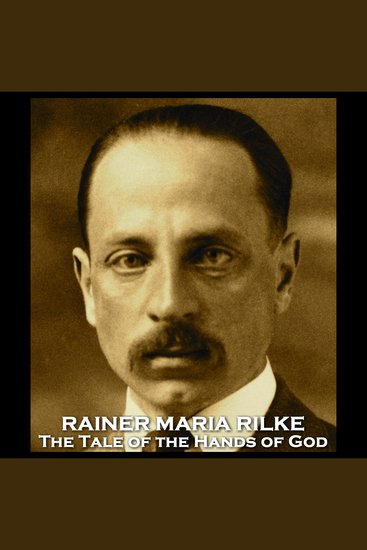
  • The Tale of the Hands of God - From their pens to your ears genius in every story - cover

    The Tale of the Hands of God -...

    Rainer Maria Rilke

    • 0
    • 0
    • 0
    René Karl Wilhelm Johann Josef Maria Rilke was born into a troubled marriage on the 4th December 1875 in Prague, then part of the Austro-Hungarian Empire.  His mother, having previously lost a baby girl, would dress the young boy up in girl’s clothing.   
    Later his father dispatched him to a military academy at age 10 but after a miserable 5 years the young Rilke left due to illness and instead entered first Prague and then Munich and finally Berlin university to study art history, philosophy and literature. 
    His initial forays into literature was in poetry.  His intense, mystical and lyrical style was much admired and over time inspired many in succeeding generations.    
    His short prose collection ‘Stories of God’, written in an impassioned burst over several nights was published in 1900 and offers a beguiling view of much of Rilke’s influences and outlook.  
    The following year he married the pioneering sculptor and artist Clara Westhoff.  The union produced one child, a daughter Ruth.   
    He lived in Paris for most of the Century’s first decade where he mixed with many great minds of the time.  Although he continued to write he also worked as a secretary to the sculptor, Rodin.   
    It was only after they settled in Switzerland in 1919 that his writing output was in full flow.  Here he wrote profusely in both German and French, which included much on his previous travels, his left-wing sympathies, his religious and existential thoughts, all part of a unique and consummate style. 
    From 1923 on, Rilke increasingly struggled with his health which was now in constant decline and often spent time rehabilitating at a sanatorium.   
    Rainer Maria Rilke died of leukaemia on the 29th December 1926 in Montreux, Switzerland.  He was 51.
    Show book