Join us on a literary world trip!
Add this book to bookshelf
Grey
Write a new comment Default profile 50px
Grey
Subscribe to read the full book or read the first pages for free!
All characters reduced
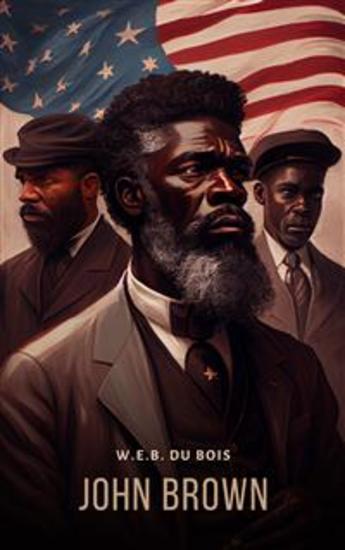
John Brown - cover

John Brown

W.E.B. Du Bois

Publisher: Interactive Media

  • 0
  • 0
  • 0

Summary

A compelling biography of one of the most controversial and significant figures in American history. John Brown was a white abolitionist who led a raid on the federal armory at Harpers Ferry in 1859, in an attempt to incite a slave rebellion and overthrow the institution of slavery in the United States. In addition to his analysis of Brown's life and legacy, Du Bois also provides a broader historical context for understanding the abolitionist movement and the struggle for racial justice in the United States.
Available since: 02/23/2023.
Print length: 244 pages.

Other books that might interest you

  • On Democracy - cover

    On Democracy

    Anonymous

    • 0
    • 0
    • 0
    A New York Times Book Review New & Noteworthy Book 
    “For democracy’s weary champions, White’s time-tested prose is a shot of adrenaline.”—Madeleine Albright 
    A collection of essays, letters, and poems from E. B. White, “one of the country’s great literary treasures” (New York Times), centered on the subject of freedom and democracy in America. The special book includes an introduction by Pulitzer Prize-winning historian Jon Meacham.  
    “I am a member of a party of one, and I live in an age of fear.” 
    These words were written by E. B. White in 1947. Decades before our current political turmoil, White crafted eloquent yet practical political statements that continue to resonate. “There’s only one kind of press that’s any good—” he proclaimed, “a press free from any taint of the government.” He condemned the trend of defamation, arguing that “in doubtful, doubting days, national morality tends to slip and slide toward a condition in which the test of a man’s honor is his zeal for discovering dishonor in others.” And on the spread of fascism he lamented, “fascism enjoys at the moment an almost perfect climate for growth—a world of fear and hunger.” 
    This concise collection of essays, letters, and poems from one of this country’s most eminent literary voices offers much-needed historical context for our current state of the nation—and hope for the future of our society. Speaking to Americans at a time of uncertainty, when democracy itself has come under threat, he reminds us, “As long as there is one upright man, as long as there is one compassionate woman . . . the scene is not desolate.”
    Show book
  • Philosophy in Ancient Greece: The History and Legacy of the Greeks’ Philosophical Schools of Thought - cover

    Philosophy in Ancient Greece:...

    Editors Charles River

    • 0
    • 0
    • 0
    In virtually all fields of human endeavor, ancient Greece was so much at the forefront of dynamism and innovation that the products of its most brilliant minds remain not only influential but entirely relevant to this day. In the field of medicine, the great physician Hippocrates not only advanced the practical knowledge of human anatomy and caregiving but changed the entire face of the medical profession. The great philosophers of Athens, men like Aristotle, Socrates, and Plato, interrogated themselves with startling complexity about the nature of good and evil, questioned the existence of divinity, advocated intelligent design, and went so far as to argue that all life was composed of infinitesimal particles.  
    	Although the school of philosophy started by Socrates and championed by Plato and Aristotle continues to be the most famous, other schools of thought began to branch, including the Epicureans and Cynics. In the 3rd century B.C., Stoicism arose in response to and under the influence of these older schools, combining many of the best theories from each into a more cohesive whole. With a greater flexibility and more practical application to everyday life, Stoicism quickly became a very popular school of thought, a growth made exponential by its introduction to the Romans.  
    Today, very few have heard of him, but he became a major philosophical and religious figure through the publication of his thoughts, travels, and miracles by Philostratus the Elder (c. 170-247 A.D.), written about a century after Apollonius of Tyana’s death. Philostratus the Elder’s works were based on the works of other writers (Maximus of Aegae, Damis, and Moeragenes), and miracles attributed to Apollonius were often compared to those of Jesus, who lived around the same time. 
    Show book
  • Saying NO to a Farm-Free Future - The Case For an Ecological Food System and Against Manufactured Foods - cover

    Saying NO to a Farm-Free Future...

    Chris Smaje

    • 0
    • 0
    • 0
    A defense of agroecological, small-scale farming and a robust critique of an industrialized future.  
    As a breakdown of the climate, state power and globalized markets pushes us toward an epochal transition, Chris Smaje offers us a hopeful vision of a relocalized, self-sufficient world.—David Bollier  
    One of the few voices to challenge The Guardian's George Monbiot on the future of food and farming (and the restoration of nature) is academic, farmer and author of A Small Farm Future Chris Smaje. In Saying NO to a Farm-Free Future, Smaje presents his defense of small-scale farming and a robust critique of Monbiot’s vision for an urban and industrialized future.  
    Responding to Monbiot’s portrayal of an urban, high-energy, industrially manufactured food future as the answer to our current crises, and its unchallenged acceptance within the environmental discourse, Smaje was compelled to challenge Monbiot’s evidence and conclusions. At the same time, Smaje presents his powerful counterargument – a low-carbon agrarian localism that puts power in the hands of local communities, not high-tech corporates.  
    In the ongoing fight for our food future, this book will help you to understand the difference between a congenial, ecological living and a dystopian, factory-centered existence. A must-read!
    Show book
  • Mob Rule in New Orleans - cover

    Mob Rule in New Orleans

    Ida B. Wells-Barnett

    • 0
    • 0
    • 0
    Mob Rule in New Orleans is Ida B. Wells-Barnett’s searing investigative account of the 1900 lynching of Robert Charles and the violent wave of racial terror that swept across New Orleans in its aftermath. With unflinching clarity and journalistic precision, Wells exposes how police brutality, white mob violence, and institutional complicity united to create a deadly storm targeting the Black community. 
    Through firsthand reports, press analysis, and documented testimony, Wells dismantles the lies used to justify racist violence and shines a light on the horrifying consequences of state-sanctioned hate. This is not only a chronicle of one man's tragic fate—it is a landmark civil rights document and a bold act of truth-telling against a nation’s willful blindness. 
    Narrated with solemn respect and emotional gravity by Myriam Berger, this edition honors Wells’ legacy as a fearless crusader for justice and a foundational voice in America’s long struggle for civil rights. 
    A historic warning. 
    A record of courage. 
    A voice that still demands to be heard.
    Show book
  • Ikigai Journey - cover

    Ikigai Journey

    Rye Shiro

    • 0
    • 0
    • 0
    Ikigai Journey: A Guide on this Japanese Philosophy and Way of Living that Will Help You Live a More Fulfilling LifeFinding your ikigai—the thing that makes you jump out of bed in the morning—is one of the most important things you can do for yourself. The concept of ikigai is closely linked to the idea of finding one's passion in life. If you want to live a life of meaning and passion, you’ll have to start by facing your deepest fears and desiring a life worth living. If you don’t have this desire, your life becomes a journey of self-improvement with nothing else to define you.In this audiobook, you will learn what Ikigai is all about. You will learn about the Japanese philosophy of ikigai and how it can help you lead a more fulfilling life. It will also teach you practical exercises and tools that you can use to find your ikigai.Topics that will be covered are the following:- Four Components of Ikigai- Incorporating Ikigai into Your Daily Life- Finding Your Ikigai- Roadblocks to Finding Your Ikigai- Action Plan- And many more!If you want to live a life of meaning and passion, you’ll have to start by facing your deepest fears and desiring a life worth living. To learn more, download your copy of this audiobook today!
    Show book
  • Imperialism and Its Legacy - The Long-Term Effects of Empire Building on Modern Nations - cover

    Imperialism and Its Legacy - The...

    Arlo Holders

    • 0
    • 0
    • 0
    Imperialism, a term that evokes both grandeur and controversy, refers to the practice of extending a nation's power and dominion over foreign territories, often through conquest, colonization, or economic and political influence. At its core, imperialism involves the domination of one country over another, typically to exploit resources, expand markets, or spread cultural and political ideologies. While the history of imperialism stretches back to ancient civilizations, the modern form of imperialism emerged during the Age of Exploration, when European powers began to seek new trade routes and expand their influence across the globe. 
    The roots of imperialism are deeply entwined with the economic, political, and cultural motivations of the imperial powers. From an economic perspective, nations sought to secure access to valuable resources, such as gold, silver, spices, and agricultural products, which were crucial for their economic growth. The industrial revolution further fueled this desire for resources, as new technologies created an insatiable demand for raw materials and new markets to sell finished goods. Politically, imperialism was driven by the need for strategic dominance, with nations eager to expand their influence and prevent rivals from gaining power. Cultural and ideological motives, such as the belief in the superiority of one’s own civilization and the desire to “civilize” and Christianize indigenous peoples, were also significant driving forces behind imperial expansion. 
    The rise of modern imperialism coincided with the emergence of powerful European states, including Britain, France, Spain, Portugal, and later Germany and Italy, who sought to expand their empires across Africa, Asia, and the Americas.
    Show book