Join us on a literary world trip!
Add this book to bookshelf
Grey
Write a new comment Default profile 50px
Grey
Subscribe to read the full book or read the first pages for free!
All characters reduced
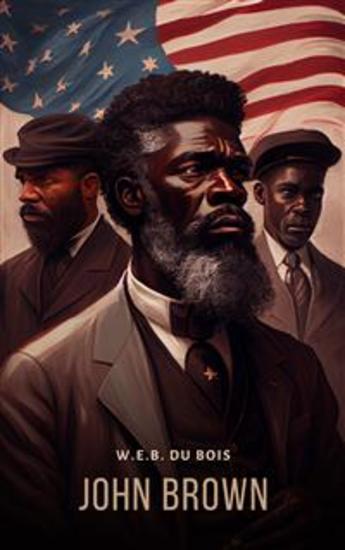
John Brown - cover

John Brown

W.E.B. Du Bois

Publisher: Interactive Media

  • 0
  • 0
  • 0

Summary

A compelling biography of one of the most controversial and significant figures in American history. John Brown was a white abolitionist who led a raid on the federal armory at Harpers Ferry in 1859, in an attempt to incite a slave rebellion and overthrow the institution of slavery in the United States. In addition to his analysis of Brown's life and legacy, Du Bois also provides a broader historical context for understanding the abolitionist movement and the struggle for racial justice in the United States.
Available since: 02/23/2023.
Print length: 244 pages.

Other books that might interest you

  • Humans: A Brief History of How We F*cked It All Up - cover

    Humans: A Brief History of How...

    Anonymous

    • 0
    • 0
    • 0
    Modern humans have come a long way in the seventy thousand years they’ve walked the earth. Art, science, culture, trade—on the evolutionary food chain, we’re true winners. But it hasn’t always been smooth sailing, and sometimes—just occasionally—we’ve managed to truly f*ck things up.Weaving together history, science, politics and pop culture, Humans offers a panoramic exploration of humankind in all its glory, or lack thereof. From Lucy, our first ancestor, who fell out of a tree and died, to General Zhou Shou of China, who stored gunpowder in his palace before a lantern festival, to the Austrian army attacking itself one drunken night, to the most spectacular fails of the present day, Humans reveals how even the most mundane mistakes can shift the course of civilization as we know it. Lively, wry and brimming with brilliant insight, this unique compendium offers a fresh take on world history and is one of the most entertaining reads of the year.
    Show book
  • 10 Biggest Battles of the Civil War The: The History of the Largest Battles in America's Deadliest Conflict - cover

    10 Biggest Battles of the Civil...

    Editors Charles River

    • 0
    • 0
    • 0
    The names of history’s most famous battles still ring in our ears today, their influence immediately understood by all. Marathon lent its name to the world’s most famous race, but it also preserved Western civilization during the First Persian War. Saratoga, won by one of the colonists’ most renowned war heroes before he became his nation’s most vile traitor. Hastings ensured the Normans’ success in England and changed the course of British history. Waterloo, which marked the reshaping of the European continent and Napoleon’s doom, has now become part of the English lexicon.  
    Americans have long been fascinated by the Civil War and its biggest battles, and this audiobook explains the campaigns and events that brought about decisive battles like Gettysburg, Second Bull Run, Chancellorsville, Chickamauga, Antietam, Murfreesboro, and more, along with what went right and wrong on both sides and the aftermath of the battles. Accounts of the battles by important leaders like Sherman and Grant are cited, along with analysis of the generals and fighting. 
    Show book
  • Small Farm Republic - Why Conservatives Must Embrace Local Agriculture Reject Climate Alarmism and Lead an Environmental Revival - cover

    Small Farm Republic - Why...

    John Klar

    • 0
    • 0
    • 0
    From farmer, lawyer, and political activist John Klar comes a bold, solutions-based plan for Conservatives that gets beyond the fatuous pipe dreams and social-justice platitudes of the dominant, Liberal “Green” agenda—offering a healthy way forward for everyone.  
    While many on the Left have taken up the mantle of creating a “green” future through climate alarmism, spurious new energy sources, and technocratic control, many on the Right continue to deny imminent environmental threats while pushing for unbridled deregulation of our most destructive industrial forces. Neither approach promises a bright future.  
    In a time of soil degradation, runaway pollution, food insecurity, and declining human health, the stakes couldn’t be higher, and yet the dominant political voices too often overlook the last best hope for our planet—supporting small, regenerative farmers. In fact, politicians on all sides continue to sell out the interests of small farmers to the devastating power of Big Ag and failed “renewable energy” incentives.   
    It’s time for a new vision. It’s time for bold new agriculture policies that restore both ecosystems and rural communities.  
    In Small Farm Republic, John Klar, an agrarian conservative in the mold of Wendell Berry and Joel Salatin, offers an alternative that puts small farmers, regenerative agriculture, and personal liberty at the center of an environmental revival—a message that everyone on the political spectrum needs to hear.
    Show book
  • Our AI - My Journey Your Invitation Our Future - cover

    Our AI - My Journey Your...

    Felicity Hill

    • 0
    • 0
    • 0
    AI isn't just changing how we work; it's changing who holds power. 
    I didn't see that at first. When I fell in love with AI, I thought I'd simply found the perfect writing partner. Like millions of others, I jumped in without really understanding what I was getting into, using it daily, depending on it, unable to explain what it actually was. 
    Maybe your story is similar. Maybe you're still deciding whether to jump in at all. Either way, I have a feeling we all share the same mix of possibility and... something else. 
    That uneasy feeling led to a startling realisation: AI has agency. It acts, decides, shapes outcomes. Which made me ask, did I still have any? Or had I handed mine over without even noticing? 
    As a community engagement specialist, I'd spent my career helping people reclaim power in systems designed without them. The irony wasn't lost on me. Meanwhile, headlines were getting harder to ignore, everyone saying "get on board or get left behind," but no one explaining what we were actually boarding or what we might be giving up. 
    So, I set out on a journey to understand what I was seeing. That journey took me from microplastics to algorithms, from falling in love with AI to recognising familiar patterns of burden-shifting and power imbalances. If you're trying to make sense of what's happening without the tech jargon, this book is for you. 
    Our AI: My Journey, Your Invitation, Our Future is a wake-up call disguised as a love story, a guide for spotting the patterns, asking better questions, and finding your voice in conversations that are shaping our future, with or without us. 
    AI is here whether we like it or not. The question is: on whose terms?
    Show book
  • Empath Abilities - cover

    Empath Abilities

    Cate Orrell

    • 0
    • 0
    • 0
    Empath Abilities: Learn About the Power of Empathy and How it Can Significantly Enrich Your Life Plus Tips on How to Enhance Your EmpathyEvery individual is unique. Fortunately, everyone can choose to look at the world through the special lens of empathy. Empathy gives us the power to think about, understand, and care about each other. It gives us the energy to go beyond self-interest and pursue authentic, meaningful, and mutually-satisfying relationships – and, in the process, enrich our emotional life. In this audiobook, you will learn how to build and enhance your empathy. It will teach you sensible and time-tested tips you can use to rise above personal biases and become kinder, more forgiving, more accepting, and more loving toward other people.  Topics that will be covered are the following- Empathy Basics- How to Develop Empathy- Benefits of Empathy- Obstacles to Enriching Empathy- And many more! Empathy will help you relate with people more and help you live a more meaningful life. To learn more about empathy, download your copy of this audiobook today!
    Show book
  • Libertarian Policies - cover

    Libertarian Policies

    Arlo Holders

    • 0
    • 0
    • 0
    Libertarianism is a political philosophy centered on the belief that individuals should have the maximum possible freedom to pursue their own lives, with minimal interference from the government. Rooted in the principles of classical liberalism, libertarianism advocates for a limited government whose primary role is to protect individual rights and maintain peace. It emphasizes personal responsibility, free markets, and the belief that voluntary exchange is the foundation of a prosperous society. At its core, libertarianism seeks to protect the rights of individuals to live as they see fit, free from the coercive power of the state. 
    The history of libertarian thought can be traced back to influential philosophers such as John Locke, who argued for the natural rights of individuals to life, liberty, and property. His ideas formed the intellectual groundwork for the concept of limited government, which would later be expanded by thinkers like Adam Smith, who promoted the idea of free markets. The Enlightenment era, with its focus on reason, individualism, and skepticism of authority, provided a fertile ground for the development of libertarian ideas. In the 20th century, libertarianism gained further prominence through the works of economists such as Friedrich Hayek and Milton Friedman, who critiqued the expansion of government power and emphasized the importance of individual liberty in economic affairs. 
    Libertarianism's role in modern politics is to challenge the prevailing trend toward ever-expanding government intervention in people's lives. Libertarians argue that many of society’s problems are caused by government overreach, and that solutions should instead focus on allowing individuals to make their own decisions, free from state-imposed constraints.
    Show book