Rejoignez-nous pour un voyage dans le monde des livres!
Ajouter ce livre à l'électronique
Grey
Ecrivez un nouveau commentaire Default profile 50px
Grey
Abonnez-vous pour lire le livre complet ou lisez les premières pages gratuitement!
All characters reduced
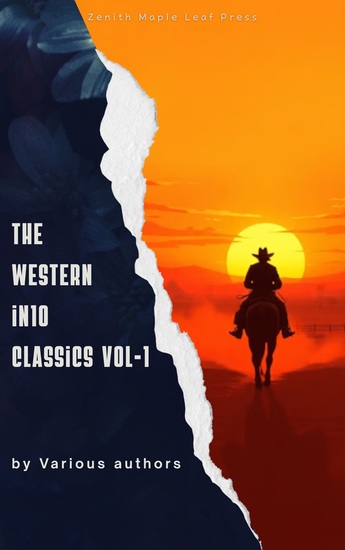
The Western in 10 classics Vol-1 - cover

The Western in 10 classics Vol-1

Andy Adams, Frederic Homer Balch, B. M. Bower, Dane Coolidge, James Fenimore Cooper, Bret Harte, Washington Irving, Samuel Merwin, Marah Ellis Ryan

Maison d'édition: Zenith Maple Leaf Press

  • 0
  • 0
  • 0

Synopsis

Ride into the Wild West with ten unforgettable classics.

The Western in 10 Classics Vol. 1 brings together the most iconic stories of the American frontier—where rugged landscapes, lawless towns, and larger-than-life heroes collide. From gunslingers and outlaws to settlers and sheriffs, these timeless works capture the grit, adventure, and spirit of the West in its golden age.

Inside this collection you'll find:
✔ Ten cornerstone Western novels and stories that shaped the genre
✔ Epic showdowns, cattle drives, frontier justice, and unforgettable landscapes
✔ Adventures that defined generations of readers and inspired countless films

Why readers love it:

The spirit of the West. Tales of courage, danger, and survival in untamed lands.

A complete collection. Ten full-length works bundled into one powerful anthology.

For fans of classic Westerns. Perfect for readers who love Louis L'Amour, Zane Grey, or frontier cinema.

A genre that shaped American storytelling
From pulp magazines to Hollywood blockbusters, the Western remains one of the most influential literary traditions. This anthology presents the essential classics that every fan of cowboys, outlaws, and the open range should experience.

✨ Saddle up and relive the stories that defined the Wild West.

👉 Click "Buy Now" to own The Western in 10 Classics Vol. 1—a must-have collection of frontier legends and timeless adventure.
Disponible depuis: 25/08/2025.
Longueur d'impression: 3161 pages.

D'autres livres qui pourraient vous intéresser

  • Across the Moors - From their pens to your ears genius in every story - cover

    Across the Moors - From their...

    W F Harvey

    • 0
    • 0
    • 0
    William Fryer Harvey AM was born on 14th April 1885 into a wealthy Quaker family in Leeds, West Yorkshire. 
    He was educated at the Quaker Bootham School in Yorkshire and Leighton Park School in Reading before university at Balliol College, Oxford.  
    His health was fragile and he poured his energies into writing short stories and in 1910 published his first collection ‘Midnight House’. 
    In the Great War he was with the Friends' Ambulance Unit and then served as a surgeon-lieutenant in the Royal Navy.  There he received the Albert Medal for Lifesaving but lung damage received at that time troubled him for the rest of his life. 
    He continued to write short stories, and even a memoir, but by 1925 ill health had forced his retirement to any outside work.  Three years later he published his second collection which contained his macabre classic ‘The Beast with Five fingers’, only one more collection would come from his pen in his lifetime. 
    For many years of his life he now lived in Switzerland with his wife but a yearning to be home saw them come back to England in 1935. 
    W F Harvey died in Letchworth on the 4th June 1937. He was 52.
    Voir livre
  • Short Story Collection Vol 036 - cover

    Short Story Collection Vol 036

    Various

    • 0
    • 0
    • 0
    A collection of 20 short works of fiction in the public domain chosen and read by a group of LibriVox members.The story of The Lamplighter (by Charles Dickens) is a special group reading, done by the following LV volunteers during a 2009 Librivox meeting in London, UK: Philippa, Cori Samuel, Alex Foster, Hugh McGuire, Chris Hughes and Gesine.
    Voir livre
  • The Blood Year Daughter - Stories - cover

    The Blood Year Daughter - Stories

    G.G. Silverman

    • 0
    • 0
    • 0
    In G. G. Silverman's debut fairytale-horror collection, The Blood Year Daughter, a woman builds husbands out of gravel and slaughterhouse feathers, two sisters eat cinnamon-scented pieces of their mother, and a charming doctor's murdered brides whisper warnings to his newest wife. 
     
    Silverman's women and girls escape smiling captors, draw blood to curse their loved ones, and wield fear to defend themselves in post-apocalyptic worlds. They ignore the insults of rotting Elderwomen filled with flies, resist marriage proposals, and fill themselves—joyfully—with multitudes of snakes. They are murdered and choose to live again. 
     
    Drawing from folktales, Silverman's Italian roots, and killers both real and imagined, The Blood Year Daughter's stories recall Kelly Link and Carmen Maria Machado. Spare and glittering as a spiderweb, sharp as a needle through a husband's nose, they establish G. G. Silverman as a formidable voice in feminist horror and magical realism.
    Voir livre
  • A Defensive Diamond - cover

    A Defensive Diamond

    Saki Saki

    • 0
    • 0
    • 0
    In "A Defensive Diamond," Saki (H.H. Munro) presents a humorous vignette set in a gentleman's club during a dreary October afternoon. The story centers around Treddleford, who seeks solace in a book while trying to avoid the incessant chatter of Amblecope, a loquacious fellow club member.As Treddleford attempts to immerse himself in poetry, Amblecope interrupts with his own anecdotes about sports and personal exploits, revealing his tendency to dominate conversations. Treddleford cleverly deflects Amblecope's attempts at engagement by sharing exaggerated and absurd tales of his own
    Voir livre
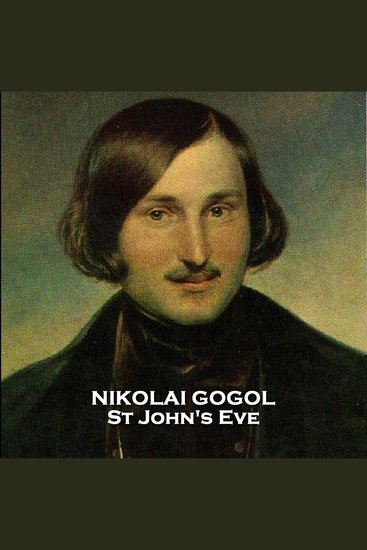
  • St John's Eve - From their pens to your ears genius in every story - cover

    St John's Eve - From their pens...

    Nikolai Gogol

    • 0
    • 0
    • 0
    Nikolai Vasilievich Gogol was born on 1st April 1809 to a father, descended from Ukrainian Cossacks and a mother with a military background in the Ukrainian town of Sorochyntsi, then part of the Russian Empire and rich in Cossack traditions and folklore.   
    His father wrote poetry and plays which the young Gogol helped stage at his uncle’s home theatre.  This helped ignite in him a love of literature and blossomed when he attended, what is now, the Nizhyn Gogol State University at the age of 12.  Here he participated in school theatre productions and refined his mastery of his native Ukrainian and also the Russian of his Imperial masters. 
    In 1828 he went to St Petersburg and unsuccessfully tried to begin a career as an actor after finding that with no money and no connections the civil service was barred to him. 
    Embezzling money from his mother he embarked on a trip to Germany. When the money ran out, he returned to St Petersburg but the experiences were used in a series of stories he contributed to periodicals.  These tales were steeped in his childhood memories of the Ukrainian landscape and peasantry enlivened with the supernatural of its folklore woven with realistic events of the day.  He wrote in Russian in a whimsical, colloquial style with a smattering of Ukrainian words and phrases that provided an authenticity.  Eight stories were published as ‘Evenings on a Farm near Dikanka’.  Seemingly all at once fame and fortune arrived. Gogol was hailed by his contemporaries, including Pushkin, as a pre-eminent writer of Russian literature.   
    His success continued with his brilliant plays ‘The Inspector General’ and the comedy ‘The Marriage for the Theatre’, both being highly acclaimed.   
    In 1834 he became Professor of Medieval History at the University of St. Petersburg but with little academic or teacher training, failed to adequately fulfil many of his duties and soon resigned this post.  With no obligations and using his earnings from his writing, which now included the impressionistic and immortal ‘Dead Souls’, Gogol travelled around Europe, spending the most time in Rome where he studied art, read Italian literature and developed a passion for opera.  
    In the 1840s Gogol became preoccupied with a need to purify his soul and embarked on a pilgrimage to Jerusalem. In tandem he fell under the influence of a strict and austere spiritual ascetic who persuaded him to observe strict fasts that, allied with his depression and deteriorating health, contributed to his death on 21st April 1852 at the age of only 43. 
    Gogol had a profound and enduring impact on literature which can be evidenced from his masterpiece, ‘The Cloak’, more popularly although wrongly translated as ‘The Overcoat’ published in 1841.  A hundred years later Vladamir Nabokov called it ‘The greatest Russian short story ever written.’
    Voir livre
  • The Broken Darkness - cover

    The Broken Darkness

    Theresa Braun

    • 0
    • 0
    • 0
    In her debut collection, Theresa Braun explores the inner workings of the human heart and what it is we most desire—forgiveness, acceptance, love, fame, or merely to escape who we really are. Whether we are battling ghosts, demons, mythical monsters, the past, or other dimensions, we are really facing the deepest parts of ourselves. These thirteen tales of horror and dark fantasy may appear to be a matter of good versus evil, but they are all a reflection of the hidden corners of the soul that are often shades of broken darkness. The characters in these stories must face their inner and outer terrors, or else suffer the consequences.
    Voir livre