Join us on a literary world trip!
Add this book to bookshelf
Grey
Write a new comment Default profile 50px
Grey
Subscribe to read the full book or read the first pages for free!
All characters reduced
10 Classics Western Stories - cover

10 Classics Western Stories

Ambrose Bierce, Samuel Merwin, James Fenimore Cooper, Andy Adams, Marah Ellis Ryan, B.M. Bower, Frederic Balch, Zenith Evergreen Literary Co.

Publisher: Zenith Evergreen Literary Co.

  • 0
  • 0
  • 0

Summary

Dusty trails, daring outlaws, and the legends that built the West.

10 Classics Western Stories brings together the best of the American West in one action-packed collection. From shootouts to frontier justice, these tales echo with the sound of galloping horses, rugged landscapes, and heroes forged in wilderness and war.

Featuring classic authors like Zane Grey, Bret Harte, and James Fenimore Cooper, this volume is a must-have for any fan of Western novels, historical Americana, and survival storytelling.

💬 "If you love the smell of campfires, the thrill of the chase, and justice served from horseback—these stories ride tall in the saddle."

🤠 Why Readers Saddle Up for This Collection:
Contains 10 complete, unabridged Western stories by legendary authors

Perfect for fans of Lonesome Dove, Riders of the Purple Sage, and The Last of the Mohicans

Ideal gift for Western fiction readers, Americana collectors, and historical lit fans

📣 Ride Into the West. Face the Frontier. Relive the Legends.
Buy 10 Classics Western Stories today and immerse yourself in a world where courage rides on every page.
Available since: 04/25/2025.
Print length: 3161 pages.
Other books that might interest you

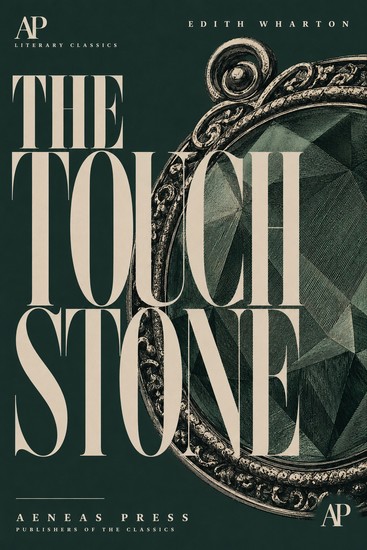
  • The Touchstone - A Novella of a Sold Correspondence - cover

    The Touchstone - A Novella of a...

    Edith Wharton

    • 0
    • 0
    • 0
    A man sells the love letters a famous dead novelist wrote him — anonymously, for the money to marry — and then must live inside the marriage the money bought. Wharton, the first woman to win the Pulitzer Prize for Fiction, published this novella in 1900; it is the earliest statement of her permanent subject, which is not adultery or money but the small betrayal a decent person makes and then has to eat, daily, for years. Six decades of paintings, from Cassatt to Hammershøi, dwell on readers and letters, the quiet interiors where a private betrayal is read and reread.
    Show book
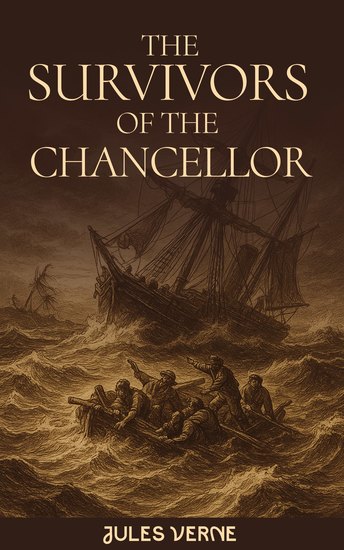
  • The Survivors of the Chancellor - cover

    The Survivors of the Chancellor

    Jules Verne

    • 0
    • 0
    • 0
    The Survivors of the Chancellor is one of Jules Verne's most intense and realistic sea narratives—a harrowing tale of shipwreck, endurance, and the darkest limits of human survival. Told in the form of a firsthand journal, the novel follows the ill-fated voyage of the merchant ship Chancellor, which suffers a catastrophic disaster while crossing the Atlantic Ocean.
    
    As fire, structural failure, and chaos overtake the vessel, passengers and crew are forced to abandon ship and cling to fragile lifeboats adrift on the open sea. With supplies dwindling and hope fading, the survivors confront starvation, madness, moral collapse, and the raw struggle to remain human under unbearable conditions. Unlike Verne's more optimistic scientific adventures, this novel strips away technological triumph to reveal the stark vulnerability of life at sea.
    
    Unflinching and deeply psychological, The Survivors of the Chancellor explores themes of desperation, ethical boundaries, and the resilience—or fragility—of the human spirit. Verne's restrained, documentary-style narration heightens the realism and emotional impact, making the ordeal feel chillingly immediate.
    
    Dark, gripping, and profoundly moving, The Survivors of the Chancellor stands as a powerful departure from Jules Verne's usual adventurous optimism, offering readers a sobering and unforgettable meditation on survival against overwhelming odds.
    Show book
  • Two Temptations - The Fragile Facades of Marriage Morality and Ruin - cover

    Two Temptations - The Fragile...

    George Eliot

    • 0
    • 0
    • 0
    In the intricately woven society of Middlemarch, the threads of respectability are beginning to snap. 
    What happens when the life you promised yourself becomes a cage of your own making? 
    In Book 7: Two Temptations of George Eliot's masterpiece, the suffocating grip of financial ruin forces proud men to their knees. Dr. Tertius Lydgate, once fueled by brilliant medical ambition, now finds himself drowning in debt and completely isolated by the glacial, secret-keeping defiance of his beautiful wife, Rosamond. As the auctioneer's hammer looms over their home, Lydgate is driven to the brink, eyeing the billiard tables and the intoxicating, destructive lure of chance. 
    Meanwhile, the pious and wealthy banker Nicholas Bulstrode faces a reckoning of a different kind. A ghost from his unsavory past has arrived on his doorstep, demanding a price for his silence. As Bulstrode's carefully constructed empire of morality threatens to collapse, the desperation of these two very different men collides in a heart-wrenching climax of betrayal and pride. 
    Beautifully narrated by Evelia Farias this explosive installment of Middlemarch dives deep into the dark waters of human frailty, the bitter ironies of marriage, and the agonizing compromises we make when everything is on the line. It is a timeless exploration of temptation that will leave you breathless.
    Show book
  • If I Were a Man - From their pens to your ears genius in every story - cover

    If I Were a Man - From their...

    Charlotte Perkins Gilman

    • 0
    • 0
    • 0
    Charlotte Perkins Gilman was born on 3rd July 1860 in Hartford, Connecticut, to an unaffectionate mother and a father who abandoned her and her older brother to a life of poverty. 
    Inevitably her schooling was limited and by 15 she had attended seven different schools but received only four years education.  However Charlotte was resourceful and did spend time with her father’s aunts – the suffragist Isabella Beecher Hooker and the ‘Uncle Tom Cabin’s’ author, Harriet Beecher Stowe as well as many hours at the public library studying ancient civilisations. 
    In 1878, she enrolled in classes at the Rhode Island School of Design where she met Martha Luther and they developed a close relationship until Luther married in 1881. Charlotte was devastated and detested romance and love until she met and married the artist Charles Walter Stetson.  
    Their only child, Katharine Beecher Stetson, was born in 1885 but left Charlotte with post-natal depression, then often dismissed as a case of hysteria or nerves.  Unsuited to domestic life she ruptured her life and moved to California with Katherine.  She divorced in 1894 and then sent Katharine east to live with her father and his second wife confirming that his paternal rights be acknowledged and that Katherine establish a relationship with her father. 
    After her mother died in 1893, Charlotte moved back east and became involved with her first cousin, Wall Street attorney, Houghton Gilman who she married in 1900. After his death she moved back to California, where Katherine now lived.   
    Her most popular story is ‘The Yellow Wallpaper’ which touched on her own post-partum depression and underlined the need for women to be responsible for their mental and physical well-being, as the narrator is ordered by her husband/doctor to take compete rest in her room where she is isolated and becomes obsessed with the revolting yellow wallpaper.   
    She wrote other notable short stories the best of which we also include.   
    Charlotte lectured widely for social reform, wrote important non-fiction works that questioned our patriarchal system and left a legacy as a leading and positive spokesperson for feminism.  
    She was diagnosed with incurable breast cancer in 1932 and, as she wrote in her suicide note and autobiography, she ‘chose chloroform over cancer’    
    Charlotte Perkins Gilman took her own life on 17th August 1935, aged 75, in Pasadena, California.
    Show book
  • The Communist Manifesto - cover

    The Communist Manifesto

    Karl Marx, Friedrich Engels

    • 0
    • 0
    • 0
    The Communist Manifesto is one of the most influential political and philosophical works ever written, authored by Karl Marx and Friedrich Engels. First published in 1848, the manifesto presents a concise analysis of class struggle, capitalism, and social change, arguing that history has been shaped by conflicts between economic classes and advocating for a society based on collective ownership of the means of production. The work examines the rise of industrial capitalism, the relationship between the bourgeoisie and the proletariat, and the economic and social forces that, according to its authors, drive historical development. It concludes with a call for workers of the world to unite in pursuit of social and economic transformation.
    Show book
  • Sense and Sensibility - cover

    Sense and Sensibility

    Jane Austen

    • 0
    • 0
    • 0
    Sense and Sensibility 
    Enter the world of Regency England, where social standing and economic security are the ultimate currencies. Sense and Sensibility, Jane Austen's timeless classic, follows the lives of two sisters, Elinor and Marianne Dashwood, as they navigate the complexities of love, loss, and family responsibility. 
    After the death of their father, the Dashwood sisters are cast out of their family home and left to fudge through a world that values reputation above all else. Elinor, the sensible and reserved eldest sister, embodies the "sense" of the novel's title, while Marianne, the younger and more emotionally expressive sister, represents the "sensibility". 
    As they settle into their new life in a humble cottage, the sisters face numerous challenges. Elinor falls deeply in love with the reserved and stoic Edward Ferrars, but their social differences and his prior engagement threaten to keep them apart. Marianne, meanwhile, is swept off her feet by the charming but duplicitous John Willoughby, only to be heartbroken when he abandons her. 
    Through their experiences, Austen masterfully explores themes of love, money, social status, and family responsibility. With sharp wit and insight, she critiques the societal norms of her time, revealing the tension between reason and emotion, and the importance of finding a balance between the two. 
    As the sisters navigate their way through the complexities of Regency England, they must confront their own prejudices and come to terms with the realities of their society in order to find true happiness. Will Elinor and Marianne find love and security, or will the societal pressures of their time tear them apart? 
    Join Elinor and Marianne on their journey of self-discovery and rediscover why Sense and Sensibility remains one of Jane Austen's most beloved novels.
    Show book