Join us on a literary world trip!
Add this book to bookshelf
Grey
Write a new comment Default profile 50px
Grey
Subscribe to read the full book or read the first pages for free!
All characters reduced
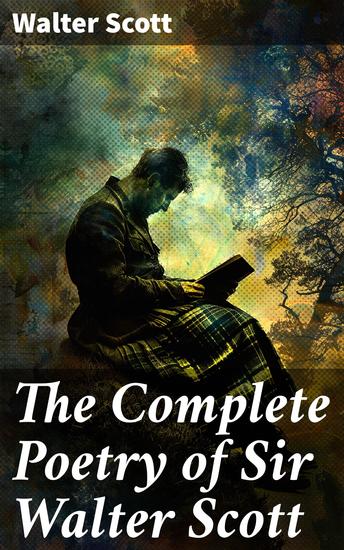
The Complete Poetry of Sir Walter Scott - Journey through Romantic Scottish Verses and Historical Ballads - cover

The Complete Poetry of Sir Walter Scott - Journey through Romantic Scottish Verses and Historical Ballads

Walter Scott

Publisher: Good Press

  • 0
  • 0
  • 0

Summary

In "The Complete Poetry of Sir Walter Scott," the renowned Scottish novelist and poet presents a comprehensive anthology of his lyrical works, encapsulating the romantic spirit and nationalistic fervor of the early 19th century. Scott's poetry blends personal emotion with rich historical narrative, often drawing inspiration from the Scottish landscape and folklore. His varied poetic style ranges from the ballads of the "Lay of the Last Minstrel" to the reflective verses of "Marmion," highlighting his ability to evoke a wide spectrum of themes, including chivalry, love, and the clash of cultures, while reflecting the influences of Romanticism that dominated his era. Walter Scott, often dubbed the 'Äòfather of the historical novel,'Äô was deeply influenced by his Scottish heritage and the turbulent history of his homeland. His background as a lawyer and an avid antiquarian fueled his fascination with Scottish history and legend, which finds ample representation in his poetry. Scott'Äôs literary career was not only shaped by his personal experiences but also by the broader cultural movements of his time, addressing themes of identity and nationhood, which would resonate throughout his works. This curated collection is essential reading for anyone interested in the interplay of history and poetry, as it reveals Scott'Äôs profound impact on the literary landscape. The volume not only serves as an introduction to Scott'Äôs poetic genius but also invites readers to engage with the vibrant tapestry of early 19th-century Scottish culture.
Available since: 01/06/2024.
Print length: 840 pages.

Other books that might interest you

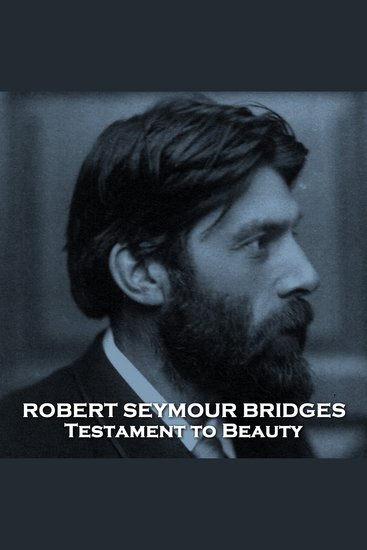
  • Testament to Beauty - A former Poet Laureate demonstrates his poetic talents in this tender and beautiful verse - cover

    Testament to Beauty - A former...

    Robert Seymour Bridges

    • 0
    • 0
    • 0
    Robert Seymour Bridges, OM was born on 23rd October 1844 at Walmer in Kent where he spent his early childhood in a house overlooking the anchoring ground of the British fleet.  
    His father died aged only 47 in 1853. A year later his mother remarried and the family relocated to Rochdale, where his stepfather was the vicar.  
    In 1854 Bridges was sent to Eton College and attended until 1863.  After Eton he went to Corpus Christi College at Oxford. There he became good friends with Gerard Manley Hopkins and would later compile an edition of his poems that is now considered a major contribution to English literature. 
    He graduated from Oxford, in 1867, with a second-class degree in literae humaniores.  Initially he planned to join the Church of England and travelled to the Middle East to broaden his religious horizons.  However, he soon decided that life as a physician would be a better path and, after 8 months studying German (that being the language of many scientific papers at the time) he began his study of medicine at St. Bartholomew's Hospital in 1869.  His long-term ambition was that by the age of forty he could retire from medicine to devote himself to writing. 
    Unfortunately Bridges failed his final medical examinations in 1873 and, as unable to immediately retake the papers, spent six months in Italy learning Italian as well as immersing himself in its art. In July 1874 he went to Dublin to continue his medical studies. Re-examined in December he passed and became a house physician at St Bartholomew's Hospital. It was whilst here that he engaged in a series of highly critical remarks about the Victorian medical establishment. One such was his claim that whilst working as a young doctor he saw a staggering 30,940 patients in one year. 
    A bout of severe pneumonia and lung disease forced his retirement from the medical profession in 1882 and so, slightly ahead of schedule, he began his literary career in earnest.  He already been writing for several years and had published his first poetry collection in 1873.  
    After his illness and a trip to Italy, Bridges moved, with his mother, to Yattendon in Berkshire.  It was during this time, from 1882 to 1904, that Bridges wrote most of his best-known lyrics as well as eight plays and two masques, all in verse.  
    It was also here, in 1884, that he married Monica Waterhouse. They would go on to have three children and spend the rest of their lives in rural seclusion, in an idyllic marriage, first at Yattendon, then at Boars Hill, Oxford. 
    Bridges made an important contribution to hymnody with the publication in 1899 of his Yattendon Hymnal. This collection of hymns became a bridge between the Victorian hymnody of the late 19th century and the modern hymnody of the early 20th century. He was also a chorister at Yattendon church for 18 years. 
    In 1902 Monica and his daughter Margaret became seriously ill with tuberculosis, and a move from Yattendon to a healthier climate was in order. After several temporary homes they moved abroad to spend a year in Switzerland before returning to settle again in England at Chilswell House, which Bridges had designed, and built on Boar's Hill overlooking Oxford University.   
    His greatest achievement though was still some years ahead of him.  The office of Poet Laureate was held by Alfred Austin but with his death it was offered first to Rudyard Kipling, who refused it, and then to Bridges. He was appointed Poet Laureate in 1913 by George V, the only medical graduate to have ever held the office. Bridges, at this time, was neither highly regarded nor well known but a safe pair of hands in a World rapidly being overshadowed by the storms about to erupt over Europe and the First World War. 
    The events of this War, including the wounding of his son, Edward, had a sobering effect on Bridges' poetry. His work became fiercely patriotic. In 1915 edited a volume of prose and poetry, The Spirit of Man, intended to appeal to readers living in war time
    Show book

  • Unicorn - cover

    Unicorn

    Mike Bartlett

    • 0
    • 0
    • 0
    'My point is we're at the frontier here. No one knows. And I find that really fucking exciting.'
    Polly and Nick have it all. Happily married, two children, successful careers. And yet there's something missing… something rare and unforeseen… waiting to add a much-needed sparkle…
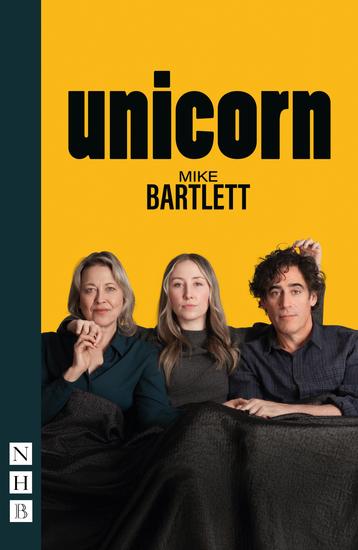
    Unicorn by Mike Bartlett is an explicit, funny and provocative play, which was first performed at the Garrick Theatre in London's West End in 2025. It was directed by James Macdonald and starred Nicola Walker, Stephen Mangan and Erin Doherty.
    Show book
  • A Pocket Book of Poems - To Accompany the Life Launch Series - cover

    A Pocket Book of Poems - To...

    Dr. Liz Bataille

    • 0
    • 0
    • 0
    Dr. Liz’ Pocket Book of Poems is subtitled a companion to Dr. Liz’ Life Launch series, which includes her Amazon #1, multi-international, best-selling memoir: Life Launch! Surviving the Storms of Physical and Sexual Abuse, Book One, and soon to be published Life Launch! Book 2: A New Dawn of Healing and Recovery. 
    In Dr. Liz’ Pocketbook of Poems, Book 3, she shares with her reader her entire body of poetry that she has written since she was 12 years old. The majority of these works were written as an outlet to self-soothe during her own teen and young adult years that Dr. Liz recounted in her best-selling memoir: living in abusive environments; navigating the tragic, accidental death of her older, only brother and other family and friends’ suicides; and her own struggles with drug and alcohol abuse. Indeed, in this book she shares through rhyme and prose her struggle to make sense of these traumatic experiences, and further, how they fuel her desire to help others (YOU) find hope, healing and a renewed passion for your lives and know that you are not alone in your journey. 
    This is Book Three of a 3-book series. Life Launch! Book Two (coming soon) will reveal the struggles Dr. Liz overcame during the 2nd half of her life: the suicide of her husband, the death of her father, abusive relationships, and being engaged at one time to a man who later became the Butcher of Brooklyn. 
    15% OF THE PROCEEDS FROM THIS BOOK WILL BE DONATED TO CHARITIES THAT SUPPORT MENTAL HEALTH (through the author’s own BJD Memorial Rainbow of Hope Charitable Foundation for Mental Health and Suicide Prevention that she established in memory of her husband, as well as too many friends and family members, who died by suicide or other tragic means).
    Show book
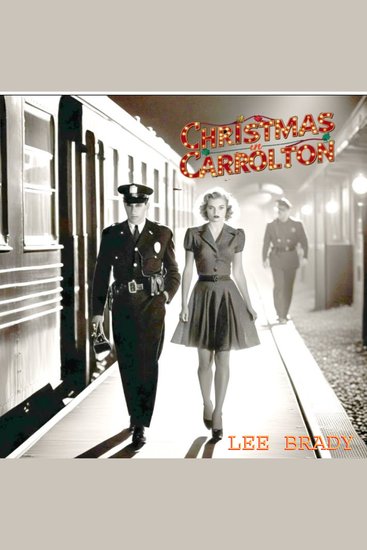
  • Christmas in Carrolton - cover

    Christmas in Carrolton

    Lee Brady

    • 0
    • 0
    • 0
    Sharla is a beautiful, mysterious movie star on a train bound for her old stomping grounds. While on the train, she meets a stranger, who knows more than she wants anyone to know about her. Sharla is one of those women who is a victim of her own beauty and so are all the men she meets.
    Show book
  • The Poetry of Edith Wharton - Pulitzer prize winning author Wharton known for novels such as Age Of Innocence and Ethan Frome was a woman of many talents an expert poet aswell we explore a wonderful selection here - cover

    The Poetry of Edith Wharton -...

    Edith Wharton

    • 0
    • 0
    • 0
    Edith Newbold Jones was born in New York on 24th January 1862.   Born into wealth, this background of privilege gave her a wealth of experience to eventually, after several false starts, produce many works based on it culminating in her 1921 Pulitzer Prize winning novel ‘The Age of Innocence’ 
     
    Marriage to Edward Robbins Wharton, who was 12 years her senior in 1885 seemed to offer much and for some years they travelled extensively.  After some years it was apparent that her husband suffered from acute depression and so the travelling ceased and they retired to ‘The Mount’, their estate designed by Edith.  By 1908 his condition was said to be incurable and prior to divorcing Edward in 1913 she began an affair, in 1908, with Morton Fullerton, a Times journalist, who was her intellectual equal and allowed her writing talents to push forward and write the novels for which she is so well known.  
     
    Acknowledged as one of the great American writers Wharton was also a dazzling though largely unrecognised poet.  Her talents allowed her to create poems that both capture and explore many situations of life and society.  
     
    Edith Wharton died of a stroke in 1937 at the Domaine Le Pavillon Colombe, her 18th-century house on Rue de Montmorency in Saint-Brice-sous-Forêt, in France. 
     
    1 - The Poetry of Edith Wharton - An Introduction 
    2 - Terminus by Edith Wharton 
    3 - Some Busy Hands by Edith Wharton 
    4 - A Failure by Edith Wharton 
    5 - A Hunting Song by Edith Wharton 
    6 - Happiness by Edith Wharton 
    7 - Mould and Vase by Edith Wharton 
    8 - Jade by Edith Wharton 
    9 - Aeropagus by Edith Wharton 
    10 - Non Dolet by Edith Wharton 
    11 - Botticlelli’s Madonna in the Louvre by Edith Wharton 
    12 - Patience by Edith Wharton 
    13 - The Comrade by Edith Wharton 
    14 - Mona Lisa by Edith Wharton 
    15 - Life by Edith Wharton 
    16 - The Bread of Angels by Edith Wharton 
    17 - Chartres by Edith Wharton 
    18 - Survival by Edith Wharton 
    19 - All Saints by Edith Wharton 
    20 - All Souls by Edith Wharton 
    21 - The Young Dead by Edith Wharton 
    22 - Belgium by Edith Wharton 
    23 - Battle Sleep by Edith Wharton 
    24 - Experience by Edith Wharton 
    25 - A Torchbearer by Edith Wharton 
    26 - A Grave by Edith Wharton 
    27 - An Autumn Sunset by Edith Wharton 
    28 - Grief by Edith Wharton
    Show book
  • King of Scotland - cover

    King of Scotland

    Iain Heggie

    • 0
    • 0
    • 0
    King of Scotland is an award-winning, dark comedy and a free adaptation of Gogol's A Diary of a Madman. 
    Long-term unemployed Tommy McMillan joins a government-funded retraining scheme, "Up the Ladder". Cited as a shining example of the government's employment policies and chosen for a media profile, Tommy is taken on by the Department of Upward Mobility. The department gets more than they bargained for; however, when they discover just how far up the ladder Tommy is expecting to go. 
    Featuring trouserless bankers, talking dogs, flying taxis, and a razor-sharp parody of the workings of politics, King of Scotland is an outrageous Fringe First-winning monologue. 
    About the author: Award-winning playwright Iain Heggie is one of Scotland's leading playwrights. His plays include the Mobil prize-winning play A Wholly Healthy Glasgow (1988) and the John Whiting Award-winning play American Bagpipes (1989). His other plays include An Experienced Woman Gives Advice, Don Juan, Love Freaks, and Wiping My Mother's Arse.
    Show book