Join us on a literary world trip!
Add this book to bookshelf
Grey
Write a new comment Default profile 50px
Grey
Subscribe to read the full book or read the first pages for free!
All characters reduced
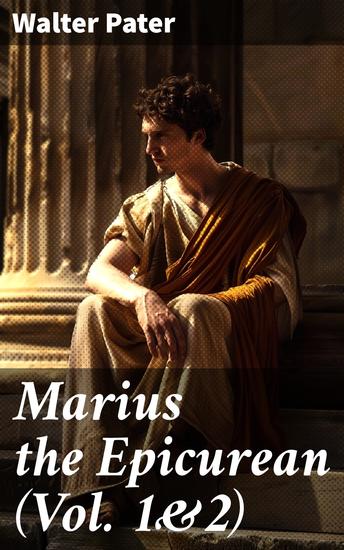
Marius the Epicurean (Vol 1&2) - Philosophical Novel - cover

Marius the Epicurean (Vol 1&2) - Philosophical Novel

Walter Pater

Publisher: Good Press

  • 0
  • 0
  • 0

Summary

Walter Pater's "Marius the Epicurean" is a profound exploration of the philosophical and aesthetic dilemmas faced by its titular character in the tempestuous milieu of ancient Rome. Written in a richly descriptive and impressionistic style, the novel engages deeply with themes of hedonism, beauty, and the search for meaning amidst moral ambiguity. Pater immerses readers in a lush landscape of sensory experiences and intellectual reflections, capturing the essence of Epicurean thought while also critiquing its limitations against the backdrop of a decaying empire. The narrative delicately balances lush prose with thoughtful insights, marking it as a significant contribution to late 19th-century literature that anticipates modern existential concerns. Walter Pater (1839-1894) was an influential English essayist and critic, notably linked with the Aesthetic Movement and the pre-Raphaelite circle. His philosophical approach, particularly his emphasis on 'art for art's sake,' reflects his own engagement with the tensions between beauty and morality. Pater's scholarly background in Renaissance studies played a crucial role in shaping Marius's character as he navigates the ethical considerations of pleasure and intellect amidst the cultural decline of Rome. Readers seeking a nuanced and evocative exploration of philosophical inquiry embedded within a narrative rich with historical context will find "Marius the Epicurean" a compelling read. Pater's distinctive prose and profound ideas invite deep reflection, making this work not only a significant literary achievement but also a thought-provoking journey into the interplay of art, philosophy, and life itself.
Available since: 12/27/2023.
Print length: 292 pages.
Other books that might interest you

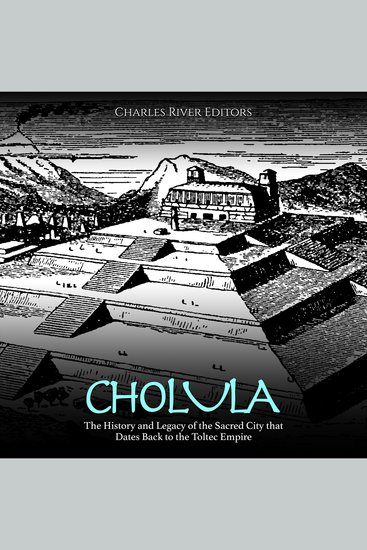
  • Cholula: The History and Legacy of the Sacred City that Dates Back to the Toltec Empire - cover

    Cholula: The History and Legacy...

    Editors Charles River

    • 0
    • 0
    • 0
    Spanish accounts and Mesoamerican ruins have ensured that 500 years later, people remain fascinated by civilizations like the Maya and Aztec, as well as sites such as Chichen Itza and Tikal. What is often overlooked is that the Maya and Aztec established kingdoms on lands that had been inhabited for millennia before them, and ancient cultures had not only left ruins but also influenced the civilizations that came after them. Thus, while sites like Chichen Itza are more famous, they drew upon past sites like Teotihuacan.  
    	Cholula is one of the most interesting, enigmatic, and forgotten cities in ancient Mesoamerica, and few people are aware that it is the oldest continuously-occupied settlement in the entire Western hemisphere. The current city is known for the Great Pyramid, which has the largest base of all pyramids in the world, as well as its many colonial churches and constant religious celebrations. All of these things ensure that Cholula is heavily visited, but the tremendous importance of Prehispanic Cholula has mostly been lost in the historical accounts of Puebla and even Mexico as a whole. 
    	Located in the Puebla-Tlaxcala Valley within a very fertile area, the Prehispanic city of Cholula was founded around 500 BCE. It soon developed into an important city and the construction of its Great Pyramid began around 200 BCE. During the height of Teotihuacan’s influence in the Classic period and the expansion of the Aztecs in the Postclassic, Cholula managed to maintain its independence and grew to become the greatest religious center in central Mesoamerica. As the main site for the cult of the god Quetzalcoatl, Cholula received pilgrims from many Prehispanic cities, and the two high priests of the Temple of Quetzalcoatl were charged with confirming the legitimacy of these foreign rulers, making their role one of the most important in the region.
    Show book
  • Ulysses Grant - The Famous American Military Leader from the 19th Century - cover

    Ulysses Grant - The Famous...

    Kelly Mass

    • 0
    • 0
    • 0
    Ulysses S. Grant was an American army officer and political leader who acted as the United States' 18th president from 1869 to 1877. Grant was an achieved civil liberties executive at the time of his presidency, developing the Justice Department and teaming up with the Radical Republicans to secure African Americans at the time of Restoration. He led the Union Army to success in the American Civil War as Commanding General in the year 1865, and after that briefly functioned as Secretary of War. 
    Ulysses Grant made a significant impact on the United States during the civil war. In this sense, his footprint in history is well-worth the study.
    Show book
  • Beirut Inferno: The Untold Story of a Fateful Attack - "Unlock the Secrets of Beirut Inferno! Engage with audio lessons for an unforgettable experience" - cover

    Beirut Inferno: The Untold Story...

    Jasper Loraine

    • 0
    • 0
    • 0
    Beirut Inferno: The Untold Story of a Fateful Attack  
    ⭐⭐ Simplified Guide & Explanations Included ⭐⭐ 
    Are you looking to uncover the hidden narratives and understand the resilience and hope that emerged from an urban catastrophe? 
    Seeking a thorough narrative that provides all the essential elements to grasp the impact and significance of this fateful event? 
    Your search ends here! 
    This guide serves as your definitive companion for deepening your awareness, comprehending the events, and engaging with detailed accounts. With this, you're prepared for an enlightening journey. 
    Updated to reflect the latest insights and analyses. 
    Key features of this enriched guide: 
    - Profound insights about the fateful attack on Beirut 
    - Detailed explanations of the events leading to and following the attack 
    - Effective strategies for understanding and connecting with the narrative 
    Our guide stands out through its comprehensive coverage, essential for a complete grasp of the complexities involved. Concepts aren't merely touched upon; they are thoroughly explored with accuracy. 
    Please note that this guide is an independent resource designed purely for educational and informational purposes. 
    Designed with a clear structure and easy-to-understand language, our guide ensures smooth transitions between topics. Say goodbye to dense jargon and welcome clear, precise, and accurate content. 
    So, why wait? Click the BUY NOW button, secure your guide, and embark on your journey to understanding Beirut Inferno: The Untold Story of a Fateful Attack success!
    Show book
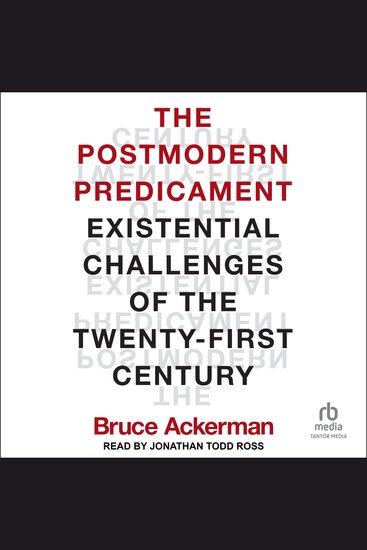
  • The Postmodern Predicament - Existential Challenges of the Twenty-First Century - cover

    The Postmodern Predicament -...

    Bruce Ackerman

    • 0
    • 0
    • 0
    Human beings have taken one thing for granted since our earliest days: we are bodily creatures dealing with one another on a face-to-face basis. The internet has shattered this fundamental feature of human existence. We are suddenly living our lives in two worlds at once—shifting endlessly from virtual to physical reality as we reach out to others. 


    Worse yet, we are developing different personal identities in our two worlds. We say and do things in virtual reality that flatly contradict our face-to-face commitments to family, friends, and fellow-workers—and vice versa. The Postmodern Predicament explores these dilemmas at each phase of the life cycle, beginning at the moment a young child picks up a cell phone. 


    The existentialist tradition of the twentieth century provides a precious perspective on our postmodern dilemmas. Thinkers and doers like Simone de Beauvoir and Jean-Paul Sartre considered the fragmentation of modern life as a central source of contemporary anxieties. Like them, Ackerman views the challenges of the internet age as a political, no less than personal, problem—and proposes concrete reforms that that could mobilize broad-based support for democracy against demagogic assaults on its very foundations.
    Show book
  • The United Nations - The Organisation at the Heart of International Diplomacy - cover

    The United Nations - The...

    50 50minutes

    • 0
    • 0
    • 0
    Keen to learn but short on time? Get to grips with the history of the United Nations in next to no time with this concise guide.50Minutes.com provides a clear and engaging analysis of the history and principal achievements of the United Nations. The UN was founded in 1945 in the aftermath of the bloodiest war the world had ever seen, with its founding members aiming to maintain international peace and security and prevent destruction on such a vast scale from taking place again. Nowadays, the organisation consists of 193 members, meaning that almost every country in the world is represented, and its work spans a number of fields, including peacekeeping, the defence of human rights and sustainable development.In just 50 minutes you will:• Gain an understanding of the structure, aims and functioning of the United Nations• Learn about its main areas of activity and key related bodies• Understand the criticisms that have been levelled at the UN and the challenges facing it in the futureABOUT 50MINUTES.COM|History & Culture50MINUTES.COM will enable you to quickly understand the main events, people, conflicts and discoveries from world history that have shaped the world we live in today. Our publications present the key information on a wide variety of topics in a quick and accessible way that is guaranteed to save you time on your journey of discovery.
    Show book
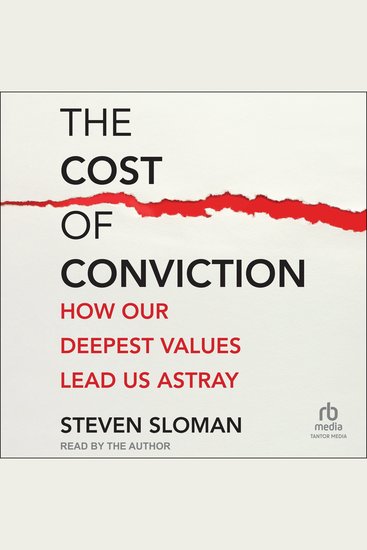
  • The Cost of Conviction - How Our Deepest Values Lead Us Astray - cover

    The Cost of Conviction - How Our...

    Steven Sloman

    • 0
    • 0
    • 0
    When you are faced with a decision, do you consider the best outcome, or do you consider your deepest values about which actions are appropriate? The Cost of Conviction contrasts these two primary strategies for making decisions: consequentialism, the former, or prioritizing one's sacred values, the latter. Steven Sloman argues that, while both modes of decision making are necessary tools for a good decision maker, people err by deploying sacred values more often than they should, especially when it comes to sociopolitical issues. In this book, Sloman provides a new understanding of today's societal ills and grounds that understanding in science. 


    The book begins by covering the philosophical and conceptual background of the two decision-making strategies, then takes a deep dive into the psychology of decision making. Drawing on historical and current examples of the use of the two strategies, the author provides a thorough overview of the psychology of decision making, including work on judgment, conscious and unconscious decision-making processes, the roles of emotion, and even an analysis of habit and addiction. 


    With its unique emphasis on sacred values, The Cost of Conviction is an eye-opening must-listen for all decision makers, especially those who wish to understand judgment, social decision making, and leadership.
    Show book