Join us on a literary world trip!
Add this book to bookshelf
Grey
Write a new comment Default profile 50px
Grey
Subscribe to read the full book or read the first pages for free!
All characters reduced
Imaginary Portraits - cover

Imaginary Portraits

Walter Pater

Publisher: Aeneas Press

  • 0
  • 0
  • 0

Summary

Four invented lives, each a study in what a mind does with beauty: a Watteau seen through a girl's diary, a Dutch philosopher, a German prince, a young Frenchman. Pater's conclusion to The Renaissance — that we should burn with a hard, gemlike flame — became the motto of the aesthetes and frightened him so much he withdrew it; these 1887 pieces are that argument made into people.
Available since: 08/19/2026.
Print length: 103 pages.

Other books that might interest you

  • Selected works of TS Eliot - The Love Song of J Alfred Prufrock The Waste Land - cover

    Selected works of TS Eliot - The...

    T. S. Eliot

    • 0
    • 0
    • 0
    Thomas Stearns Eliot OM (26 Sept 1888 – 4 Jan 1965) was a poet, essayist, publisher, playwright, and literary and social critic. Born in St. Louis, Missouri, to a prominent Boston Brahmin family, he moved to England in 1914 at the age of 25 and went on to settle, work and marry there. He became a British subject in 1927 at the age of 39, subsequently renouncing his American citizenship. Considered one of the twentieth century's major poets, Eliot attracted widespread attention for his poem "The Love Song of J. Alfred Prufrock" (1915), which was seen as a masterpiece of the Modernist movement. It was followed by some of the best-known poems in the English language, including The Waste Land (1922), "The Hollow Men" (1925), "Ash Wednesday" (1930), and Four Quartets (1943). He was also known for his seven plays, particularly Murder in the Cathedral (1935) and The Cocktail Party (1949). He was awarded the Nobel Prize in Literature in 1948, "for his outstanding, pioneer contribution to present-day poetry".
    This collection includes the works of T. S. Eliot: 
    The Love Song of J. Alfred Prufrock
    The Waste Land
    Show book
  • BJ Harrison Reads The Purloined Letter - cover

    BJ Harrison Reads The Purloined...

    Edgar Allan Poe

    • 0
    • 0
    • 0
    B.J. Harrison reads "The Purloined Letter" by Edgar Allan Poe, which is a story of an unusual mystery that needs to be solved. A sensitive letter has been stolen from the queen's boudoir, and the famous amateur detective C. Auguste Dupin has been called to the rescue. The guilty one is the lover himself, Minister D-. What ensues is a match between the detective and the thief, two equally brilliant minds. Who will win, and at what cost? The story is the third in a series of Edgar Allan Poe's three stories featuring Dupin, which have been considered significant forerunners in the category of the modern detective story. It has been adapted into television and theater versions alike.B. J. Harrison started his Classic Tales Podcast back in 2007, wanting to breathe new life into classic stories. He masterfully plays with a wide array of voices and accents and has since then produced over 500 audiobooks. Now in collaboration with SAGA Egmont, his engaging narration of these famous classics is available to readers everywhere.Edgar Allan Poe (1809-1849) was an American writer, poet, editor and literary critic. He is considered a pioneer in the genres of detective fiction, the macabre and science fiction. His numerous short stories include the likes of "The Purloined Letter", and "The Raven" is one of his best-known poems. Edgar Allan Poe's works have been captured throughout popular culture, including films, such as Histoires extraordinaires from 1968, based on Poe's stories and directed by Federico Fellini.
    Show book
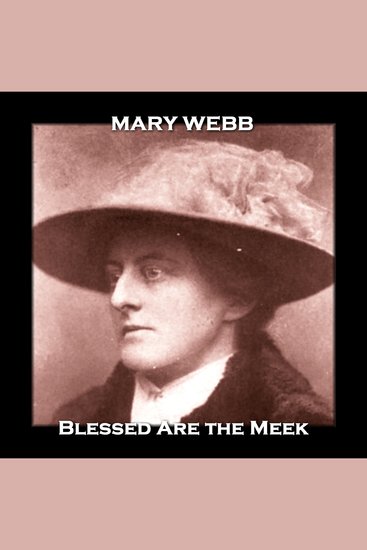
  • Blessed Are the Meek - From their pens to your ears genius in every story - cover

    Blessed Are the Meek - From...

    Mary Webb

    • 0
    • 0
    • 0
    Mary Gladys Meredith was born on 25th March 1881 at Leighton Lodge in the village of Leighton, near Shrewsbury in Shropshire.  
    Mary was home-schooled by her father before being sent to a finishing school in Southport in 1895. Her longs walks in the countryside helped her develop a heightened sense of observation and description, of both people and places, which later infused both her poetry and prose. 
    When she was 20 she developed symptoms of Graves' disease, a thyroid disorder that caused bulging protuberant eyes and throat goitre. This caused life-long ill health and was a possible contributor to her early death.  
    Mary was first published as a teenager when her brother sent to a local newspaper her poem on a recent rail accident.  Mary, who was in the habit of destroying her work was appalled though placated when she discovered that it had received some positive appreciation in readers letters. 
    1912 brought marriage to Henry Bertram Law Webb, a teacher. He supported her literary work which, in 1917, resulted in the publication of her novel ‘The Golden Arrow.’ 
    A few years later they acquired a property in London where, it was hoped, recognition of her literary talents would be more easily recognised.   
    Her 1924 novel, ‘Precious Bane’, won the Prix Femina Vie Heureuse, the prestigious French literary prize awarded by an all-female jury. 
    Most of her poetry and various other works were only published after her death. 
    By 1927 her health was deteriorating and her marriage failing.   
    Mary Webb died on 8th October 1927 at St Leonards-on-Sea, East Sussex.  She was 46.
    Show book
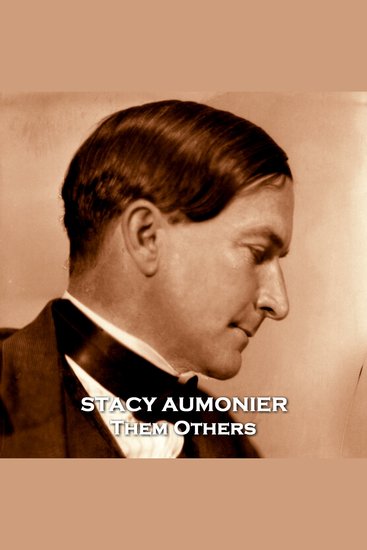
  • Them Others - From their pens to your ears genius in every story - cover

    Them Others - From their pens to...

    Stacy Aumonier

    • 0
    • 0
    • 0
    Stacy Aumonier was born at Hampstead Road near Regent’s Park, London on 31st March 1877. 
    He came from a family with a strong and sustained tradition in the visual arts; sculptors and painters. 
    In 1890 the teenage Aumonier attended Cranleigh School in Surrey. Although he would later write critically about English public schools (with articles for the London Evening Standard and New York Times) in how they tried to impose conformity on students, records indicate that he integrated well into Cranleigh. Aumonier was a passionate cricket player, belonged to the Literary and Debating Society, and, in his final year, became a prefect. 
    On leaving school it seemed the family tradition of the visual arts would be his career path. In particular his early talents were that of a landscape painter. He exhibited paintings at the Royal Academy in 1902 and 1903, and 1908. An exhibition of his work would later be held at the Goupil Gallery in London in 1911. 
    In 1907 he married the international concert pianist, Gertrude Peppercorn, at West Horsley in Surrey. She herself was the daughter of a landscape painter (Arthur Douglas Peppercorn, occasionally cited as ‘the English Corot’.) A son, Timothy, was born in 1921. 
    A year after his marriage, Aumonier began a brief career in a second branch of the arts at which he enjoyed outstanding success—as a stage performer writing and performing his own sketches.  
    The Observer newspaper commented that "...the stage lost in him a real and rare genius, he could walk out alone before any audience, from the simplest to the most sophisticated, and make it laugh or cry at will." 
    In 1915, Aumonier published a short story ‘The Friends’ which was well received (and voted one of the best short stories of 1915 by the Boston Magazine, Transcript).  
    Despite his age being 40 in 1917 he was called up for service in World War I. He began as a private in the Army Pay Corps, and then transferred as a draughtsman in the Ministry of National Service. 
    By now he had four books published—two novels and two books of short stories—and his occupation is recorded with the Army Medical Board as ‘author.’ 
    In the mid-1920s, Aumonier received the shattering diagnosis that he had contracted tuberculosis. In the last few years of his life, he would spend long spells in various sanatoria, some better than others. In a letter to his friend, Rebecca West, written shortly before his death, he described the debilitating conditions in a sanatorium in Norfolk during the winter of 1927, where the dampness was so severe that a newspaper left beside the bed would feel "sodden to the touch in the morning." 
    Shortly before his death, Stacy Aumonier sought treatment in Switzerland, but died of the disease in Clinique La Prairie at Clarens beside Lake Geneva on 21st December 1928. He was 55.
    Show book

  • Ethan Frome - cover

    Ethan Frome

    Edith Wharton

    • 0
    • 0
    • 0
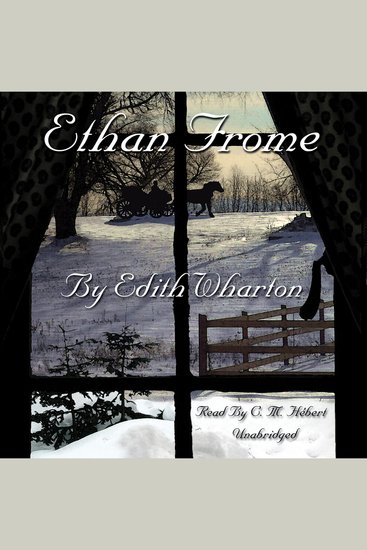
    Often regarded as Edith Wharton's finest achievement,Ethan Fromecontrasts sharply with her usual ironic contemplation of fashionable New York society. Set in the bleak winter landscape of New England farmlands, this keenly-etched portrait of the simple inhabitants of a nineteenth-century village is a masterpiece of literary realism. 
    Ethan is a patient, rough-hewn man tormented by a passionate love for his sickly wife's young cousin, Mattie, who has come to offer her domestic services. Restricted by the bonds of marriage—however loveless it may be—and the fear of public condemnation, Ethan's desperate quest for happiness leads ultimately to pain and despair. 
    Ethan's story, with its tragic implications of what might have been, has held irresistible fascination for readers for over a century. The tale of a decent man's fall brought on by his finest feelings is a haunting study of the human conflict between desire and duty.
    Show book
  • Wuthering Heights - cover

    Wuthering Heights

    Emily Brontë

    • 0
    • 0
    • 0
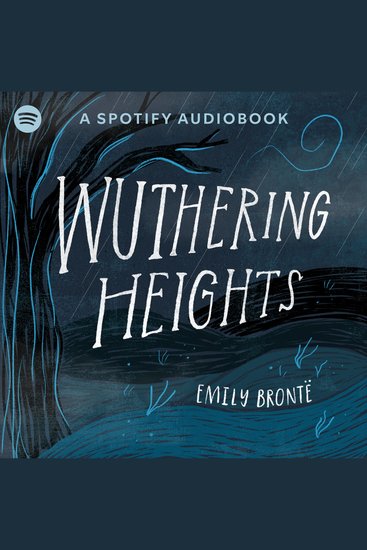
    Considered to be one of the greatest novels ever written in English, Wuthering Heights is a wild, passionate story of the intense love between Catherine and Heathcliff. 
    They meet as children. They grow up together. It’s only after one fatefully misheard conversation that Heathcliff leaves, believing his love for Catherine isn’t reciprocated. When he returns, he is a wealthy and polished man but things have now changed – drastically – and Heathcliff starts to exact terrible revenge on those who wronged him… 
    “Be with me always—take any form—drive me mad! only do not leave me in this abyss, where I cannot find you!”
    Show book