Begleiten Sie uns auf eine literarische Weltreise!
Buch zum Bücherregal hinzufügen
Grey
Einen neuen Kommentar schreiben Default profile 50px
Grey
Jetzt das ganze Buch im Abo oder die ersten Seiten gratis lesen!
All characters reduced
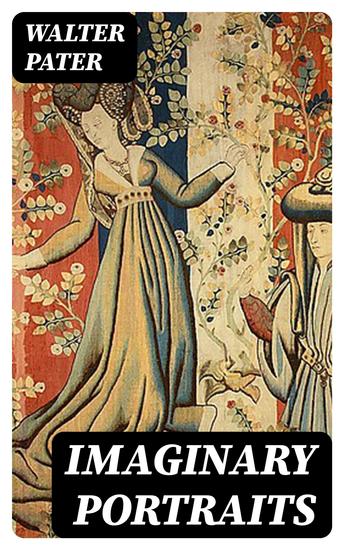
Imaginary Portraits - cover

Imaginary Portraits

Walter Pater

Verlag: DigiCat

  • 0
  • 0
  • 0

Beschreibung

Walter Pater's "Imaginary Portraits" is a collection of finely crafted sketches that delve into the inner worlds of historical and fictional figures. Through rich, impressionistic prose, Pater intertwines aestheticism with intricate psychological exploration, reflecting the Victorian fascination with art and individuality. Each portrait is imbued with a sense of the ephemeral, capturing the essence of his subjects in evocative detail, while the theme of unrealized potential permeates the narratives, challenging the boundaries between reality and imagination in the literary context of the fin de siècle. Pater, a pivotal figure in the Aesthetic Movement, was deeply influenced by his Oxford education and his engagement with Renaissance art and philosophy. His ideas on beauty and emotional experience, framed through his own keen sensibilities, propelled him to explore the depths of character and the multiplicity of human experience. "Imaginary Portraits" reflects Pater's keen interest in perception and representation, illuminating how such influences shaped his understanding of art and literature as vital components of human life. This book is highly recommended for readers seeking to engage with an exploration of the artistic psyche and the nature of identity. Pater's eloquent prose and innovative style will appeal to anyone interested in the intersections of art, literature, and philosophy, offering profound insights into the complexities of both historical and imagined figures.
Verfügbar seit: 10.08.2022.
Drucklänge: 83 Seiten.

Weitere Bücher, die Sie mögen werden

  • Hands - The Power from up on High - cover

    Hands - The Power from up on High

    A Nyembo, D McKendi

    • 0
    • 0
    • 0
    It started when Joy's hands were small and his were large and mature. A touch here and a touch there, a hand here and a hand there. A life here, and a life that almost ended.  
    Some people say everything happens for a reason. But what could justify this? Joy decides she must share her story, her truth: Truth, Expressed, Dawn, Dusk, Incessantly Endures. That's TEDDIE! She hugs it tightly, the bear of her salvation.  
    In the most-high places, Joy's cry for help is heard. An invisible hand empties out the glass of misery and begins filling it with a new life. From then on, this invisible hand touches every part of her. Soon her life is about answering one question: Now my own hands, what will I do with them? 
    This is a story of victory against the odds, carried in the hand of love which reaches down from up high.
    Zum Buch
  • A Middle-Sized Artist - From their pens to your ears genius in every story - cover

    A Middle-Sized Artist - From...

    Charlotte Perkins Gilman

    • 0
    • 0
    • 0
    Charlotte Perkins Gilman was born on 3rd July 1860 in Hartford, Connecticut, to an unaffectionate mother and a father who abandoned her and her older brother to a life of poverty. 
    Inevitably her schooling was limited and by 15 she had attended seven different schools but received only four years education.  However Charlotte was resourceful and did spend time with her father’s aunts – the suffragist Isabella Beecher Hooker and the ‘Uncle Tom Cabin’s’ author, Harriet Beecher Stowe as well as many hours at the public library studying ancient civilisations. 
    In 1878, she enrolled in classes at the Rhode Island School of Design where she met Martha Luther and they developed a close relationship until Luther married in 1881. Charlotte was devastated and detested romance and love until she met and married the artist Charles Walter Stetson.  
    Their only child, Katharine Beecher Stetson, was born in 1885 but left Charlotte with post-natal depression, then often dismissed as a case of hysteria or nerves.  Unsuited to domestic life she ruptured her life and moved to California with Katherine.  She divorced in 1894 and then sent Katharine east to live with her father and his second wife confirming that his paternal rights be acknowledged and that Katherine establish a relationship with her father. 
    After her mother died in 1893, Charlotte moved back east and became involved with her first cousin, Wall Street attorney, Houghton Gilman who she married in 1900. After his death she moved back to California, where Katherine now lived.   
    Her most popular story is ‘The Yellow Wallpaper’ which touched on her own post-partum depression and underlined the need for women to be responsible for their mental and physical well-being, as the narrator is ordered by her husband/doctor to take compete rest in her room where she is isolated and becomes obsessed with the revolting yellow wallpaper.   
    She wrote other notable short stories the best of which we also include.   
    Charlotte lectured widely for social reform, wrote important non-fiction works that questioned our patriarchal system and left a legacy as a leading and positive spokesperson for feminism.  
    She was diagnosed with incurable breast cancer in 1932 and, as she wrote in her suicide note and autobiography, she ‘chose chloroform over cancer’    
    Charlotte Perkins Gilman took her own life on 17th August 1935, aged 75, in Pasadena, California.
    Zum Buch
  • The Latter Days of Wizadora - The Midlife Misfires of a Forgotten Witch - cover

    The Latter Days of Wizadora -...

    Alexander Paul Burton

    • 0
    • 0
    • 0
    She was once a whimsical wizardess solving magical mishaps on children’s television. Now she’s navigating midlife, burnout, and the absurdities of modern life—one disastrous spell at a time. 
    The Latter Days of: Wizadora is a biting satire that reimagines a beloved childhood icon in a world where magic has become mundane, nostalgia is monetized, and the pressure to "find yourself" can only be solved with too much gin. 
    Once an effortlessly magical being who captivated young audiences, Wizadora now lives above a vape shop in Luton, working a soul-sucking job at the Department of Arcane Complaints and Refunds. Her wand’s broken, her plants are staging protests, and her magical mishaps—including summoning her naked ex in front of a Parent & Witchcraft group—have made her a viral sensation for all the wrong reasons. 
    This novel skewers the societal obsession with staying young, relevant, and "magical" in an increasingly cynical, oversaturated world. It takes a sharp, hilarious look at the illusions of modern life—where social media influencers glow with "ancient prophecies," smartphones sprout wings, and the self-help industry has turned every personal failure into a product. 
    Wizadora’s journey is about coming to terms with who we thought we should be, versus who we really are—and the hilarious, painful absurdity of it all. 
    Through wit, absurdity, and surprisingly tender moments, The Latter Days of: Wizadora offers a scathing commentary on nostalgia, societal expectations, and the overwhelming pressure to "find your magic" in a world that no longer believes in it. 
    Magic isn’t what it was. But neither are we. And that’s fine.
    Zum Buch
  • Lost & Found - Nine life-changing lessons about stuff from someone who lost everything - cover

    Lost & Found - Nine...

    Helen Chandler-Wilde

    • 0
    • 0
    • 0
    On New Year's Eve of 2018, Helen Chandler-Wilde lost everything she owned in a storage unit fire in Croydon, England, where she'd stowed all her possessions after a big breakup. She was left devastated and forced to re-evaluate her relationship with owning material things. 


    In Lost & Found, she offers a profound mix of memoir, self-help, and journalism to explore the psychological reasons, sociological quirks of human nature, and fascinating science behind why we buy and hold onto things. Helen interviews people from all walks of life, including behavioral psychologists on the science of nostalgia, a nun on what it's like to own almost nothing, and consumer psychologists on why we spend impulsively, to help us better understand why we're surrounded by clutter and what we can do to change it. 


    By the end of this smart-thinking book filled with lessons and engaging prompts to help us gain perspective on our buying habits and the value we place on what we already have, your relationship with your belongings will be changed forever. The perfect "new year, new you" listen or gift for anyone who is downsizing, striving for a more sustainable lifestyle, or is eager to cultivate a minimalist mindset.
    Zum Buch
  • Life Outside The Land of My Birth - cover

    Life Outside The Land of My Birth

    Gideon M. Mahlangu

    • 0
    • 0
    • 0
    Wounds that cannot be seen are the most of severe pain, compared to those of an eye witness, as it is not easy for one to realise that they need medical treatment to cure. This book is based on a true life story of Samson Olayiwola Kolawoles who long-held the belief that there are better and brighter future prospects ahead of him in South Africa, the land that was not of his birth. His believe on his future prospects analysis relied mainly on his commitment, dedication, but above all on the Creator  the universe. The genesis of his long-held belief emanates from the principle: A good head and a good heart are at all times of life a powerful and formidable conquering force.The publications narration of a life journey provides human intelligence with an insight that as human beings, through the unavoidable natural process of life, one inadvertently incurs many obligations.The truth is that naturally as human beings irrespective of the land of our birth, we are born in possession of life obligations and as one grows, they accumulate. Hence, it is important for human beings including Africans to have tranquil relations so that no one can say, African parents have committed the biggest debt or sin for giving birth to any African soul.The strong belief in African morals, values, convictions and principles played a great role in the writing of this book. One of the principles is that there are many things that one can do to build and take care of planet earth - of Africa in particular, in this instance. Whether we know it or not, there are human beings on planet earth who have the potential to destroy it. The life journey of the main character motivated the author to feel responsible for doing what is humanly correct and compelling morally, which was to devise a means of contributing in reducing the potential of those who are highly committed to destroying the African motherlandAbove all, the trials, tribulations and triumphs of the main character inspired the author to write this book. The primary aim of the author is to see him-self playing a pivotal role in educating, imparting and sharing knowledge and information amongst African humanity and the entire world as a part of the contribution to saving the other part of planet earth, namely Africa, which is important.The events of the life journey of the main character have undoubtedly proved how the African world could be destroyed to the point where ultimately there would be no tolerance and no support to each other socially, politically or economically as Africans. Certainly, there is and there will be no other relevant time for Africans to ask that to one another when such happens. The underlying question becomes, why should we as Africans always allow ourselves to be viewed by the outside world as the people who are incapable of caring of their rich soil and for themselves? Is this a curse and you believing so, then Africans just accept that you do not belong to Africa but where they belong is nowhere. Africans, your appearance does not occur to yourselves as being individuals from various African countries but it presents a collective African picture. That is why it is imperative to have a good picture about Africa and its people collectively. Realise that as people we are viewed in comparison to the behaviour and appearance of others. Africans, you need to be worthy of trust to one another. If there is no confidence and reliability to one another, then, Africa, you are at risk of collapsing. The end result is that you will become the advocates and champions of the African pessimism and colonial system of special type agenda.
    Zum Buch
  • Shiksa Goddess - (Or How I Spent My Forties) - cover

    Shiksa Goddess - (Or How I Spent...

    Wendy Wasserstein

    • 0
    • 0
    • 0
    Though celebrated playwright Wendy Wasserstein was firmly rooted in New York's cultural life, her appeal is universal. Shiksa Goddess collects her urbane, inspiring, and deeply empathetic essays, all written when she was in her forties, and all infused with her trademark irreverent humor. The full range of Wasserstein' s mid-life obsessions are covered in this eclectic collection— everything from Chekhov, politics, and celebrity to family, fashion, and real estate. Whether fretting over her figure, discovering her gentile roots, or writing tenderly about her very Jewish mother and her own daughter— born when Wendy was forty-eight and single— Wasserstein reveals the full, dizzying life of a shiksa goddess with unabashed candor and inimitable style.
    Zum Buch