Join us on a literary world trip!
Add this book to bookshelf
Grey
Write a new comment Default profile 50px
Grey
Subscribe to read the full book or read the first pages for free!
All characters reduced
The Hopi Indians - cover

The Hopi Indians

Walter Hough

Publisher: DigiCat

  • 0
  • 0
  • 0

Summary

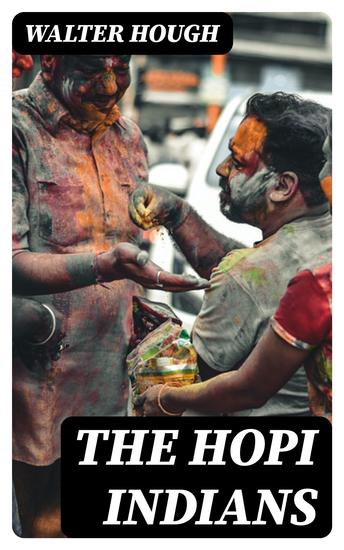
In 'The Hopi Indians,' Walter Hough presents a comprehensive exploration of the Hopi tribe, illuminating their intricate cultural practices, spiritual beliefs, and rich historical background. Hough employs a meticulous ethnographic approach, utilizing vivid descriptions and observational insights to convey the essence of Hopi life. His work is situated within the broader contexts of American anthropology and early 20th-century studies of Indigenous cultures, reflecting both the fascination and the prevailing attitudes toward Native American societies at the time. The narrative intertwines personal accounts with scholarly research, making the book both informative and engaging for readers interested in indigenous studies and anthropology. Walter Hough was a prominent American anthropologist, whose career was marked by a commitment to the preservation of Indigenous cultures. His extensive fieldwork and research among various Native American groups, including the Hopi, were profoundly influenced by his desire to advocate for Indigenous rights and cultural understanding during an era of significant change. Hough's experiences fostered a deep respect for the Hopi people, allowing him to capture their stories with authenticity and compassion, while striving to communicate the complexities of their customs and worldview. 'The Hopi Indians' is a vital read for scholars, students, and anyone interested in Indigenous American cultures. Hough's empathetic portrayal and in-depth analysis provide an essential lens through which to view not only the Hopi but also the broader spectrum of Native American life. This book invites readers to appreciate the enduring legacy of the Hopi and offers significant insights into the importance of cultural preservation.
Available since: 09/05/2022.
Print length: 159 pages.

Other books that might interest you

  • A Cup of Tea on The Commode - My Multi-Tasking Adventures of Caring for Mom and How I Survived to Tell the Tale - cover

    A Cup of Tea on The Commode - My...

    Mark Steven Porro

    • 0
    • 0
    • 0
    Mark enjoyed his carefree bachelor’s life in Los Angeles. He had no steady girlfriend, no children, few responsibilities outside of work. But that all changed when “The Call” came. Genevieve, his eighty-nine-year-old mother, was on her deathbed. He rushed back to New Jersey to be by her side. Hours became days, days became weeks, then she woke up. So, he moved back into his childhood home and took over her care. His first task was to remove all hazards, which included the current caregivers. 
     
    After, Mark asked his mother, “Do you trust me?” She whispered, “Yes.” “Do you understand I will do everything in my power to keep you healthy and safe?” She smiled and nodded. “That means I’m in charge, and that means now you must obey me.” Her mood shifted in an instant. She looked him dead in the eye, then puckered up her lips. He wasn’t sure if this was a sign of surrender or one wishing him luck. He kissed her and hoped for the best. 
     
    The parent/child role reversal may not have been unique to Mark, but how he dealt with it was. One day, hoping to make Genevieve’s time on the commode a tad more pleasant, he offered her a cup of her favorite beverage. It was a hit, and a cup of tea on the commode became a staple on the morning menu, and the clear choice for the title of this intimate, funny, and heartwarming memoir of how eldercare can be done. 
     
    A Cup of Tea on the Commode chronicles Mark’s multitasking adventures of filling his mother’s last years with love, laughter, and joy. Though not always successful, he came pretty damn close.
    Show book
  • The Populist Playbook - Strategies and Tactics Used by Populist Leaders - cover

    The Populist Playbook -...

    Arlo Holders

    • 0
    • 0
    • 0
    Populism, as a political ideology and movement, is rooted in the idea of a fundamental divide between "the people" and "the elite." It asserts that the common people, often portrayed as hardworking and morally upright, are being oppressed or ignored by an elite class of politicians, businessmen, and intellectuals who are perceived as self-serving and out of touch with the needs of the general public. The term "populism" has evolved over time and can be used to describe a range of political movements and leaders who claim to represent the interests of the ordinary person against established powers. However, despite its widespread usage, the definition of populism remains fluid, often shaped by the context in which it is used. 
    Historically, populism has roots in 19th-century agrarian movements in the United States and Europe. In the United States, for instance, the Populist Party emerged in the late 1800s as a response to the economic struggles of farmers, advocating for policies such as free silver and the direct election of senators. Similarly, in Europe, populist movements often arose in opposition to industrialization and the concentration of wealth and power in the hands of the elites. These early forms of populism focused on economic issues and the struggle of the working class and rural populations against the powerful urban elites and industrialists. 
    In modern times, populism has become more varied and globalized, often adapting to the specific cultural, economic, and political climates of different countries. Contemporary populist movements often capitalize on discontent with globalization, rising inequality, and the perceived failures of traditional political elites to address the concerns of ordinary citizens. The populist playbook has expanded to include a wide array of strategies, from fiery rhetoric and social media manipulation to direct attacks on democratic institutions and the media.
    Show book
  • The Wholehearted Way - Finding Peace After Life's Heartbreaks Disappointments and Rejections - cover

    The Wholehearted Way - Finding...

    Dr. Peace Amadi

    • 0
    • 0
    • 0
    A Five-Part Framework to Healing and Inner Peace 
    · Understand your patterns of pain 
    · Navigate heartbreak, disappointment, and rejection 
    · From a credentialed PsyD professor of psychology, speaker, and coach 
     
    Heartbreak, disappointment, and rejection are part of being human in a broken world. But when we experience them again and again, it can start to feel personal. Our identity and worth are shaken, and we may find that staying hurt feels easier than pursuing healing. Yet, in Christ, we are meant to be made whole. 
     
    The Wholehearted Way expresses an approach to life that requires us to tell ourselves a bigger, better, broader story about our pain, allowing us to love ourselves fully and live abundantly. Combining biblical truth with her psychology and coaching expertise, Dr. Peace Amadi helps you 
     
    · understand why rejection cuts so deep 
    · identify the hidden beliefs that sabotage your healing and restoration 
    · build a kind, life-giving relationship with your inner self 
    · ask the right questions when facing heartache, unfulfilled dreams, and unmet expectations 
    · choose freedom from the painful cycles in your life  
     
    Though pain must run its course, it doesn't have to be your life's story. The Wholehearted Way is your compassionate roadmap for navigating the heartbreak, disappointment, and rejection life hands you in order to experience true and lasting peace.
    Show book
  • Subtle Abuse - Indirect Forms of Psychological Harm - cover

    Subtle Abuse - Indirect Forms of...

    Cito Harder

    • 0
    • 0
    • 0
    Subtle abuse is a form of psychological harm that often goes unnoticed, yet its effects can be just as damaging as more overt forms of mistreatment. Unlike physical abuse, which leaves visible marks, or direct verbal abuse, which is easier to identify, subtle abuse operates in the shadows, disguised as normal behavior, misunderstandings, or even acts of care. This makes it particularly dangerous because victims may not recognize it until significant emotional and psychological damage has already occurred. 
    At its core, subtle abuse is about control, manipulation, and emotional harm inflicted in ways that are difficult to detect. It can take many forms, including gaslighting, passive-aggressive behavior, emotional withholding, and undermining someone’s confidence in indirect ways. A common characteristic of subtle abuse is its plausibility—it often leaves victims doubting their own experiences and questioning whether they are simply overreacting. Because the harm is delivered in small, often deniable doses, victims may struggle to explain their distress to others, further isolating them in their experience. 
    One of the most insidious aspects of subtle abuse is its ability to erode a person’s sense of self over time. The victim may start to feel insecure, anxious, or even incapable, not realizing that their mental state has been shaped by constant, indirect put-downs or the gradual withholding of emotional support. For example, a partner who consistently dismisses concerns with phrases like “You’re too sensitive” or “I was just joking” may be engaging in subtle emotional abuse by invalidating the other person’s feelings. Similarly, a boss who subtly undermines an employee’s work without overt criticism may be manipulating them into self-doubt and compliance.
    Show book
  • The Light Between Apple Trees - Rediscovering the Wild Through a Beloved American Fruit - cover

    The Light Between Apple Trees -...

    Priyanka Kumar

    • 0
    • 0
    • 0
    As a child in the foothills of the Himalayas, Priyanka Kumar was entranced by forest-like orchards of diverse and luscious fruit—especially apples. These biodiverse orchards seemed worlds away from the cardboard apples that lined supermarket shelves. Yet on a small patch of woods near her home in Santa Fe, Kumar discovered a wild apple tree—and the seeds of an odyssey were planted. In The Light Between Apple Trees, Kumar takes us on a dazzling and transformative journey to rediscover apples, unearthing a rich and complex history while illuminating how we can reimagine our relationship with nature.Apples are popular, but in our everyday lives we rarely encounter more than a handful of varieties: of the sixteen thousand apple varieties once celebrated in America, scarcely a fifth remain accessible. Kumar reveals the richness of a hidden world. She brilliantly weaves together science and childhood memories with the apple's storied history, from its roots in Kazakhstan to Spanish orchards in the Southwest and Thomas Jefferson's beloved Monticello fruitery.The Light Between Apple Trees is a lyric odyssey that will forever change how you look at an "apple a day." Kumar shows how—if we follow untamed paths—the tang and texture of an apple can lead us back to the wild.
    Show book
  • Terraform - Building a Better World - cover

    Terraform - Building a Better World

    Anonymous

    • 0
    • 0
    • 0
    Performed by Propaganda and featuring four exclusive original songs. 
    In this debut collection of essays and poetry, musician, speaker, and activist Propaganda inspires us to create a better, more equitable world. 
    “If we get to make the very cultures that shape who we are, then let us remake them in the best way possible.” 
    In this deep, challenging, and thoughtful book, Propaganda looks at the ways in which our world is broken. Using the metaphor of terraforming—creating a livable world out of an inhospitable one—he shows how we can begin to reshape our homes, friendships, communities, and politics. 
    In this transformative time—when we are redefining what a truly just and equitable world looks like, and reflecting on the work that needs to be done both in our spiritual and secular lives—Propaganda rallies readers to create that just world. He sheds light on how nefarious origin stories have skewed our views of ourselves and others and allowed gross injustices, and demonstrates how great storytelling and excellent art can create and shape new perspectives of the world and make all of us better. 
    ?Includes the songs "" IAGBTW (It Ain't Gotta Be This Way)”, "" The Soils Alive"", "" Us We "", and ""Imagine"" (featuring Nahoa Life) by Propaganda.
    Show book