Join us on a literary world trip!
Add this book to bookshelf
Grey
Write a new comment Default profile 50px
Grey
Subscribe to read the full book or read the first pages for free!
All characters reduced
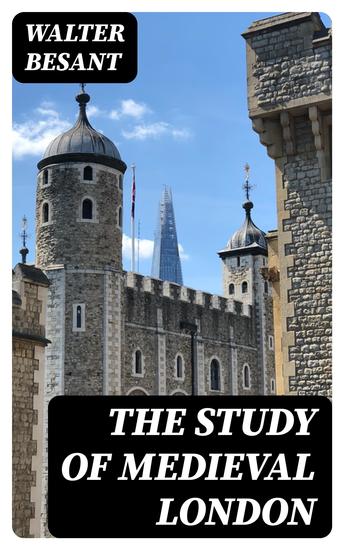
The Study of Medieval London - cover

The Study of Medieval London

Walter Besant

Publisher: DigiCat

  • 0
  • 0
  • 0

Summary

In 'The Study of Medieval London,' Walter Besant embarks on an exhaustive exploration of one of the most vibrant urban landscapes of the Middle Ages. Employing a meticulous blend of historical narrative and vivid description, Besant immerses the reader in the social, economic, and artistic facets of medieval life. His literary style seamlessly intertwines academic rigor with an engaging prose that captures the essence of this transformative period in London's history. By placing medieval London within the broader context of European urban development, Besant demonstrates how the city's growth was influenced by commerce, politics, and culture. Walter Besant, a distinguished novelist and historian of the late 19th century, was deeply invested in London's social issues and its historical narratives. His extensive background in both literary and social commentary, along with his commitment to uncovering the past, surely motivated him to create a comprehensive account of medieval London. Besant's profound understanding of the socio-political dynamics of his time infused his work with a rich contextual background, making his analysis particularly poignant for contemporary readers. This compelling examination is highly recommended for anyone interested in urban history or the medieval period. Besant's accessible narrative invites both scholars and casual readers to uncover the layers of London's past, making it an essential read that bridges the gap between historical inquiry and immersive storytelling.
Available since: 11/13/2022.
Print length: 976 pages.

Other books that might interest you

  • Hey Man Where's Dr Huang? - cover

    Hey Man Where's Dr Huang?

    Nathaniel Sewell

    • 0
    • 0
    • 0
    Dr. Huang hates Benjamin. Benjamin threw Dr. Huang out of Homer Memorial Golf & Country Club for being a pervert and having a fluid gender identity for subversive purposes. But Dr. Huang got lucky after Benjamin got knocked out by a stray golf ball. After the trauma, Benjamin ends up in the hospital with a futuristic probe inserted between the hemispheres of his brain-a probe implanted by Dr. Huang. Benjamin awakes in a dream-like environment at the first tee box at Homer Memorial. But only to be challenged to a golf match by the three sisters of fate, Nona, Decima, and Morta. Benjamin has no real chance of beating the supernatural sisters, but the stakes become apparent through a series of questions. Benjamin can earn more shots to his handicap for each hole, but there is a deadly catch: if he lies, he instantly dies by electrocution from Dr. Huang's probe. A deadly match that Benjamin comes to realize is happening inside his mind. Dr. Huang monitors Benjamin's every thought; if he even thinks about lying or misleading the sister of fate, he dies. Benjamin's life is at risk for each hole, and a series of challenges designed by Dr. Huang beyond golf await him. The challenges that examine racism, bigotry, gender dysphoria, and what happened to a crumbling American society and body politic. Will the sisters of fate win the match and Morta cut Benjamin's life short, or will Benjamin adhere to his ethical standard, his par, to fight back for his life? Nathaniel Sewell was born in Lexington, Kentucky. He lives in downtown St. Petersburg, Florida. His novels are about family troubles, political, social issues and the things none of us like to talk about. Hey Man, Where's Dr. Huang? is his sixth novel.
    Show book
  • Russian Cities - Saint Petersburg’s and Stalingrad’s History - cover

    Russian Cities - Saint...

    Kelly Mass

    • 0
    • 0
    • 0
    This bundle contains two different books about Russia: 
    Stalingrad - Stalingrad has changed names. It's now called Volgograd and is still one of the largest cities in Russia. But we can't ignore the fact that for a significant time in history, it was called Stalingrad, named after the tyrant and leader of the Soviet Union in the Second World War, Joseph Stalin. Let's explore the history of this city during the Second World War, and why the battles fought there were so horrendous and pivotal in history. 
    At the time of the Battle of Stalingrad In Southern Russia, Germany and its allies combated the Soviet Union for control of Stalingrad (now Volgograd). It is just one of the bloodiest engagements in the history of warfare, with an approximated 2 million general losses. It's marked by intense close-quarters battle and direct attacks on people in air campaign. The German High Command was pushed to eliminate substantial army forces from other theaters of war after their defeat at Stalingrad. 
    St. Petersburg - St Petersburg's structures lay over the skeletons of the press-ganged servant workers who worked to build it, making it the label "the city built on bones." Historians approximate that 100,000 18th-century serfs are buried underneath the city's stunning Italianate estates and large Parisian-style streets. 
    They passed away of cold, appetite, illness, or, if they were truly unfortunate, wolves. They were drawn from all around the Russian Empire at the time. They dedicated their lives for the magnificence of Imperial Russia, and the city they built, St Petersburg, stands as a testimony to the Russian state's single-mindedness. 
    Its extravagant palaces radiate European elegance and were actively built in a Western way to bring Russia closer to Europe.
    Show book
  • Ukraine Between War and Peace - cover

    Ukraine Between War and Peace

    Jacques Baud

    • 0
    • 0
    • 0
    Has the US strategy in Ukraine reached an impasse? What is the Russian conduct of military operations? When will the Ukrainian counter-offensive take place? Does Western weaponry really make a difference in Ukraine? Who are the winners of this war? What changes in the world are we witnessing since February 24, 2022? What is the reality of the losses on the Ukrainian and Russian sides? Can Western industry compete with Russian industry in Ukraine? Why is a negotiated solution not being sought? How is our perception of the conflit serving Ukraine?
    
    To answer these questions and many others, Jacques Baud relies on information from Western intelligence services and American documents that were leaked in April 2023. After the best-sellers Putin, Game Master? and Operation Z, both works praised world-wide, Baud returns to the war in Ukraine by analyzing the facts and nothing but the facts. Whether one is for or against the position of Ukraine, one must nevertheless deal with the field of operations and to analyze what is happening there. This is the only way to find a path to peace—because peace will not come by relying on illusions.
    Show book
  • The Things We Make - The Unknown History of Invention from Cathedrals to Soda Cans - cover

    The Things We Make - The Unknown...

    Bill Hammack

    • 0
    • 0
    • 0
    Discover the secret method used to build the world . . . 


    For millennia, humans have used one simple method to solve problems. Whether it's planting crops, building skyscrapers, developing photographs, or designing the first microchip, all creators follow the same steps to engineer progress. But this powerful method, the "engineering method", is an all but hidden process that few of us have heard of—let alone understand—but that influences every aspect of our lives. 


    Bill Hammack, a Carl Sagan Award–winning professor of engineering and viral "The Engineer Guy" on YouTube, has a lifelong passion for the things we make, and how we make them. Now, for the first time, he reveals the invisible method behind every invention and takes us on a whirlwind tour of how humans built the world we know today. From the grand stone arches of medieval cathedrals to the mundane modern soda can, Hammack explains the golden rule of thumb that underlies every new building technique, every technological advancement, and every creative solution that leads us one step closer to a better, more functional world. Spanning centuries and cultures, Hammack offers a fascinating perspective on how humans engineer solutions in a world full of problems.
    Show book
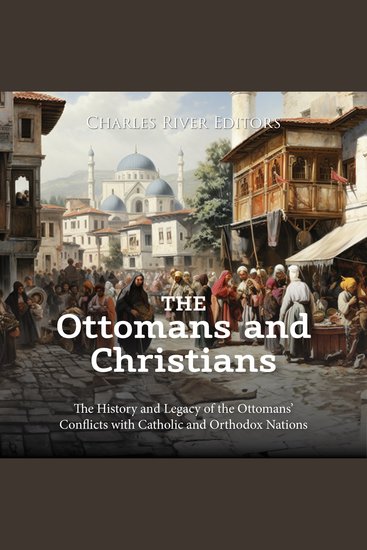
  • Ottomans and Christians The: The History and Legacy of the Ottomans’ Conflicts with Catholic and Orthodox Nations - cover

    Ottomans and Christians The: The...

    Editors Charles River

    • 0
    • 0
    • 0
    In terms of geopolitics, perhaps the most seminal event of the Middle Ages was the successful Ottoman siege of Constantinople in 1453. The city had been an imperial capital as far back as the 4th century, when Constantine the Great shifted the power center of the Roman Empire there, effectively establishing two almost equally powerful halves of antiquity’s greatest empire. Constantinople would continue to serve as the capital of the Byzantine Empire even after the Western half of the Roman Empire collapsed in the late 5th century. Naturally, the Ottoman Empire would also use Constantinople as the capital of its empire after their conquest effectively ended the Byzantine Empire, and thanks to its strategic location, it has been a trading center for years and remains one today under the Turkish name of Istanbul.  
    	The end of the Byzantine Empire had a profound effect not only on the Middle East but Europe as well. Constantinople had played a crucial part in the Crusades, and the fall of the Byzantines meant that the Ottomans now shared a border with Europe. In the wake of taking Constantinople, the Ottoman Empire would spend the next few centuries expanding its size, power, and influence, bumping up against Eastern Europe and becoming one of the world’s most important geopolitical players. It was a rise that would not truly start to wane until the 19th century. Naturally, the Islamic empire was viewed as a threat by the predominantly Christian continent to their west, and it took little time for different European nations to start clashing with the powerful Turks. In fact, the Ottomans would clash with Russians, Austrians, Venetians, Polish, and more before collapsing as a result of World War I, when they were part of the Central Powers. 
    Show book
  • On Liberty - cover

    On Liberty

    John Stuart Mill

    • 0
    • 0
    • 0
    The classic and influential essay, On Liberty, was written by John Stuart Mill and first published in 1859. An English philosopher, Mill painstakingly expounded upon his ideas of liberty, individuality, and authority mainly through a lens influenced by the philosophy of utilitarianism.
    Show book