Join us on a literary world trip!
Add this book to bookshelf
Grey
Write a new comment Default profile 50px
Grey
Subscribe to read the full book or read the first pages for free!
All characters reduced
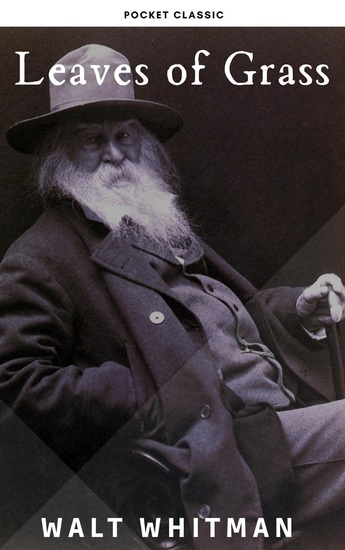
Leaves of Grass - The Original 1855 Edition - cover

Leaves of Grass - The Original 1855 Edition

Walt Whitman, Pocket Classic

Publisher: Pocket Classic

  • 0
  • 0
  • 0

Summary

In 1855, Walt Whitman published — at his own expense — the first edition of Leaves of Grass, a visionary volume of twelve poems. Showing the influence of a uniquely American form of mysticism known as Transcendentalism, which eschewed the general society and culture of the time, the writing is distinguished by an explosively innovative free verse style and previously unmentionable subject matter. Exalting nature, celebrating the human body, and praising the senses and sexual love, the monumental work was condemned as "immoral." Whitman continued evolving Leaves of Grass despite the controversy, growing his influential work decades after its first appearance by adding new poems with each new printing.
This edition presents the original twelve poems from Whitman's premier 1855 publication of Leaves of Grass. Included are some of the greatest poems of modern times: "Song of Myself," "I Sing the Body Electric," and "There Was a Child Went Forth," works that continue to upset conventional notions of beauty and originality even today.
Available since: 10/30/2022.
Print length: 162 pages.


Other books that might interest you

  • Poems and Ramblings: of a God-intoxicated Yogi - cover

    Poems and Ramblings: of a...

    Jan Esmann

    • 0
    • 0
    • 0
    These poems offer unique insights into the heart and soul of an enlightened person. The spirit of the poems is contagious and reading them can give rise to a transmission or awakening of Shakti (spiritual energy). The author is an ardent Mother devotee, which shines forth in every poem. The book is divided into two equal parts. 1. the poems. 2. the ramblings which are short prose pieces on spirituality and sadhana (spiritual practices). In the second part, the important practice of Kriya Pranayama is explained.
    Show book
  • Blackout Songs (NHB Modern Plays) - cover

    Blackout Songs (NHB Modern Plays)

    Joe White

    • 0
    • 0
    • 0
    A chance encounter at an AA meeting and they're drawn to one another. Then later, once they're drinking again, they both have this almost-feeling that they might have met before – could even have been together, sometime in the past... They should really get sober together and figure it all out: that would be a worthwhile project. Maybe they will. Just after one last drink...
    A compassionate and unflinching study of love, addiction and memory, Joe White's play Blackout Songs was first performed at Hampstead Theatre, London, in November 2022, directed by Guy Jones.
    Show book
  • Becoming Light - Poems New and Selected - cover

    Becoming Light - Poems New and...

    Erica Jong

    • 0
    • 0
    • 0
    Although most famous for her bestselling fiction, including Fear of Flying and Any Woman's Blues, Erica Jong started her publishing career as a poet. The celebrated author enjoys an international reputation for her verse. An essential collection of poetry, Becoming Light includes early poems previously uncollected in book form, selections from her previous books, and many new poems. Erica Jong's poetry exhibits her rare gifts for inventiveness, wit, vigor, honesty, and accessibility. Critics have generously praised Jong's unique poetic voice.
    Show book
  • Menopause: The Anthology - cover

    Menopause: The Anthology

    Cherry Potts, Catherine Pestano

    • 0
    • 0
    • 0
    The subject of Menopause is just beginning to break the barrier of taboo, and become a mainstream discussion point, but that discussion has until now been very serious, medical, and, we would argue, heterosexual and white. This anthology of poems and short fiction aims to address that, with wild and wonderful writing from humour and anger, relief and distress, by women who have experienced menopause, whether naturally or as a result of surgery; with a healthy dose of views from the global majority and the lesbian, bisexual and trans communities.
    Show book
  • Gaze Back - cover

    Gaze Back

    Marylyn Tan

    • 0
    • 0
    • 0
    Winner of the Singapore Literature Prize (Poetry 2020) 
     
    What do we expect of an author who is unapologetically female? What do we expect of consuming art in general? Should a work be easy, should a work be safe? 
     
    Marylyn Tan’s debut volume, GAZE BACK, complicates ideas of femininity, queerness, and the occult. The feminine grotesque subverts the restrictions placed upon the feminine body to be attractive and its subjection to notions of the ideal. The occultic counterpoint to organised religion, then, becomes a way toward techniques of empowering the marginalised. 
     
    GAZE BACK, ultimately, is an instruction book, a grimoire, a call to insurrection—to wrest power back from the social structures that serve to restrict, control and distribute it amongst those few privileged above the disenfranchised.
    Show book
  • Catastrophic Molting - cover

    Catastrophic Molting

    Amy Shimshon-Santo

    • 0
    • 0
    • 0
    CATASTROPHIC MOLTING (FlowerSong Press) Amy Shimshon-Santo uses the tools of language to remind readers there is power in repudiation, comfort in collective mourning, and possibility in reimagining. The book title is inspired by the molting ritual of sea elephants (Mirounga Angustirostris) along the California coast. The mirounga rest together on the shore as social protection from violence when they are the most vulnerable. Only through these periods of dramatic change can they grow sleek new coats. The book’s journey begins with “Contagion,” revealing a world split in half like a calabash by a virus. “Beating, trembling,” a woman pleads for mercy while the poems confront the liminality of profound change. “A new cycle had begun / I would never be the same again.” The second section, Sangue, gives voice to mourning and rage. “when you murder the future of music / you are conjuring extinction.” Dysfunction on planet Earth reverberates from the street into the expansive galaxy. Refusing to normalize violence, the poet gathers war inside her own body to detonate it, then blows “tsunami-wind / to rattle clear the desks.” With the verve of Oya, the goddess of ancestral and radical change, the book claims ground for empathy and inter-being. The collection asks readers to imagine: “what if we were a part of a whole / that loved us without ceasing?” Catastrophic Molting breaks from inertia and seeks new ground. Our “foremothers greet the unborn” and are “betrothed to a story that doesn’t wish us dead.” Shimshon-Santo suggests that “stepping off might actually be, stepping in / turning away might actually be, turning toward.”
    Show book