Join us on a literary world trip!
Add this book to bookshelf
Grey
Write a new comment Default profile 50px
Grey
Subscribe to read the full book or read the first pages for free!
All characters reduced
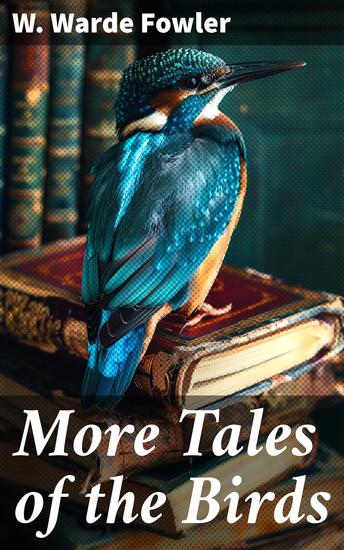
More Tales of the Birds - Exploring Bird Symbolism in Ancient Greek Literature - cover

More Tales of the Birds - Exploring Bird Symbolism in Ancient Greek Literature

W. Warde Fowler

Publisher: Good Press

  • 0
  • 0
  • 0

Summary

In "More Tales of the Birds," W. Warde Fowler invites readers into a vibrant tapestry of avian life, blending rich narrative with keen observations of various bird species. This collection, marked by Fowler's elegant prose and meticulous attention to detail, explores the intersection of natural history and folklore, serving as both an engaging read and an informative treatise on ornithology. Set against the backdrop of early 20th-century England, the book reflects the burgeoning interest in nature writing and scientific observation prevalent during this period, making it a significant contribution to the genre. W. Warde Fowler was an esteemed classical scholar and a naturalist whose passion for ornithology stemmed from his extensive studies of the natural world. His background in the Classics and his deep-rooted appreciation for literature allowed him to infuse his observations with a poetic sensibility, bridging the gap between science and art. Fowler'Äôs work often sought to enhance public understanding of birdlife, fueled by his belief in the necessity of conservation and an ethical approach to nature. This book is highly recommended for anyone captivated by the beauty of the natural world or interested in the rich narratives that unfold within it. Fowler's unique perspective and eloquent style make "More Tales of the Birds" not only a delightful read but also a vital text for those wishing to deepen their appreciation of both literature and ornithology.
Available since: 10/12/2023.
Print length: 107 pages.

Other books that might interest you

  • Why should I worry when I can face the world? - cover

    Why should I worry when I can...

    Shibu Nair

    • 0
    • 0
    • 0
    All of us want to be happy yet why do we never make sincere efforts to become happy? All of us want peace of mind yet why do we keep worrying and overthinking for most part of our life? We are all born happy yet why do we fall prey to anxiety and depression as we grow in age? We all know we have to enjoy our present yet why do we regret our past and fear our future? 
    'Why should I worry when I can face the world?' is a sincere attempt to provide credible answers to all these questions. If read, understood and practiced well, this book can help you overcome your worries and bring you everlasting peace and happiness.
    Show book
  • Hillbilly Nationalists Urban Race Rebels and Black Power - Interracial Solidarity in 1960s-70s New Left Organizing - cover

    Hillbilly Nationalists Urban...

    James Tracy, Amy Sonnie

    • 0
    • 0
    • 0
    Some of the most important and little-known activists of the 1960s were poor and working-class radicals. Inspired by the Civil Rights movement, the Black Panthers, and progressive populism, they started to organize significant political struggles against racism and inequality during the 1960s and into the 1970s. 


    Historians of the period have traditionally emphasized the work of white college activists who courageously took to the streets to protest the war in Vietnam and continuing racial inequality. Poor and working-class whites have often been painted as spectators, reactionaries, and, even, racists. But authors James Tracy and Amy Sonnie disprove that narrative. 


    Through over ten years of research, interviewing activists along with unprecedented access to their personal archives, Tracy and Sonnie tell a crucial, untold story of the New Left. Their deeply sourced narrative history shows how poor and working-class individuals from diverse ethnic, rural and urban backgrounds cooperated and drew strength from one another. The groups they founded redefined community organizing, and transformed the lives and communities they touched.
    Show book
  • Dim Sum and Faith - How Our Stories Form Our Souls - cover

    Dim Sum and Faith - How Our...

    Jenn Suen Chen

    • 0
    • 0
    • 0
    Discover the Sacred in Your Story
    Imagine gathering around a dim sum table, a lively setting where stories are shared over flavorful bites and heartfelt moments. This is the inviting atmosphere Jenn Suen Chen recreates in Dim Sum and Faith. Drawing from her own rich tapestry of experiences, Jenn helps readers to explore how our personal narratives shape our spiritual journeys.
    Dim Sum and Faith invites you to examine the phases of your life—shaping, undoing, awakening, and reshaping. Through guided scripture reading and reflective prompts, each chapter becomes a steppingstone toward understanding the profound ways God's presence is woven through every joy and trial in your story. This isn't just about looking back; it's about seeing how our stories are a part of God's continuous formation in our lives.
    Dim Sum and Faith is an invitation to pause, reflect, and rediscover the joy and peace that comes from knowing you are lovingly crafted by God.
    Show book
  • Bad Company - Private Equity and the Death of the American Dream - cover

    Bad Company - Private Equity and...

    Megan Greenwell

    • 0
    • 0
    • 0
    A timely work of singular reportage and a damning indictment of the private equity industry told through the stories of four American workers whose lives and communities were upended by the ruinous effects of private equity takeovers. 
    Private equity runs our country, yet few Americans have any idea how ingrained it is in their lives. Private equity controls our hospitals, daycare centers, supermarket chains, voting machine manufacturers, local newspapers, nursing home operators, fertility clinics, and prisons. The industry even manages highways, municipal water systems, fire departments, emergency medical services, and owns a growing swath of commercial and residential real estate. 
    Private equity executives, meanwhile, are not only among the wealthiest people in American society, but have grown to become modern-day barons with outsized influence on our politics and legislation. CEOs of firms like Blackstone, Carlyle, KKR, and Apollo are rewarded with seats in the Senate and on the boards of the country’s most august institutions; meanwhile, entire communities are hollowed out as a result of their buyouts. Workers lose their jobs. Communities lose their institutions. Only private equity wins. 
    Acclaimed journalist Megan Greenwell’s Bad Company unearths the hidden story of private equity by examining the lives of four American workers that were devastated as private equity upended their employers and communities: a Toys R Us floor supervisor, a rural doctor, a local newspaper journalist, and an affordable housing organizer. Taken together, their individual experiences also pull back the curtain on a much larger project: how private equity reshaped the American economy to serve its own interests, creating a new class of billionaires while stripping ordinary people of their livelihoods, their health care, their homes, and their sense of security. 
    In the tradition of deeply human reportage like Matthew Desmond’s Evicted, Megan Greenwell pulls back the curtain on shadowy multibillion dollar private equity firms, telling a larger story about how private equity is reshaping the economy, disrupting communities, and hollowing out the very idea of the American dream itself. Timely and masterfully told, Bad Company is a forceful rebuke of America’s most consequential, yet least understood economic forces.
    Show book
  • Restoring Eden - Unearthing the Agribusiness Secret That Poisoned My Farming Community - cover

    Restoring Eden - Unearthing the...

    Elizabeth D. Hilborn

    • 0
    • 0
    • 0
    All spring, Dr. Elizabeth Hilborn watched as her family fruit farm of many years became increasingly diminished, suffering from a lack of bees. 


    The plentiful wildlife, so abundant just weeks before, was gone. Everything was still, silent. 


    As an environmental scientist trained to investigate disease outbreaks, she rose to the challenge. Despite facing headwinds from skeptical neighbors, environmental experts, and agricultural consultants, she'd assembled information. 


    The chemicals found in her water samples showed beyond any doubt that not only her farm, but her greater farming community, was at risk from toxic chemicals that traveled with rain water over the land and deep within the soil. 


    Even as a scientist, she'd been unaware of the risks to life from some common agricultural chemicals. Her goal was to protect her farm and the animals who lived there. 


    But first she had to convince her rural neighbors of the risk to their way of life, too. 


    A lyrical celebration of nature by a passionate citizen scientist who felt called to advocate for the land, earth, and creatures who don't have a voice, Restoring Eden ultimately offers hope that citizens can create change, that reform is possible.
    Show book
  • The Jesus Clones - cover

    The Jesus Clones

    Tordín Lyn

    • 0
    • 0
    • 0
    Imagine what could happen if a religious zealot possessing wealth, power, and bio-technical genius, came into possession of a thorn from the Crown of Thorns placed upon Jesus’ head at the time of His Crucifixion. Richard Francis Craig had such a thorn and recovered Jesus’s DNA from its fossilized remains. He then joined forces with two progressive members of the Church, Cardinal Giovanni and Bishop Bellarmine, and a biotech wunderkind, Kristjan Evans. They have the technology to read His genetic code, a gift from God given through the Immaculate Conception of Mary and the Virgin Birth of Jesus. Dare they go further? Do they have the courage to use His genetic information to recreate the essence of Jesus, His clone, resurrecting Him to usher in the Second Coming and End of Times, the Final Judgement?Richard Craig made his fortune using his technological genius to found the biopharmaceutical company GenFlux. He was brought up in a strict Christian family by a stern father, a minister in the Redemption Church, and an architect of the God Box. While in the God Box Richard had his vision of Revelation and the Second Coming. The world is in chaos approaching the years of Tribulation and Richard believed God’s desire was for Man to save himself. Did not Mankind discover medical breakthroughs that prevented misery and death? Did Richard not develop medical breakthroughs that cured illness and alleviated suffering? Did Man not harness the power of the atom and the power of DNA, the life force? Richard often felt he was chosen to be a Prophet of the Lord. He knew Mankind possessed the power to control the life force itself, DNA, and thus the life essence of any organism whose DNA sequence Man could acquire. Assisted by Cardinal Giovanni, Bishop Bellarmine, and fellow technological genius Kristjan Evans, Richard Craig formulated his plan to clone Jesus and hasten the Second Coming of Christ, the Final Judgment, and the End of Times.
    Show book