Join us on a literary world trip!
Add this book to bookshelf
Grey
Write a new comment Default profile 50px
Grey
Subscribe to read the full book or read the first pages for free!
All characters reduced
Ten years' digging in Egypt 1881-1891 - Enriched edition - cover

Ten years' digging in Egypt 1881-1891 - Enriched edition

W. M. Flinders Petrie

Publisher: DigiCat

  • 0
  • 0
  • 0

Summary

In "Ten Years' Digging in Egypt, 1881-1891," W. M. Flinders Petrie provides a comprehensive account of his archaeological expeditions in Egypt during a transformative period for the field. The book combines meticulous observational detail with a narrative style that is both engaging and scholarly, illuminating the complexities of ancient Egyptian civilization. Petrie's work is set against the backdrop of the late 19th century, a time when archaeology was emerging as a scientific discipline, reflecting a growing interest in Egypt's past and the burgeoning field of Egyptology. Through a blend of personal anecdotes and technical descriptions, readers are invited to explore the profound insights derived from Petrie's extensive excavations and discoveries, including significant artifacts and the methods that revolutionized archaeological practice. W. M. Flinders Petrie, often referred to as the father of modern archaeology, was a pioneering figure whose innovative techniques and rigorous standards set new benchmarks for the discipline. His background in engineering and profound interest in history equipped him with the tools necessary to uncover the layers of Egypt's rich heritage. His dedication to accurate documentation and preservation of artifacts highlights not only his scholarly commitment but also his desire to elevate archaeology from mere treasure hunting to a respected science, making this work both a personal memoir and an academic contribution. "Ten Years' Digging in Egypt, 1881-1891" is essential reading for anyone interested in the foundations of Egyptology and the evolution of archaeological methods. Petrie's vivid descriptions and analytical insights provide a unique lens through which to view the ancient world, making it a valuable resource for scholars, students, and enthusiasts alike. By engaging with this work, readers will not only gain an understanding of Egypt's history but will also appreciate the meticulous craftsmanship of archaeology as a discipline.

In this enriched edition, we have carefully created added value for your reading experience:
- A succinct Introduction situates the work's timeless appeal and themes.
- The Synopsis outlines the central plot, highlighting key developments without spoiling critical twists.
- A detailed Historical Context immerses you in the era's events and influences that shaped the writing.
- An Author Biography reveals milestones in the author's life, illuminating the personal insights behind the text.
- A thorough Analysis dissects symbols, motifs, and character arcs to unearth underlying meanings.
- Reflection questions prompt you to engage personally with the work's messages, connecting them to modern life.
- Hand‐picked Memorable Quotes shine a spotlight on moments of literary brilliance.
- Interactive footnotes clarify unusual references, historical allusions, and archaic phrases for an effortless, more informed read.
Available since: 11/12/2023.
Print length: 4574 pages.
Other books that might interest you

  • Limitless Mind - Learn Lead and Live Without Barriers - cover

    Limitless Mind - Learn Lead and...

    Anonymous

    • 0
    • 0
    • 0
    In this revolutionary book, a professor of education at Stanford University and acclaimed math educator who has spent decades studying the impact of beliefs and bias on education, reveals the six keys to unlocking learning potential, based on the latest scientific findings. 
    From the moment we enter school as children, we are made to feel as if our brains are fixed entities, capable of learning certain things and not others, influenced exclusively by genetics. This notion follows us into adulthood, where we tend to simply accept these established beliefs about our skillsets (i.e. that we don’t have “a math brain” or that we aren’t “the creative type”). These damaging—and as new science has revealed, false—assumptions have influenced all of us at some time, affecting our confidence and willingness to try new things and limiting our choices, and, ultimately, our futures.  
    Stanford University professor, bestselling author, and acclaimed educator Jo Boaler has spent decades studying the impact of beliefs and bias on education. In Limitless Mind, she explodes these myths and reveals the six keys to unlocking our boundless learning potential. Her research proves that those who achieve at the highest levels do not do so because of a genetic inclination toward any one skill but because of the keys that she reveals in the book. Our brains are not “fixed,” but entirely capable of change, growth, adaptability, and rewiring. Want to be fluent in mathematics? Learn a foreign language? Play the guitar? Write a book? The truth is not only that anyone at any age can learn anything, but the act of learning itself fundamentally changes who we are, and as Boaler argues so elegantly in the pages of this book, what we go on to achieve.
    Show book
  • Thanatology - The Study of Death - cover

    Thanatology - The Study of Death

    Mike Crawford

    • 0
    • 0
    • 0
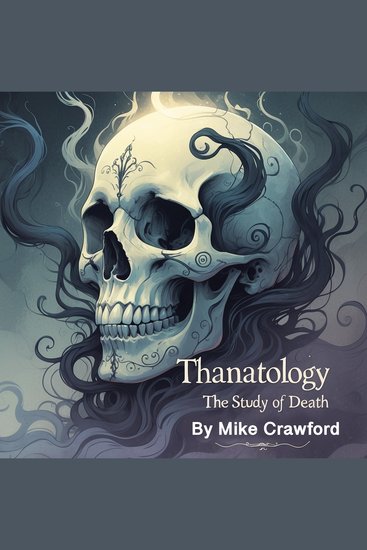
    Thanatology, the study of death and the processes surrounding it, has deep historical roots. While the formal discipline emerged in the 20th century, human fascination with death dates back to ancient times. Early civilizations developed complex rituals, beliefs, and philosophies surrounding death, shaping the way societies understood and coped with mortality. Over time, thanatology evolved from religious and philosophical inquiries to a multidisciplinary field incorporating medical, psychological, and sociological perspectives. 
    In ancient societies, death was often viewed through a spiritual or mythological lens. Egyptian, Greek, and Hindu traditions conceptualized the afterlife in elaborate ways, influencing burial practices and rituals. The Egyptians, for instance, believed in the preservation of the body for the soul’s journey in the afterlife, leading to the practice of mummification. Similarly, Greek philosophy—particularly the works of Plato—explored the soul’s immortality and the nature of existence beyond death. These early interpretations laid the groundwork for later philosophical and religious discussions on mortality. 
    The Middle Ages saw the dominance of religious perspectives on death, with Christianity, Islam, and Buddhism offering moral and theological frameworks for understanding mortality. Death was often seen as a transition rather than an end, shaping attitudes toward dying and burial practices. The Black Death in the 14th century significantly influenced perceptions of death, leading to a greater emphasis on the fragility of life and the afterlife. Art, literature, and religious texts from this period reflect a deep engagement with the themes of death and salvation.
    Show book
  • The Shocking Truth about Animal Testing - cover

    The Shocking Truth about Animal...

    Zoey Fraisers

    • 0
    • 0
    • 0
    Animal testing has long been a cornerstone of scientific research, serving as a method to understand biological processes, test the safety and efficacy of products, and develop medical treatments. It involves the use of live animals in experiments and observational studies to explore the effects of drugs, chemicals, and other substances on biological systems. This practice, while often viewed as essential, is fraught with controversy, ethical dilemmas, and scientific scrutiny. 
    The origins of animal testing can be traced back to ancient Greece, where philosophers like Aristotle and Erasistratus conducted rudimentary experiments on animals to study anatomy and physiology. Over centuries, as medicine and technology advanced, the scope and complexity of animal testing expanded. By the 19th and 20th centuries, animal experimentation had become an institutionalized component of biomedical research, contributing to groundbreaking discoveries such as vaccines, antibiotics, and surgical techniques. 
    Today, animal testing is pervasive across multiple industries, including pharmaceuticals, cosmetics, and chemicals. It is primarily used to evaluate the safety of products, ensure regulatory compliance, and develop new treatments for diseases. Animals such as mice, rats, rabbits, and primates are commonly employed because of their physiological similarities to humans, which researchers argue make them suitable models for studying human biology.
    Show book
  • Past life Regression Hypnosis - Reconnect With Your Past Lives to Explore the Power of the Present Guided Sessions for Effective Healing and Self-Hypnosis with Accompanying Solfeggio Frequencies - cover

    Past life Regression Hypnosis -...

    Elliot McPherson

    • 0
    • 0
    • 0
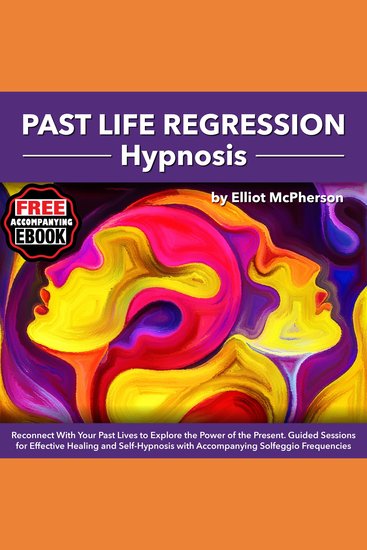
    Unlock the mysteries of your past lives with"Past Life Regression Hypnosis"This transformative guide takes you on a journey to reconnect with your previous incarnations, empowering you to heal and grow in the present. Through expertly crafted guided hypnosis sessions, you'll delve deep into your subconscious, uncovering memories that hold the key to understanding your current life's challenges and strengths. 
    This book isn't just about exploration, it's a tool for profound healing. With self-hypnosis techniques and the soothing power of Solfeggio frequencies, you'll learn how to release past traumas, enhance your emotional well-being, and embrace a more fulfilled life. 
    What You'll Discover:Step-by-step guided hypnosis sessions for past life exploration.Techniques for self-hypnosis to deepen your journey.Healing through the power of Solfeggio frequencies.Insights into how past lives influence your present. 
    Practical hypnosis sessions for integrating past life insights into daily life. 
    Begin your journey of self-discovery and healing today. "Click'" to Buy now to start exploring the hidden depths of your soul and unlock the potential of the present through the wisdom of the past.
    Show book
  • Global Capitalism - How the World's Economies Are Interconnected and Influenced - cover

    Global Capitalism - How the...

    Arlo Holders

    • 0
    • 0
    • 0
    Global capitalism refers to the interconnected economic system that spans across national borders, where capital, goods, services, and labor move freely to create a global market. The emergence of global capitalism is deeply intertwined with historical shifts in political, technological, and economic structures, particularly the acceleration of trade and investment in the late 20th and early 21st centuries. At its core, global capitalism is driven by the logic of profit maximization, competition, and the pursuit of economic efficiency on a global scale. 
    The roots of global capitalism can be traced to the rise of industrial capitalism in the 18th and 19th centuries, which laid the foundation for an interconnected global economy. With the expansion of imperialism, the development of transportation technologies like steamships and railways, and the establishment of international financial institutions, economic activity increasingly transcended national boundaries. The post-World War II period saw an unprecedented acceleration of this trend, with institutions like the International Monetary Fund (IMF) and the World Bank being established to facilitate international economic cooperation and development. The creation of the World Trade Organization (WTO) in 1995 further integrated global markets by promoting free trade and reducing trade barriers.
    Show book
  • A Concise History of Florida - cover

    A Concise History of Florida

    James C. Clark

    • 0
    • 0
    • 0
    A quick overview of the Sunshine State's fascinating past. 


    In 1513, Spanish explorer Juan Ponce de León first set foot on Florida's east coast. The land he discovered was a geographic anomaly so distinctive that one day, centuries later, astronaut Neil Armstrong would say that Florida was the first shape on earth he recognized on his return from a visit to the moon. 


    This unique state has witnessed such momentous events as the 1959 arrival of the first Cuban exiles under Fidel Castro and the 1981 launch of the Columbia—the first space shuttle. Join historian James C. Clark as he chronicles the surprising history of the Sunshine State in this concise and captivating book.
    Show book