
Join us on a literary world trip!
Add this book to bookshelf
Grey
Write a new comment Default profile 50px
Grey
Subscribe to read the full book or read the first pages for free!
All characters reduced
Egyptian decorative art - A course of lectures delivered at the Royal Institution - cover

Egyptian decorative art - A course of lectures delivered at the Royal Institution

W. M. Flinders Petrie

Publisher: Librorium Editions

  • 0
  • 0
  • 0

Summary

In dealing with the subject of decorative art in Egypt, it is needful to begin by setting some bounds to a study which might be made to embrace almost every example of ancient work known to us in that land. The Egyptian treatment of everything great and small was so strongly decorative that it is hard to exclude an overwhelming variety of considerations. But here it is proposed to limit our view to the historical development of the various motives or elements of decoration. The larger questions of the æsthetic scheme of design, of the meaning of ornament—symbolic or religious, of the value and effect of colour, of the relations of parts, we can but glance at occasionally in passing; in another branch, the historical connection of Egyptian design with that of other countries, the prospect is so tempting and so valuable, that we may linger a little at each of these bye-ways to note where the turning occurs and to what it leads. As I have said, all Egyptian design was strongly decorative. The love of form and of drawing was perhaps a greater force with the Egyptians than with any other people. The early Babylonians and the Chinese had, like the Egyptians, a pictorial writing; but step by step they soon dropped the picture altogether in favour of the easier abbreviation of it. The Egyptian, on the contrary, never lost sight of his original picture; and however much his current hand altered, yet for four or five thousand years he still maintained his true hieroglyphic pictures. They were modified by taste and fashion, even in some cases their origin was forgotten, yet the artistic form was there to the very end.
Available since: 02/28/2023.

Other books that might interest you

  • How We Think - cover

    How We Think

    John Dewey

    • 0
    • 0
    • 0
    "How We Think" is a seminal work by John Dewey, an influential American philosopher, psychologist, and educational reformer. Published in 1910, the book explores the nature of thought, inquiry, and problem-solving, particularly within the context of education and learning. Dewey argues that thinking is an active process involving inquiry, reflection, and experimentation rather than a passive absorption of knowledge. He emphasizes the importance of critical thinking, creative problem-solving, and the integration of experiences in shaping one's understanding of the world.
    Show book
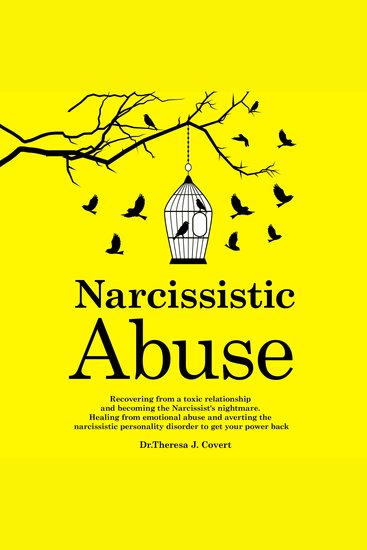
  • Narcissistic Abuse - Recovering From a Toxic Relationship and Becoming the Narcissist’s Nightmare Healing From Emotional Abuse and Averting the Narcissistic Personality Disorder to Get Your Power Back - cover

    Narcissistic Abuse - Recovering...

    Dr. Theresa J. Covert

    • 0
    • 0
    • 0
    Still struggling from the effects of a narcissistic or psychopathically abusive relationship? 
    Many people do and sadly there is very little information available to be found online or in the written research, or with counsellors and therapists that can help. Narcissistic Victim Syndrome is not officially recognised, nor is it widely even known. 
    Even when it is accepted, recognised and known not many people seem to know what to DO ABOUT IT to heal it… The fact is being in a relationship with a narcissist over a long period of time has long lasting traumatic effects that can be extremely catastrophic to the person suffering them. 
    Do the following symptoms sound familiar? 
    - Ruined self confidence 
    - Doubting yourself and your sanity 
    - Mood swings 
    - Sleeplessness 
    - Extreme weight loss or weight gain 
    - Uncharacteristic jealousy/ insecurity 
    - Feeling like you don’t know the difference between right and wrong 
    - Extreme paranoia (being turned into an obsessive detective) 
    - Endless, repetitive obsessive thinking about your ex 
    - Constantly trying to find explanations for what has happened 
    - Feelings of helplessness and despair 
    - A desire to self isolate 
    - Feeling desperately misunderstood 
    - Overwhelming feelings of loss and grief 
    - An inability to be comfortable with yourself 
    - Strange dreams 
    - Sudden inexplicable anxiety followed by rapid dips into depression 
    The list goes on…. 
    I can’t promise you that reading to this book is going to be a “total cure”, but I can promise that if you APPLY YOURSELF DILLIGENTLY, take notes, read and re-read the chapters, follow all instructions to the letter, with a tenacious resolve to get better you will feel an instant decrease in anxiety within the first 24 hours and should see huge improvements within the first 3 days.
    Show book
  • Father Forgive - First Time Gay - cover

    Father Forgive - First Time Gay

    Randy Manners

    • 0
    • 0
    • 0
    Graduation is tomorrow, and Alex will take his vows of priesthood Monday morning. 
      
    His friend takes him out for one last wild night on the town. Problem is, Alex has never been into the high octane lifestyle of dance clubs and fast women. He’s never been that into women at all. It’s exactly why he’s a good fit for the priesthood, right? 
      
    And then Hank showed up. He was every bit the man his old-school name warranted. And he understood. This wasn’t his kind of place, either. Hank takes the reigns and leads Alex down a new path. 
      
    Which calling will Alex follow?
    Show book
  • Onigamiising - Seasons of an Ojibwe Year - cover

    Onigamiising - Seasons of an...

    Linda LeGarde Grover

    • 0
    • 0
    • 0
    Long before it came to be known as Duluth, the land at the western tip of Lake Superior was known to the Ojibwe as Onigamiising, "the place of the small portage." There the Ojibwe lived in keeping with the seasons, moving among different camps for hunting and fishing, for cultivating and gathering, for harvesting wild rice and maple sugar. In Onigamiising Linda LeGarde Grover accompanies us through this cycle of the seasons, one year in a lifelong journey on the path to Mino Bimaadiziwin, the living of a good life. 


    In fifty short essays, Grover reflects on the spiritual beliefs and everyday practices that carry the Ojibwe through the year and connect them to this northern land of rugged splendor. As the four seasons unfold—from Ziigwan (Spring) through Niibin and Dagwaagin to the silent, snowy promise of Biboon—the award-winning author writes eloquently of the landscape and the weather, work and play, ceremony and tradition and family ways, from the homey moments shared over meals to the celebrations that mark life's great events. Now a grandmother, a Nokomis, beginning the fourth season of her life, Grover draws on a wealth of stories and knowledge accumulated over the years to evoke the Ojibwe experience of Onigamiising, past and present, for all time.
    Show book
  • Saints and Liars - The Story of Americans Who Saved Refugees from the Nazis - cover

    Saints and Liars - The Story of...

    Debórah Dwork

    • 0
    • 0
    • 0
    Long before their country officially joined the war, American aid workers were active in rescue efforts across Europe. Two such Americans were Martha and Waitstill Sharp, who were originally sent to Prague as part of a relief effort but turned immediately to helping Jews and dissidents after the 1939 invasion by Germany. 


    They were not the only ones. Renowned historian Debórah Dwork follows the story of rescue workers in five major cities as the refugee crisis expanded to Vilna, Shanghai, Marseille, and Lisbon. Followed by Nazi agents, spiriting people across borders, they learned secrecy. 


    Others negotiated with government representatives, like Laura Margolis, who worked with the Japanese, to get enough food and warm shelter for the refugees in Shanghai. Yet, the women also often faced lack of support from their agencies; if part of a couple, they fought to get paid even at a low salary despite working as long and hard as their husbands. 


    Moving and revelatory, Saints and Liars illuminates the unpredictable circumstances with which these aid workers contended, while revealing the moral questions they encountered and the devastating decisions they had to make.
    Show book
  • Black Hearts and Painted Guns - A Battalion's Journey into Iraq's Triangle of Death - cover

    Black Hearts and Painted Guns -...

    Kelly Eads, Daniel S. Morgan

    • 0
    • 0
    • 0
    “Will give readers a feeling for what it was like to fight in the Global War on Terror and the kind of young people who stepped forward to do it.” —On Point: The Journal of Army HistoryKelly Eads joined the 101st Airborne Division soon after 9/eleven, his experience reflecting the patriotism and commitment of so many young men and women who responded to the attack. He deployed to Iraq twice with the 2nd Battalion, 502nd Infantry Regiment.Early in their deployment to Iraq, the 2nd Battalion brought the fight directly to the enemy by setting up patrol bases in the local areas where they lived and operated. Soon they built a reputation for themselves, becoming known to the enemy as the Black Hearts—The 502nd had been distinguished on the battlefield by black hearts on their helmets since World War II. Their Scout Platoon became known as Painted Guns due to their practice of camouflaging their rifles.During Eads’ deployments, the battalion would experience thousands of Improvised Explosive Devices and firefights. They would spend countless hours in blistering 120-degree desert heat, controlling roads and preventing enemy freedom of movement; and would dedicate months to hunting enemy mortar teams and terror cells.With the help of Dan Morgan, an Infantry officer who deployed multiple times to Iraq and Afghanistan as a commander and operations officer, Eads takes the reader on a rollercoaster of combat experiences during the hunt for the most violent terrorist in Iraq, Abū Muṣʻab Zarqāwī, bringing to life the painstaking and horrid details of combat in a sectarian war. He tells the story of the soldiers’ camaraderie, built through adversity, and the love of family that sustained them.
    Show book