Join us on a literary world trip!
Add this book to bookshelf
Grey
Write a new comment Default profile 50px
Grey
Subscribe to read the full book or read the first pages for free!
All characters reduced
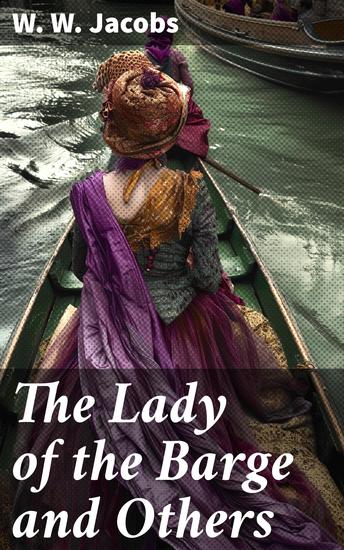
The Lady of the Barge and Others - Twists of Greed and Morality in Vintage British Tales - cover

The Lady of the Barge and Others - Twists of Greed and Morality in Vintage British Tales

W. W. Jacobs

Publisher: Good Press

  • 0
  • 0
  • 0

Summary

In "The Lady of the Barge and Others," W. W. Jacobs showcases his deftness in blending humor with elements of the uncanny and the grotesque. This collection of short stories offers a vivid depiction of life in the early 20th century, particularly within the English working class and maritime communities. Jacobs'Äô literary style is marked by his keen eye for regional dialects and character-driven narratives that evoke both laughter and suspense. The stories intertwine fantastic occurrences with mundane realities, underscoring the unpredictability of human relationships and the wilder aspects of life along the water'Äôs edge. W. W. Jacobs (1863-1943) is often regarded as a master of the short story form, with a career that reflects the socio-cultural experiences of his time. His background, rooted in London's east end, provided him with firsthand insights into the lives of his characters. Jacobs'Äô tenure as a writer during a period of significant maritime activity in England undoubtedly influenced his thematic focus on the sea and its denizens, as evidenced in this collection. This book is a must-read for fans of classic literature who appreciate the art of storytelling filled with wit and the uncanny. Jacobs' ability to juxtapose the ordinary with the extraordinary makes "The Lady of the Barge and Others" an engaging exploration of human follies and foibles, enticing readers to delve into the unique charm of his world.
Available since: 08/12/2023.
Print length: 117 pages.

Other books that might interest you

  • A Fly in the Ointment - cover

    A Fly in the Ointment

    D H Lawrence

    • 0
    • 0
    • 0
    ‘A Fly in the Ointment’ was written by D H Lawrence in 1908. It was the fourth of his sixty-seven short stories, all of which will be published individually in audio book format by the Blackthorn Press. The story is set in lodgings in Croydon and the incident may be autobiographical but the story is full of yearning for the life and loves he left behind in Nottinghamshire.
    Show book
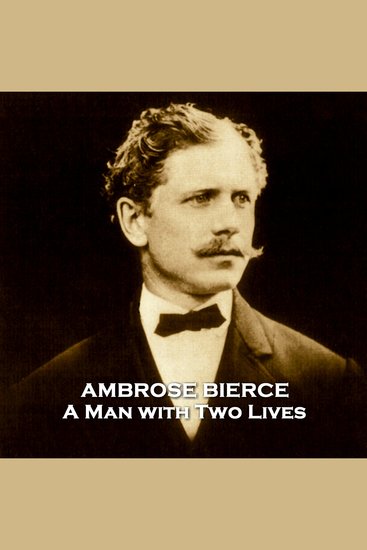
  • A Man with Two Lives - From their pens to your ears genius in every story - cover

    A Man with Two Lives - From...

    Ambrose Bierce

    • 0
    • 0
    • 0
    Ambrose Gwinnett Bierce was born on 24th June 1842 at Horse Cave Creek in Meigs County, Ohio. His parents were poor but they introduced him to literature at an early age, instilling in him a deep appreciation of books, the written word and the elegance of language.  
    Growing up in Koscuisko County, Indiana poverty and religion were defining features of his childhood, and he would later describe his parents as “unwashed savages” and fanatically religious, showing him little affection but always quick to punish. He came to resent religion, and his introduction to literature appears to be their only positive effect. 
    At age 15 Bierce left home to become a printer’s devil, mixing ink and fetching type at The Northern Indian, a small Ohio paper. Falsely accused of theft he returned to his farm and spent time sending out work in the hopes of being published. 
    His Uncle Lucius advised he be sent to the Kentucky Military Institute. A year later he was commissioned as an Officer.  As the Civil War started Bierce enlisted in the 9th Indiana Infantry Regiment.  
    In April 1862 Bierce fought at the Battle of Shiloh, an experience which, though terrifying, became the source of several short stories. Two years later he sustained a serious head wound and was off duty for several months. He was discharged in early 1865.  
    A later expedition to inspect military outposts across the Great Plains took him all the way to San Francisco. He remained there to become involved with publishing and editing and to marry, Mary Ellen on Christmas Day 1871.  They had a child, Day, the following year.  
    In 1872 the family moved to England for 3 years where he wrote for Fun magazine. His son, Leigh, was born, and first book, ‘The Fiend’s Delight’, was published.  
    They returned to San Francisco and to work for a number of papers where he gained admiration for his crime reporting. In 1887 he began a column at the William Randolph Hearst’s San Francisco Examiner.  
    Bierce’s marriage fell apart when he discovered compromising letters to his wife from a secret admirer. The following year, 1889 his son Day committed suicide, depressed by romantic rejection. 
    In 1891 Bierce wrote and published the collection of 26 short stories which included ‘An Occurrence at Owl Creek Bridge’.  Success and further works including poetry followed.  
    Bierce with Hearst’s resources helped uncover a financial plot by a railroad to turn 130 million dollars of loans into a handout. Confronted by the railroad and asked to name his price Bierce answered “my price is $130 million dollars. If, when you are ready to pay, I happen to be out of town, you may hand it over to my friend, the Treasurer of the United States”.  
    He now began his first foray as a fabulist, publishing ‘Fantastic Fables’ in 1899.  But tragedy again struck two years later when his second son Leigh died of pneumonia relating to his alcoholism.  
    He continued to write short stories and poetry and also published ‘The Devil’s Dictionary’.  
    At the age of 71, in 1913 Bierce departed from Washington, D.C., for a tour of the battlefields where he had fought during the civil war. At the city of Chihuahua he wrote his last known communication, a letter to a friend. It’s closing words were “as to me, I leave here tomorrow for an unknown destination,” Ambrose Bierce then vanished without trace.
    Show book

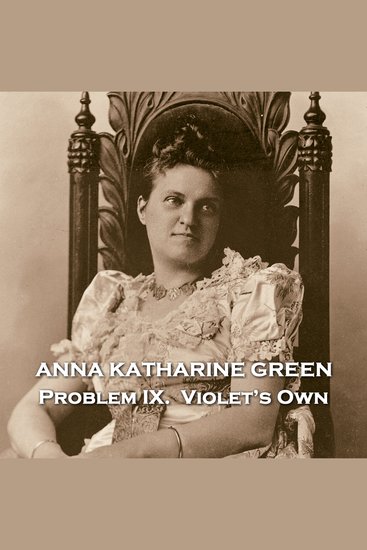
  • Problem IX Violet’s Own - A girl helps her sister rise from poverty to achieve her dreams - cover

    Problem IX Violet’s Own - A girl...

    Anna Katharine Green

    • 0
    • 0
    • 0
    Anna Katharine Green was born in Brooklyn, New York on November 11th, 1846. 
     
    Anna’s initial ambition was to be a poet. However that path failed to ignite any significant interest and she turned to fiction writing. She published her first―and most famous work in 1878―‘The Leavenworth Case’. Wilkie Collins praised it and it sold extremely well. 
     
    It led to Anna writing 40 novels and to becoming known as ‘the mother of the detective novel.’ 
     
    In helping to shape the genre she brought many other innovations including a series detective: her main character was detective Ebenezer Gryce of the New York Metropolitan Police Force, but in three novels he is assisted by the nosy society spinster Amelia Butterworth, another innovation and a prototype for Miss Marple, Miss Silver and others.  
     
    She also invented the 'girl detective': in the character of Violet Strange, a debutante with a secret life as a sleuth. Anna’s other innovations included the now familiar dead bodies in libraries, newspaper clippings as "clews," the coroner's inquest, and expert witnesses. Yale Law School once used her books to demonstrate how damaging it can be to rely on circumstantial evidence. 
     
    Her career was now well advanced and she was much admired.  
      
    On November 25, 1884, Green married the actor and stove designer, and later noted furniture maker, Charles Rohlfs, who was seven years her junior. They had three children; Rosamund, Roland and Sterling. 
     
    Although Anna was a progressive she did not approve of many of her feminist contemporaries, and was opposed to women's suffrage. 
     
    On November 25, 1884, Anna married the actor and noted furniture maker, Charles Rohlfs, who was seven years her junior. They had three children; Rosamund, Roland and Sterling. 
     
    Anna Katharine Green died on April 11, 1935 in Buffalo, New York, at the age of 88.
    Show book
  • Great State The (Unabridged) - cover

    Great State The (Unabridged)

    H. G. Wells

    • 0
    • 0
    • 0
    Herbert George Wells (21 September 1866 - 13 August 1946) was an English writer. Prolific in many genres, he wrote dozens of novels, short stories, and works of social commentary, history, satire, biography and autobiography. His work also included two books on recreational war games. Wells is now best remembered for his science fiction novels and is often called the "father of science fiction", along with Jules Verne and the publisher Hugo Gernsback.
    THE GREAT STATE: For many years now I have taken a part in the discussion of Socialism. During that time Socialism has become a more and more ambiguous term.
    Show book
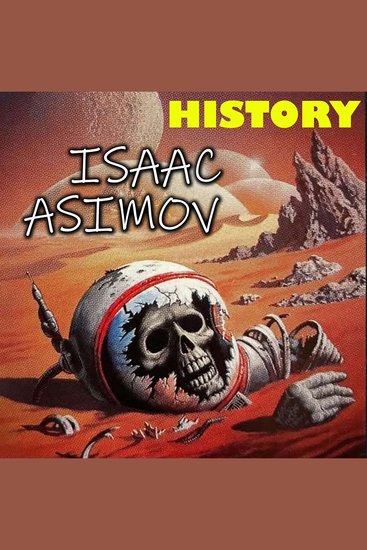
  • History - cover

    History

    Isaac Asimov

    • 0
    • 0
    • 0
    "History" is a science fiction short story by American writer Isaac Asimov. It was first published in the March 1941 issue of Super Science Stories and reprinted in the 1972 collection The Early Asimov.
    Show book
  • Triumphs of a Taxidermist The (Unabridged) - cover

    Triumphs of a Taxidermist The...

    H. G. Wells

    • 0
    • 0
    • 0
    Bellows visits a friend, the taxidermist of the title, in the latter's home. Like much of Wells' fiction, the Taxidermist remains unnamed and the story is a concealed assault on the English culture of the time of its writing. The Taxidermist proudly tells the younger man of his accomplishments both grotesque and fraudulent.
    Show book