Join us on a literary world trip!
Add this book to bookshelf
Grey
Write a new comment Default profile 50px
Grey
Subscribe to read the full book or read the first pages for free!
All characters reduced
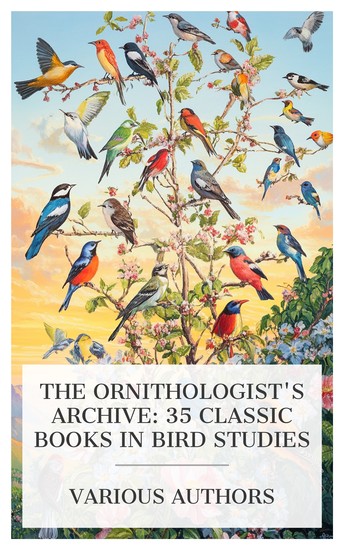
The Ornithologist's Archive: 35 Classic Books in Bird Studies - Birds of Britain Western Bird Guide: Birds of the Rockies and West to the Pacific Extinct Birds Birds in London British Sea Birds etc - cover

The Ornithologist's Archive: 35 Classic Books in Bird Studies - Birds of Britain Western Bird Guide: Birds of the Rockies and West to the Pacific Extinct Birds Birds in London British Sea Birds etc

W. H. Hudson, Edmund Selous, Charles K. Reed, Chester A. Reed, Douglas Dewar, T. Gilbert Pearson, Charles Dixon, E. Raymond Hall, Frank M. Chapman, Leander S. Keyser, Thomas Bingley, Emil K. Urban, John Albert Leach, George H. Lowery, Henry S. Fitch, M. Dale Arvey, Edward Harrison Taylor, Henry Higgins Lane, Harrison Bruce Tordoff, Rollin H. Baker, Robert Morrow Mengel, Robert L. Merz, Jon C. Barlow, Erwin E. Klaas, Joseph Grinnell, Elizabeth Grinnell, Jack Miner, P. M. C. Kermode, J. A. Harvie-Brown, John Cordeaux, Alexander Goodman More, Richard Manliffe Barrington, Frederick Charles Lincoln, Steven R. Peterson, Peter A. Anastasi, Austin Loomer Rand, Lionel Walter Baron Rothschild, James W. Bee, J. Lewis Bonhote

Publisher: e-artnow

  • 0
  • 0
  • 0

Summary

The Ornithologist's Archive: 35 Classic Books in Bird Studies is a truly remarkable collection that encapsulates a wide array of themes and styles, each reflecting the profound intricacies of avian studies. This anthology serves as a vital bridge linking historical and contemporary explorations in ornithology, covering diverse topics from ecological interactions to the phenomenological aspects of birdsong. The breadth of stylesâ€"ranging from empirical field reports to poetic reflectionsâ€"invites readers to delve into the multifaceted world of birds, much like the varied and versatile entries contained within, ensuring both intellectual engagement and artistic appreciation. Contributors to this anthology span a broad historical and cultural spectrum, including preeminent figures like Frank M. Chapman and W. H. Hudson, whose innovative methods and insights have significantly influenced the field. These authors, among others, lend their unique voices shaped by distinct literary and scientific movements, effectively illustrating how ornithology intersects with evolution, conservation, and natural history. From North America's dense forests to the far reaches of the British countryside, the contributors’ collective experiences encapsulate the universal fascination with avian life, offering readers a comprehensive and enriching perspective on these themes. For both avid bird enthusiasts and those new to the field, The Ornithologist's Archive offers an unparalleled opportunity to immerse oneself in the varied world of avian studies. The anthology stands out as an educational resource, inviting readers to perceive birds through different lenses presented by the diverse writing styles and perspectives of its contributors. Whether for scholarly research or leisurely reading, this collection fosters an engaging dialogue between its authors, providing insights into the past, present, and future evolution of ornithological studies.
Available since: 03/04/2025.
Print length: 3000 pages.

Other books that might interest you

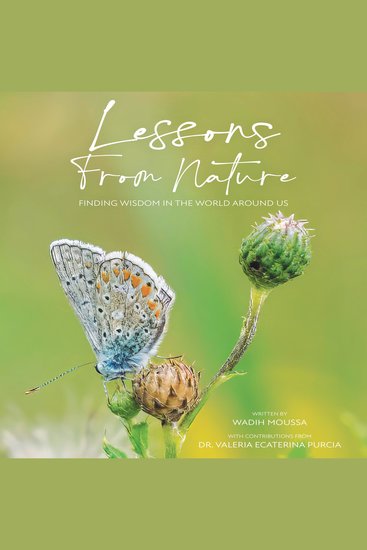
  • Lessons From Nature - Finding Wisdom in the World Around Us - cover

    Lessons From Nature - Finding...

    Wadih Moussa, Valeria Ecaterina...

    • 0
    • 0
    • 0
    This audiobook is narrated by an AI Voice.   
    Lessons From Nature: Finding Wisdom in the World Around Us is a collaboration between photographer Wadih Moussa and psychologist Dr. Valeria Ecaterina Purcia, blending the quiet beauty of nature with the clarity of psychological insight. 
    In the audiobook edition, each chapter begins with a brief description of a photograph—a still moment captured in nature—followed by a reflection on the life lesson it holds: the diligence of a bee, the endurance of a tree, the contentment of a bird. These stories invite the listener to slow down, pay attention, and discover how nature mirrors the values that ground and sustain us. 
    Adding depth to each chapter, Dr. Purcia draws on her experience as a psychologist, educator, and author to explore the emotional and mental dimensions of these natural lessons. Her contributions turn each entry into a practical meditation on resilience, self-awareness, and personal growth. 
    This audiobook is both contemplative and usable. It speaks to those who crave meaning in a noisy world, who want to reconnect with themselves, and who believe that nature still has something to teach us if we’re willing to listen. 
    Whether drawn by the imagery, the life lessons, or the psychological reflections, listeners will find here a quiet space for renewal. A place to pause. A path back to balance.
    Show book
  • Matters of Life and Death - Human Dilemmas in the Light of the Christian Faith - cover

    Matters of Life and Death -...

    John Wyatt

    • 0
    • 0
    • 0
    Conjoined twins dilemma... Suicide of terminally ill patient... Designer baby transplant success... Woman gives birth at sixty-six...  
    Rarely are human dilemmas out of the news. And what medical science can do and ought to do - or ought not to do - impinges on our personal lives, families and societies.  
    John Wyatt examines the issues surrounding the beginning and end of life against the background of current medical-ethical thought. Writing out of a deep conviction that the Bible's view of our humanness points a way forward, he suggests how Christian healthcare professionals, churches and individuals can respond to today's challenges and opportunities.
    Show book
  • Reader Come Home - The Reading Brain in a Digital World - cover

    Reader Come Home - The Reading...

    Anonymous

    • 0
    • 0
    • 0
    From the author of Proust and the Squid, a lively, ambitious, and deeply informative epistolary book that considers the future of the reading brain and our capacity for critical thinking, empathy, and reflection as we become increasingly dependent on digital technologies. 
    A decade ago, Maryanne Wolf’s Proust and the Squid revealed what we know about how the brain learns to read and how reading changes the way we think and feel. Since then, the ways we process written language have changed dramatically with many concerned about both their own changes and that of children. New research on the reading brain chronicles these changes in the brains of children and adults as they learn to read while immersed in a digitally dominated medium. 
    Drawing deeply on this research, this book comprises a series of letters Wolf writes to us—her beloved readers—to describe her concerns and her hopes about what is happening to the reading brain as it unavoidably changes to adapt to digital mediums. Wolf raises difficult questions, including:Will children learn to incorporate the full range of ""deep reading"" processes that are at the core of the expert reading brain?Will the mix of a seemingly infinite set of distractions for children’s attention and their quick access to immediate, voluminous information alter their ability to think for themselves?With information at their fingertips, will the next generation learn to build their own storehouse of knowledge, which could impede the ability to make analogies and draw inferences from what they know?Will all these influences, in turn, change the formation in children and the use in adults of ""slower"" cognitive processes like critical thinking, personal reflection, imagination, and empathy that comprise deep reading and that influence both how we think and how we live our lives?Will the chain of digital influences ultimately influence the use of the critical analytical and empathic capacities necessary for a democratic society?How can we preserve deep reading processes in future iterations of the reading brain?Who are the ""good readers"" of every epoch? 
    Concerns about attention span, critical reasoning, and over-reliance on technology are never just about children—Wolf herself has found that, though she is a reading expert, her ability to read deeply has been impacted as she has become, inevitably, increasingly dependent on screens. 
    Wolf draws on neuroscience, literature, education, technology, and philosophy and blends historical, literary, and scientific facts with down-to-earth examples and warm anecdotes to illuminate complex ideas that culminate in a proposal for a biliterate reading brain. Provocative and intriguing, Reader, Come Home is a roadmap that provides a cautionary but hopeful perspective on the impact of technology on our brains and our most essential intellectual capacities—and what this could mean for our future.
    Show book
  • Women Space Pioneers - cover

    Women Space Pioneers

    Dr. Elliott Haimoff

    • 0
    • 0
    • 0
    WOMEN SPACE PIONEERS is a profile of the lives and experiences of the first eight women astronauts in the U.S. space program when they all became astronauts, and their impact on the future of women's participation in space exploration.  What makes this audiobook absolutely UNIQUE is that seven of these astronauts were personally interviewed and their unfiltered and uncensored interviewed memories of their trials and tributlations of that era is presented here in their own words - Dr. Sally Ride, Dr. Kathy Sullivan, Dr. Anna Fisher, Dr. Rhea Seddon, Dr. Shannon Lucid, Dr. Bonnie Dunbar, and Dr. Mary Cleave.  In addition, interviews were also conducted and included here of some of the men who also flew with these women (Admiral TK Mattingly & Capt. Dave Walker), along with some of the top NASA officials of those days at the Johnson Space Center (Dr. Carolyn Huntoon & George Abbey).  There's also 3 songs by the noted singer, Jae Cie, who produced them as a tribute to their pioneering spirit.  This audiobook's introduction and epilogue are presented by NICHELLE NICHOLS, who portrayed the first woman astronaut on TV as communication officer Lt. Uhura in the original Star Trek TV series, and was an active recruiter of these women for NASA.
    Show book
  • White Noise Magic - The White Noise Bundle - Sleep Study Focus Tinnitus - cover

    White Noise Magic - The White...

    White Noise Magic

    • 0
    • 0
    • 0
    Tranquility awaits. Dive into White Noise Magic. 
     
    Do you struggle to drift off to sleep? Does constant background noise disrupt your focus? White Noise Magic can be your key to unlocking tranquility. 
    This immersive audiobook offers a curated blend of calming white noise specifically designed to: 
     
    Induce restful sleep: Lull yourself into a peaceful slumber with soothing sounds that mask distractions and promote relaxation.Enhance focus and study: Achieve laser-sharp concentration by blocking out unwanted noise, allowing you to fully immerse yourself in your tasks.Find relief from tinnitus: Soothe the ringing in your ears with carefully selected frequencies that provide auditory masking and reduce the perception of tinnitus. 
     
    White Noise Magic is your portable oasis of calm. Let it guide you to a better night's sleep, a more productive day, and a renewed sense of serenity. 
     
    Order your copy today and experience the magic of white noise! Total running time: 20+ hours!
    Show book
  • You Teach the Machines - AI On Your Terms - cover

    You Teach the Machines - AI On...

    Jeff Pennington

    • 0
    • 0
    • 0
    AI on your terms. Not theirs. You Teach the Machines helps people of all backgrounds understand, live with, and use artificial intelligence. Told through real examples drawn from finance, cooking, technology, marketing, health, music, driving, and more, You Teach the Machines will help you maximize benefit and minimize harm from the AI-driven change already happening in your life. Find out what AI has to do with data privacy, the movie Trading Places, painter Bob Ross's Happy Little Clouds, the growth of the nuclear power industry, and your child or grandchild's classroom. Did you know that AI learns much like a baby? Understand the AI training cycle and how you participate in it-whether you realize it or not, you literally teach the machines. Did you know that AI can scale the expertise of specialized doctors? Discover how AI can enhance your health and provide rural residents with new access to medical care. Does this all feel new? Learn how we've been here before: From the invention of the written and printed word to ChatGPT, You Teach the Machines shows how writing and books have transformed the use of human knowledge, just as AI is doing now. Historical anecdotes help to demystify and put powerful new artificial intelligence technology in a historical context relevant to your life and work today. Completely new to AI? Helpful hands-on exercises walk you through what AI is good at—and where it is still a work-in-progress. Gain actionable insight into the pitfalls and side effects of a new industrial revolution in human knowledge work. Most importantly, You Teach the Machines lays out a path to improve your work and life with artificial intelligence. On your terms.
    Show book