Join us on a literary world trip!
Add this book to bookshelf
Grey
Write a new comment Default profile 50px
Grey
Subscribe to read the full book or read the first pages for free!
All characters reduced
By-ways in Book-land - Short Essays on Literary Subjects - cover

By-ways in Book-land - Short Essays on Literary Subjects

W. H. Davenport Adams

Publisher: DigiCat

  • 0
  • 0
  • 0

Summary

In "By-ways in Book-land," W. H. Davenport Adams invites readers on an explorative journey through the lesser-known realms of literature. Combining scholarly insight with a conversational prose style, Adams delves into the historical and cultural significance of various texts, authors, and genres that often escape mainstream attention. The work stands as a significant contribution to literary criticism, emphasizing the importance of underappreciated voices and narratives that enrich the fabric of literary discourse, making it a seminal text in Victorian literary studies. W. H. Davenport Adams, a notable figure in Victorian literary circles, was deeply engaged with the literary landscape of his time, contributing to journals and archives that championed forgotten authors. His commitment to elevating obscure literary works reflects his belief in the democratizing power of literature, which can broaden perspectives and foster cultural appreciation. Personal experiences and a diverse intellectual upbringing likely fueled his curiosity for exploring these literary 'byways,' as he sought to engage a wider audience with forgotten gems of literary history. I highly recommend "By-ways in Book-land" to scholars and casual readers alike who are eager to uncover the intricate tapestry of literary history. Adams' engaging approach not only enriches our understanding of neglected works but also strengthens the case for inclusivity within the literary canon. This work serves as a vital reminder that every text has the potential to illuminate new corners of thought, making it an essential addition to any literary library.
Available since: 09/16/2022.
Print length: 105 pages.

Other books that might interest you

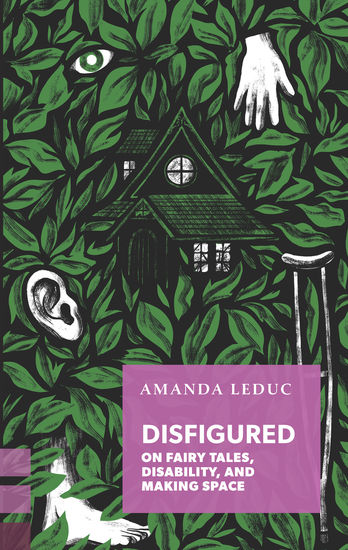
  • Disfigured - On Fairy Tales Disability and Making Space - cover

    Disfigured - On Fairy Tales...

    Amanda Leduc

    • 0
    • 0
    • 0
    Fairy tales shape how we see the world, so what happens when you identify more with the Beast than Beauty? 
    ONE OF ENTROPY MAGAZINE'S BEST NONFICTION OF 2020/2021 
    If every disabled character is mocked and mistreated, how does the Beast ever imagine a happily-ever-after? Amanda Leduc looks at fairy tales from the Brothers Grimm to Disney, showing us how they influence our expectations and behaviour and linking the quest for disability rights to new kinds of stories that celebrate difference. 
    “Leduc persuasively illustrates the power of stories to affect reality in this painstakingly researched and provocative study that invites us to consider our favorite folktales from another angle.” —Sara Shreve, Library Journal
    Show book
  • On Distant Service - The Life of the First US Foreign Service Officer to be Assassinated - cover

    On Distant Service - The Life of...

    Susan M. Stein

    • 0
    • 0
    • 0
    On July 18, 1924, a mob in Tehran killed U.S. foreign service officer Robert Whitney Imbrie. His violent death, the first political murder in the history of the service, outraged the American people. Though Imbrie’s loss briefly made him a cause célèbre, subsequent events quickly obscured his extraordinary life and career. 
    Susan M. Stein tells the story of a figure steeped in adventure and history. Imbrie rejected a legal career to volunteer as an ambulance driver during World War I and joined the State Department when the United States entered the war. Assigned to Russia, he witnessed the October Revolution, fled ahead of a Bolshevik arrest order, and continued to track communist activity in Turkey even as the country’s war of independence unfolded around him. His fateful assignment to Persia led to his death at age forty-one and set off political repercussions that cloud relations between the United States and Iran to this day. Drawing on a wealth of untapped materials, On Distant Service returns readers to an era when dash and diplomacy went hand-in-hand.
    Show book
  • Kushan Empire The: The History and Legacy of the Powerful Ancient Dynasty in South Asia - cover

    Kushan Empire The: The History...

    Editors Charles River

    • 0
    • 0
    • 0
    Long before it was known as Afghanistan, and even longer before it acquired its current reputation, Afghanistan’s modern borders were fairly congruent with the ancient country known as Bactria. Bactria was the seat of several different kingdoms during the course of many centuries, but none were as successful as the Kushan Empire, the dominant political entity in Central Asia from the early 2nd century BCE until the early 3rd century CE, during which time the Kushan rulers played a major role in the first iteration of the trade networks known collectively as the Silk Road. The Kushans began as nomadic steppe warriors who eventually grew tired of constantly migrating and subsequently put their skills and experience to use by conquering Bactria and creating a kingdom that was stronger economically than it was militarily. Taking advantage of their location on the Silk Road trade routes, the Kushan kings charged fees and tolls for goods passing through their empire and developed over-land and sea routes that brought goods from China to Rome and vice versa. But silk, textiles, gold, silver, and other commodities were not the only things that entered the Kushan Empire from the East and West; the Kushan Empire was a focal point for the spread of ideas, diplomats, and diseases. Although the Romans and the Chinese never had direct contact, they both had diplomatic relations with the Kushan kings, who proved to be outstanding diplomats. The Kushan Empire eventually became a transit point of people and ideas, where enormous wealth was exchanged alongside early forms of monotheism, such as Zoroastrianism and Buddhism. The Kushan kings recognized these cultural benefits and so practiced a policy of patronizing different religious philosophies and maintaining peaceful relations with other powers along the Silk Roads to keep the flow of goods moving. 
    Show book
  • Daily Life in Rome - A Social and Cultural History - cover

    Daily Life in Rome - A Social...

    Rogan Fish

    • 0
    • 0
    • 0
    The foundation of Roman society was built upon a complex hierarchy that influenced daily life, social interactions, and political structures. At its core, the Roman family served as the most fundamental unit, shaping personal identity, social standing, and economic stability. The paterfamilias, or male head of the household, wielded significant authority over his family, including his wife, children, and even enslaved individuals. Roman families emphasized duty, tradition, and respect for elders, with ancestral lineage playing a crucial role in societal reputation. Women, while largely confined to domestic roles, could exert influence within the household and, in some cases, in business affairs. Marriage alliances were also instrumental in forging political and social ties, reinforcing the interconnected nature of Roman society. 
    Beyond the family, Roman society was stratified into distinct classes, each with its own privileges and restrictions. At the top were the patricians, an elite group of aristocratic families who traditionally held political power. Their wealth and influence allowed them to dominate the Senate and other governing bodies. Below them were the plebeians, a broad class of commoners that included farmers, artisans, and merchants. Although they had fewer political rights in the early Republic, the plebeians gradually gained influence through social and political struggles, such as the Conflict of the Orders. The lowest tier of society consisted of enslaved individuals and freedmen. Slaves were often prisoners of war or those born into servitude, playing essential roles in both households and large-scale economic activities. Freedmen, formerly enslaved individuals who had gained their freedom, occupied an intermediate status, often working as skilled laborers or entrepreneurs while still facing social limitations.
    Show book
  • The Socratic Dialogues - Alcibiades and Other Attributed Dialogues - cover

    The Socratic Dialogues -...

    Plato

    • 0
    • 0
    • 0
    The influence of Plato, his Dialogues and his ‘Academy’, cast a long shadow. Around 35 Dialogues, almost all featuring Socrates as the principal figure, are generally ascribed to Plato and form one of the most important threads in Western philosophy  These four Dialogues may fall into the ‘Attributed Texts’ category, but they are of sufficient interest to warrant study in our time and when set against the principal canon.  
     
    The recording opens with Alcibiades I. Socrates’ interlocuter is well known as a young, charismatic figure of the time, and appears in the Symposium and Protagoras. The subject under discussion is justice and injustice. Socrates questions the over-confident Alcibiades about his understanding of these issues, which is crucial for someone about to play an active role in public life. It is the longest Dialogue of the four. 
     
    Hippias is another young man. A Sophist, brimming with the confidence of youth to the extent of being vain and boastful. He appears in two Dialogues on this recording, the Lesser Hippias and the Greater Hippias. The Lesser Hippias is a witty and lively conversation in which Hippias is keen to display his abilities only to be shaken by patient questioning by the astute Socrates. The Greater Hippias, a discussion about beauty, contains some interesting elements, while also showing how the form became diluted in the hands of lesser followers of Plato.  
     
    The final Dialogue, Menexenus is a special case. It was an important form in Athenian society and this is a rare surviving example. It has been included here in a new recording so it can be listened to in the context of ‘Attributed Dialogues’, rather than a fully accepted work by Plato. The background to each Dialogue is set by Benjamin Jowett. David Rintoul continues his persuasive characterisation of the masterful Socrates.
    Show book
  • Bad Girls of Ancient Greece: Myths and Legends from the Baddies that Started it all - cover

    Bad Girls of Ancient Greece:...

    Lizzy Tiffin

    • 0
    • 0
    • 0
    You’ve heard all about the ‘brilliant men’ of ancient myth, but what about the scheming and scandalous women who were so often lost in their shadow? 
    Bad Girls of Ancient Greece contains profiles of wayward wives, mad mothers, scandalous sisters and damsels, that quite frankly, caused others A LOT of stress in the ancient world. 
    With the ever-growing popularity of mythological retellings, Lizzy Tiffin has written THE guide to all of the baddies of ancient Greece. This book stands as a reminder that us women really have been bad – in the best way possible – from the start. 
    Written with humour and sass, Lizzy profiles the women in Greek myth and legend covering: mortals, goddesses, titans, nymphs (you name it, she’s done it). Here you’ll find the weird and wonderful escapades of the women we’re often lead to believe were minor characters. 
    Bad Girls of Ancient Greece is an accessible, intelligent, hilarious (sometimes spicy) guide to the women we love and know – Athena, Medusa, Aphrodite – and also those we may not, like Polyphonte, who was cursed with burning hot lust for a wild bear … imagine! 
    So dive into the stories you thought you knew with Bad Girls of Ancient Greece as your illuminating guide… 
    Lizzy Tiffin's Bad Girls of Ancient Greece is a non-fiction collection that brings a feminist perspective to the history of classical Greece. Through a series of humorous essays, she explores the stories of these women, making it a must-read for anyone interested in feminist theory and social history. 
    For fans of Billy Wellman (The Ottoman Empire) 
    HarperCollins 2024
    Show book