Join us on a literary world trip!
Add this book to bookshelf
Grey
Write a new comment Default profile 50px
Grey
Subscribe to read the full book or read the first pages for free!
All characters reduced
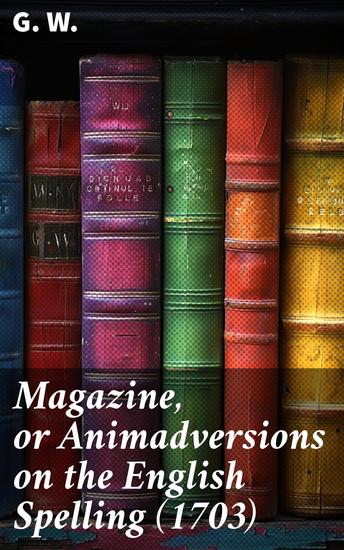
Magazine or Animadversions on the English Spelling (1703) - Unveiling the Phonetic Disparities: A Critical Analysis of English Spelling in the 18th Century - cover

Magazine or Animadversions on the English Spelling (1703) - Unveiling the Phonetic Disparities: A Critical Analysis of English Spelling in the 18th Century

W. G.

Publisher: Good Press

  • 0
  • 0
  • 0

Summary

In the 1703 treatise "Magazine, or Animadversions on the English Spelling," G. W. critiques the chaotic nature of English orthography with keen insight and a blend of wit and rigor. The book serves not only as a reflection on the phonetic inconsistencies and the lack of standardized spelling in English but also critiques the socio-cultural forces that perpetuate these issues. Written in a period marked by the early Enlightenment in England, the text combines elements of satire and academic analysis, challenging readers to reconsider their linguistic practices while dissecting the interplay between language and identity. G. W., whose full identity remains shrouded in mystery, was likely influenced by the burgeoning debates surrounding language both in literary circles and among the wider intellectual community of his time. The period witnessed significant shifts in the understanding of language and its relationship to society, prompting G. W. to engage with the prescriptive and descriptive approaches to spelling that were emerging in his contemporaries'Äô works. His background may offer essential nuances to his arguments, reflecting a deep concern for clarity in communication and the evolution of English. For readers intrigued by language, linguistics, and the historical framing of spelling conventions, "Magazine, or Animadversions on the English Spelling" is an essential text. It invites both casual linguists and serious scholars to ponder the implications of spelling on broader communicative practices, making it a relevant read for anyone interested in the foundational aspects of English as a living language.
Available since: 08/22/2023.
Print length: 29 pages.

Other books that might interest you

  • You Sound Like a White Girl - The Case for Rejecting Assimilation - cover

    You Sound Like a White Girl -...

    Julissa Arce

    • 0
    • 0
    • 0
    This program is read by the author and includes a bonus conversation with the author and Paola Ramos, a Vice News journalist, MSNBC Contributor, and author of Finding Latinx.“A love letter to our people—full of fury and passion."— José Olivarez, award-winning poet and author of Citizen Illegal"If you could take Rodolfo Gonzales epic poem 'I Am Joaquin' and explain it through compelling, personal narrative in twenty-first century America, You Sound Like A White Girl would be it.”— Joaquin CastroBestselling author Julissa Arce brings readers a powerful polemic against the myth that assimilation leads to happiness and belonging for immigrants in America. Instead, she calls for a celebration of our uniqueness, our origins, our heritage, and the beauty of the differences that make us Americans.“You sound like a white girl.” These were the words spoken to Julissa by a high school crush as she struggled to find her place in America. As a brown immigrant from Mexico, assimilation had been demanded of her since the moment she set foot in San Antonio, Texas, in 1994. She’d spent so much time getting rid of her accent so no one could tell English was her second language that in that moment she felt those words—you sound like a white girl?—were a compliment. As a child, she didn’t yet understand that assimilating to “American” culture really meant imitating “white” America—that sounding like a white girl was a racist idea meant to tame her, change her, and make her small. She ran the race, completing each stage, but never quite fit in, until she stopped running altogether.In this dual polemic and manifesto, Julissa dives into and tears apart the lie that assimilation leads to belonging. She combs through history and her own story to break down this myth, arguing that assimilation is a moving finish line designed to keep Black and brown Americans and immigrants chasing racist American ideals. She talks about the Lie of Success, the Lie of Legality, the Lie of Whiteness, and the Lie of English—each promising that if you obtain these things, you will reach acceptance and won’t be an outsider anymore. Julissa deftly argues that these demands leave her and those like her in a purgatory—neither able to secure the power and belonging within whiteness nor find it in the community and cultures whiteness demands immigrants and people of color leave behind.In You Sound Like a White Girl, Julissa offers a bold new promise: Belonging only comes through celebrating yourself, your history, your culture, and everything that makes you uniquely you. Only in turning away from the white gaze can we truly make America beautiful. An America where difference is celebrated, heritage is shared and embraced, and belonging is for everyone. Through unearthing veiled history and reclaiming her own identity, Julissa shows us how to do this.
    Show book
  • Essay for Ezra An - Racial Terror in America - cover

    Essay for Ezra An - Racial...

    Grant Farred

    • 0
    • 0
    • 0
    An Essay for Ezra is a critique of terror that begins but by no means ends with the presidency of Donald J. Trump. A father addresses his son and a boy shares his observations in a dynamic dialogistic exchange that is a commentary of and for its time, taking the measure of racial terror and of white supremacy both in our moment and as a historical phenomenon. 


    Drawing on the social and political thought of James Baldwin and Martin Luther King, Grant Farred examines the temptation and the perils of essentialism and the need to discriminate—to engage the black mind as much as the black body. With that dialectic as his starting point, Farred engages the ideas of Jameson, Barthes, Derrida, Adorno, Kant, and other thinkers to derive an ethics of being in our time of social peril. His antiessentialist racial analysis is salient, especially when he deploys Dave Chappelle as a counterpoint to Baldwin—and Chappelle's brilliant comic philosophic voice jabs at both racial and gender identity. 


    Standing apart for its willingness to explore terror in all its ambivalence, this theoretical reflection on racism, knowledge, ethics, and being in our neofascist present brings to bear the full weight of philosophical inquiry and popular cultural critique on black life in the United States.
    Show book
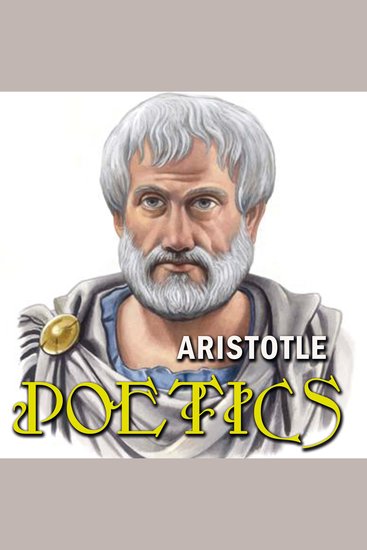
  • Poetics - cover

    Poetics

    Aristotle

    • 0
    • 0
    • 0
    Aristotle's Poetics (Greek: Περὶ ποιητικῆς; Latin: De Poetica) is the earliest surviving work of dramatic theory and first extant philosophical treatise to focus on literary theory. In it, Aristotle offers an account of what he calls "poetry" (a term that derives from a classical Greek term, ποιητής, that means "poet; author; maker" and in this context includes verse drama – comedy, tragedy, and the satyr play – as well as lyric poetry and epic poetry). They are similar in the fact that they are all imitations but different in the three ways that Aristotle describes: Differences in music rhythm, harmony, meter and melody. Difference of goodness in the characters.Difference in how the narrative is presented: telling a story or acting it out. In examining its "first principles", Aristotle finds two: 1) imitation and 2) genres and other concepts by which that of truth is applied/revealed in the poesis. His analysis of tragedy constitutes the core of the discussion. Although Aristotle's Poetics is universally acknowledged in the Western critical tradition, "almost every detail about his seminal work has aroused divergent opinions". The work was lost to the Western world for a long time. It was available in the Middle Ages and early Renaissance only through a Latin translation of an Arabic version written by Averroes.Aristotle's work on aesthetics consists of the Poetics, Politics and Rhetoric. The Poetics is specifically concerned with drama. At some point, Aristotle's original work was divided in two, each "book" written on a separate roll of papyrus.
    Show book
  • Subconscious mind reprogramming creativity - A guided meditation - DST Hypno with Stu Newman - cover

    Subconscious mind reprogramming...

    Stuart Newman

    • 0
    • 0
    • 0
    Subconscious mind reprogramming creativity with DST Hypno and Stu Newman is a powerful way to unlock your creative potential.  
    By tapping into the power of hypnosis, you can access hidden resources within yourself that will help you become more creative and productive in all areas of your life.  
    With this program, you'll be able to identify negative thought patterns that are blocking your progress and replace them with positive ones that promote growth. 
      
    You'll also learn how to use visualization techniques for greater clarity in decision-making as well as other tools such as affirmations for self-empowerment.  
    This program has already helped many people realize their full potential - why not give it a try?  
    Unlocking the power of creativity can open up new doors for success!
    Show book
  • Sage Leadership - Taoist Wisdom to Overcome Conflict and Create a Just World; Translations from the Huainanzi - cover

    Sage Leadership - Taoist Wisdom...

    Thomas Cleary

    • 0
    • 0
    • 0
    The subtle arts of management and leadership have been developed over thousands of years by the Chinese. The Book of Leadership and Strategy represents the Taoist culmination of this long tradition and is one of the most prestigious works of ancient Chinese thought. Collected here are insightful teachings on the challenges of leadership on all levels, from organizational management to political statecraft. The translator, Thomas Cleary, has chosen and arranged these teachings to emphasize the most valuable lessons of Taoist wisdom for modern Western listeners. Like Cleary's bestselling translation of The Art of War by Sun Tzu, this work will serve as an enlightening guide for people in business, politics, and government.
    Show book
  • The Problem with Pretty - Beauty Bias and the Surprising Science of Good Looks - cover

    The Problem with Pretty - Beauty...

    Allycin Powell-Hicks

    • 0
    • 0
    • 0
    What is beauty? Who gets to determine who is beautiful?What happens when you fall outside of beauty norms? Most of us have been tricked into believing beauty is about how we look, but Dr. Allycin Powell-Hicks reveals the real problem isn’t your appearance—it’s how you’re trained to see it. Blending science-based research and personal experiences, The Problem with Pretty dismantles beauty myths from their roots and dissects what it really means to be beautiful. She exposes how our brains take shortcuts, latching onto tiny visual cues, filling in the rest with socially constructed ideas that have nothing to do with reality.The Problem with Pretty rewires how we perceive beauty. Drawing on women’s stories, Dr. Ally breaks down the biases that shape our self-worth. She sheds a much-needed light on the systems that profit from our insecurities as well as how understanding our lineage can help us reclaim our power. With humor and her signature straightforward style, Dr. Ally offers the practical tools you need to stop chasing pretty and start living free, whole, and connected to who you really are.
    Show book