
Join us on a literary world trip!
Add this book to bookshelf
Grey
Write a new comment Default profile 50px
Grey
Subscribe to read the full book or read the first pages for free!
All characters reduced
Studies on Homer and the Homeric Age - Complete Edition (Vol 1-3) - cover

Studies on Homer and the Homeric Age - Complete Edition (Vol 1-3)

W. E. Gladstone

Publisher: DigiCat

  • 0
  • 0
  • 0

Summary

In "Studies on Homer and the Homeric Age," W. E. Gladstone embarks on a comprehensive examination of the works attributed to Homer, intertwining literary analysis with historical context. The book meticulously delves into the linguistic structure and thematic elements of the Iliad and the Odyssey, offering a profound inquiry into Homeric tradition and its implications for understanding ancient Greek society. Gladstone's scholarly approach, rich with philological insights and intertextual references, situates these epic tales within the broader currents of 19th-century thought, bridging classical antiquity and emerging modern ideologies. W. E. Gladstone, a British statesman and a profound scholar of ancient literature, drew inspiration from his lifelong fascination with Greek culture and history. His political career and profound interest in moral philosophy influenced his interpretation of Homer, seeing the epics not merely as literary artifacts but as revelations of human nature and moral dilemmas. Gladstone's unique background as both a politician and a passionate philologist imbues this work with an exceptional depth of insight and significance. For any scholar, student, or avid reader of classical literature, "Studies on Homer and the Homeric Age" serves as an enriching resource that enhances one's understanding of not only Homer's works but also the civilization from which they emerged. Gladstone's erudition invites readers to engage with the moral and cultural questions that resonate through time, making it a must-read for anyone interested in the intersection of literature and historical context.
Available since: 11/14/2023.
Print length: 1498 pages.

Other books that might interest you

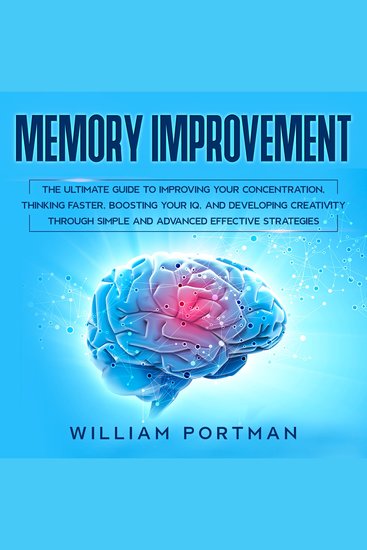
  • Memory Improvement - The Ultimate Guide to Improving Your Concentration Thinking Faster Boosting Your IQ and Developing Creativity Through Simple and Advanced Effective Strategies - cover

    Memory Improvement - The...

    William Portman

    • 0
    • 0
    • 0
    Do you wish to improve your memory, effortlessly remembering important information like classwork, work-related details, people's names, dates, and so much more? 
    Are you searching for a comprehensive guide that breaks down memory improvement in simple language, perfect for beginners? 
    If you've answered yes, you're in luck... 
    You are just a step away from discovering secret memory optimization hacks that few people know about, and learning exactly how to enhance your memory! 
    Memory is what makes us human. More than that, a good memory sets successful people apart from the rest. It's not just about academics; remembering a lover’s birthday, important personal information, and significant dates can strengthen relationships and contribute to overall success. 
    By reading this, you already understand the importance of a good memory, so you're in the right place. 
    Here’s a sneak peek of what you will learn in this audiobook:How memory improvement techniques work and the science behind themThe myths and truths about memory improvementReasons why you might be suffering from memory lossBenefits of improved recall abilityThe role of sleep in enhancing memoryVarious techniques to boost your memoryHow to keep your brain healthy and avoid memory-loss issuesAnd much more! 
    After listening to and implementing the strategies in this audiobook, you will never have to worry about forgetting passwords, PIN codes, dates, or important phone numbers, even if your memory is currently in a bad state!
    Show book
  • Who’s the Devil: the Other or the West? - cover

    Who’s the Devil: the Other or...

    Régis Le Sommier

    • 0
    • 0
    • 0
    “We’ve spent nine trillion dollars bombing the Middle East like mad. We’ve sown death there, including our own. And what has it gotten us? Nothing.” 
    Donald Trump, November 1, 2024. 
    
    The figure of the devil has haunted our collective consciousness since the dawn of time. He structures our societies, whether religious or secular. Sometimes, the devil has been a friend before being “demonized”. Sometimes, by force of circumstance, he has become an ally. And sometimes, the devil must be eliminated to mask or even justify the errors of our societies. 
    Thus, during the Second World War, we made a pact with Stalin to bring down a devil deemed more formidable: Hitler. In Northern Ireland, the British ended up talking with representatives of the IRA, just as the French did a few years earlier with the Algerian FLN. Recently, the Americans negotiated with the Taliban, another terrorist group, before handing over the keys to Afghanistan. Saddam Hussein, Muammar Gaddafi and Bashar al-Assad were friends of the West before the latter precipitated their downfall, even if it meant causing chaos in their countries.
    Régis Le Sommier has been a war reporter for 27 years, and has himself interviewed a number of infamous figures. His aim is to revisit the concept of the devil in the light of recent and current conflicts, in order to answer one question: shouldn’t the deleterious consequences of geopolitics conducted “in the name of good” lead us to doubt the validity of the actions taken by our governments, even today, against those they like to refer to as devils?
    Show book
  • Can the Brain Operate Without Recourse to the Past? - Malibu 1970 - Small Group Discussion 2 - cover

    Can the Brain Operate Without...

    Jiddu Krishnamurti

    • 0
    • 0
    • 0
    Can the brain operate without recourse to the past? - 22 February 1970  
    • Is there self-progress? 
    • Conflict 
    • Security 
    • Any form of division within oneself is a source of conflict. 
    • Can the brain be quiet?
    Show book
  • Existential and Philosophical Therapies - Living with Purpose (2 in 1) - cover

    Existential and Philosophical...

    Vivian Westlake

    • 0
    • 0
    • 0
    This book contains these two titles: 
    Existential Therapy - Existential therapy is a deeply philosophical approach to psychotherapy, grounded in the belief that life’s greatest challenge is navigating its inherent uncertainties while striving to create meaning. At its core, this approach invites individuals to confront the universal dilemmas of existence: freedom, responsibility, isolation, mortality, and the search for purpose. These existential concerns, though often unsettling, are also the catalysts for personal growth and transformation. 
    Reality Therapy - Reality Therapy is a therapeutic approach that emphasizes personal responsibility and focuses on the present moment, encouraging individuals to make choices that align with their true desires and values. Developed by Dr. William Glasser in the 1960s, it diverges from traditional therapeutic methods by centering on the idea that behavior is a choice and that people can gain control of their lives through conscious decisions. At the core of Reality Therapy is the concept that all behavior is purposeful and is driven by an individual's attempt to fulfill basic needs. These needs include survival, love and belonging, power, freedom, and fun. When people feel that these needs are unmet, they often engage in behaviors that are designed to satisfy them, even if those behaviors are not helpful or productive. Reality Therapy challenges individuals to evaluate whether their current behaviors are effective in meeting these needs and whether they are serving their long-term goals.
    Show book
  • The Enlightenment in America - Ideas and Revolution - cover

    The Enlightenment in America -...

    Nova Ashford

    • 0
    • 0
    • 0
    The Enlightenment, a period of intellectual and philosophical advancement in Europe during the 17th and 18th centuries, laid the groundwork for many of the principles that would shape modern democratic societies. Its influence reached far beyond Europe, significantly impacting the American colonies and their path to independence. Understanding the roots of Enlightenment thought requires exploring the major intellectual movements that preceded it, including the Renaissance, the Scientific Revolution, and the Reformation. 
    At the heart of the Enlightenment was a growing emphasis on reason, individualism, and skepticism toward traditional authority. The Renaissance, which spanned the 14th to the 17th centuries, marked a resurgence in classical learning and a renewed focus on humanism—the belief in the value and agency of human beings. Renaissance thinkers, such as Leonardo da Vinci and Michelangelo, laid the groundwork for later intellectual revolutions by advocating for a more secular view of the world, emphasizing human capability and creativity. This shift from a purely religious worldview to one that incorporated human reason would directly influence Enlightenment thinkers who challenged the authority of both the church and monarchy. 
    The Scientific Revolution, which began in the 16th century with figures like Copernicus, Galileo, and Newton, was a key precursor to Enlightenment thought. The scientific discoveries of this era demonstrated the power of reason and observation in understanding the natural world. These discoveries not only transformed scientific inquiry but also encouraged a new way of thinking about society and governance. The methods of empirical observation and logical reasoning that characterized the Scientific Revolution were adopted by Enlightenment philosophers, who sought to apply them to human behavior, politics, and ethics.
    Show book
  • Codependency - cover

    Codependency

    Brittany Forrester

    • 0
    • 0
    • 0
    Codependency involves sacrificing one’s personal needs to try to meet the needs of others. Someone who is codependent has an extreme focus outside themselves. Their thoughts and actions revolve around others, such as spouses or relatives.Codependency often appears in relationships that are unbalanced and unhealthy. A person with codependency often tries to save others from themselves. They may get hurt trying to “cure” a partner’s addictions or abusive behaviors.Codependents do the wrong things for the right reasons.But the good news is that people can change and learn new, healthier behaviors.People can be inspired and encouraged to change and learn from fit role models.In this audiobook, you will find:causes of codependencyfeelings that spring from codependencyhow to recognize codependencyhow to overcome codependencystrategies, self-care, and recovery from codependencymuch much more!
    Show book