Join us on a literary world trip!
Add this book to bookshelf
Grey
Write a new comment Default profile 50px
Grey
Subscribe to read the full book or read the first pages for free!
All characters reduced
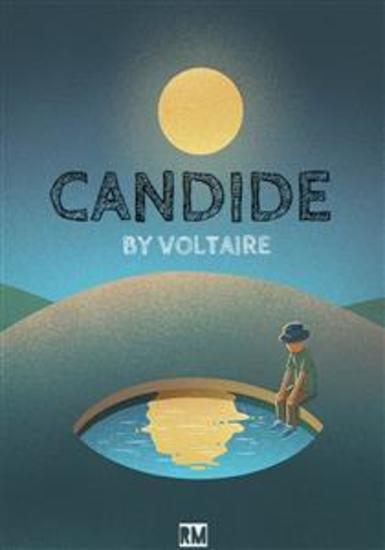
Candide (Annotated) - cover

Candide (Annotated)

Voltaire

Publisher: Reading Masterpieces

  • 0
  • 0
  • 0

Summary

"Candide" is an accessible masterpiece which demonstrated to the world Volatire's genius as a satirist. The eponymous Candide is a young man tutored by an optimist who is convinced according to the cause and effect philosophy of Leibniz and perhaps is best summarized in Voltaire's leitmotif that human beings live in the "best of all possible worlds." Alexander Pope rather laughably made the same outrageous claim in his "Essay on Man" in which he writes, "Everything that is is right." How can this be so, you may well ask? Here is the nut of the problem: it seems that a perfect God has created a highly imperfect world. How can a good, omnipotent, loving God create a world in which so much catastrophic evil exists and which is so often allowed even to thrive? It is a question for the ages. Theologians argue that God created mankind with free will and without it they would simply be puppets without the freedom to make choices. Theologians also point out that the majority of the evil resident in our world is perpetuated on vast masses of humanity by other human beings, not God, and that evil is the cause and effect of conflicting self-interests imposed by people with more power upon the less powerful. But this point doesn't explain why a loving, all-powerful God would allow any of it to exist and endure. Why not cast down all the devils and give his human creatures a perfect garden, a paradise on earth, without snakes anywhere? Why did God create the serpent in the Garden of Eden in the first place? Voltaire, like Rousseau, was an avid gardener and Voltaire jests at Rousseau's good faith in the "Confessions" as if the latter were simply a country bumpkin. But gardens have a great deal of meaning in "Candide" as in, for example, Milton's "Paradise Lost" or "Genesis" and are thematically significant for Voltaire who concludes that gardens are, after all, a wise place to reside out of harm's way. Voltaire absolutely skewers the optimistic cause and effect of Pope and Leibniz with a catalog of tragicomic catastrophes which plague not only Candide and Pangloss but all of mankind infinitely. Consider the Great Lisbon Earthquake of 1755 which burst suddenly out of nowhere with all its raging fires and tidal waves to destroy nearly all of the city and the ships in its harbor. Is there no end even to the great catastrophes in which man has no hand but from which we are compelled to suffer except for God's grace? Voltaire's vivid and piercing wit is hilarious as he brazenly brings parody to places high and low, near and far, rich and poor to depict our world as the ultimate dystopia. In his novel Candide can only find a semblance of happiness in El Dorado, a rich, hidden world in South America: in other words, happiness in real life can only be found in a utopia without a basis for reality. So what are we to deduce about Candide? Is he a sometimes violent fool for all his naivete? And is Pangloss not a buffoon who earns his suffering so extensively at every turn of the road for his unjustified, unbridled optimism? Or are they heroic for their optimism despite the epic disasters that nearly devastate them time after time. Or is their fate really just the human condition and are they both just being all too human?
Available since: 01/22/2022.
Other books that might interest you

  • Somatic Experiencing - Healing Trauma through the Body's Wisdom - cover

    Somatic Experiencing - Healing...

    Vivian Westlake

    • 0
    • 0
    • 0
    Trauma is a deeply impactful event that can leave lasting scars on the body and mind. While traditionally associated with physical injury or life-threatening events, trauma also encompasses psychological and emotional experiences that overwhelm the body's ability to cope. These experiences can range from major events, such as accidents, abuse, or natural disasters, to more subtle forms of chronic stress and neglect. Regardless of the cause, trauma has profound effects on the nervous system and the way individuals experience the world around them. 
    When a person faces a traumatic event, their body enters a state of heightened alertness, preparing to respond with fight, flight, or freeze reactions. These responses are governed by the autonomic nervous system (ANS), which is responsible for managing involuntary bodily functions like heart rate, respiration, and digestion. In a traumatic situation, the ANS activates the sympathetic nervous system (SNS), triggering the fight or flight response to protect the individual. If neither response is possible, the freeze response takes over, which can lead to feelings of paralysis or disassociation. These instinctual reactions are designed to protect, but when the trauma is unresolved, the nervous system may remain stuck in a heightened state of alertness. 
    The effects of trauma are not just psychological but are also deeply physiological. When the body remains in this heightened state of arousal, it can disrupt the normal functioning of various bodily systems, leading to symptoms such as chronic pain, tension, digestive issues, or sleep disturbances. This state of dysregulation can also affect the brain, impairing areas responsible for memory, emotional regulation, and decision-making. The longer this state persists, the more difficult it becomes for the individual to return to a sense of normalcy, and the trauma can become entrenched in both the body and mind.
    Show book
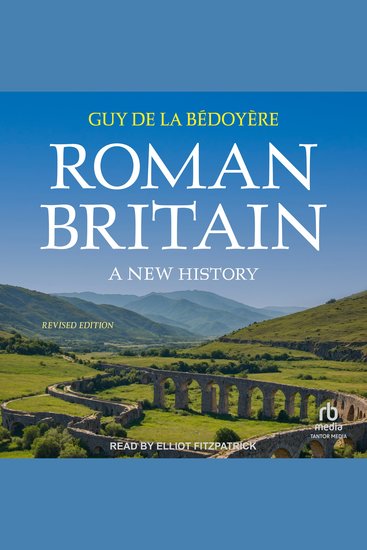
  • Roman Britain - A New History: Revised Edition - cover

    Roman Britain - A New History:...

    Guy de la Bédoyère

    • 0
    • 0
    • 0
    This illuminating account of Britain as a Roman province sets the Roman conquest and occupation of the island within the larger context of Romano-British society and how it functioned. 


    The author first outlines events from the Iron Age period immediately preceding the conquest in AD 43 to the emperor Honorius's advice to the Britons in 410 to fend for themselves. He then tackles the issues facing Britons after the absorption of their culture by an invading army, including the role of government and the military in the province, religion, commerce, technology, and daily life. For this revised edition, the text and bibliography have been updated to reflect the latest discoveries and research in recent years.
    Show book
  • End of History and the Last Man The: Book Summary & Analysis - cover

    End of History and the Last Man...

    Briefly Summaries

    • 0
    • 0
    • 0
    This is a concise summary and analysis of The End of History and the Last Man, by  
    Francis Fukuyama.
     
    It is not the original book and is not affiliated with or endorsed by Francis Fukuyama.
     
    Ideal those seeking a quick and insightful overview.
    The End of History and the Last Man explores the profound idea that history, as a dynamic process driven by ideological conflict, may have reached its conclusion with the triumph of liberal democracy. Combining political philosophy, history, and sociology, this groundbreaking work examines how liberal democracy emerged as the dominant form of governance, its strengths and vulnerabilities, and whether human fulfillment can truly be achieved within this framework. The book delves into the implications of this "end of history," questioning whether material progress and individual freedoms are enough to satisfy the human desire for recognition, identity, and meaning.
    Show book
  • The Monster and the Mirror - Mental Illness Magic and the Stories We Tell - cover

    The Monster and the Mirror -...

    K.J. Aiello

    • 0
    • 0
    • 0
    Revelatory memoir and cultural criticism that connects popular fantasy and our perceptions of mental illness to offer an empathetic path to compassionate care
    		 
    Growing up, K.J. Aiello was fascinated by magical stories of dragons, wizards, and fantasy, where monsters were not what they seemed and anything was possible. These books and films were both a balm and an escape, a safe space where Aiello’s struggle with mental illness transformed from a burden into a strength that could win battles and vanquish villains.
    		 
    A unique blend of memoir, research, and cultural criticism, The Monster and the Mirror charts Aiello’s life as they try to understand their own mental illness using The Lord of the Rings, Game of Thrones, and other stories as both guides to heroism and agency and cautionary tales of how mental illness is easily stereotyped as bad and violent. Aiello questions who is allowed to be “mad” versus “sane,” “good” versus “evil,” and “weak” versus “strong,” and who is allowed to tell their own stories. The Monster and the Mirror explores our perceptions of mental illness in a way that is challenging and tender, empathetic and knowledgeable, and offers a path to deeper understanding and compassionate care.
    Show book
  • Goddess Manifestation: Awakening Inspiration And Divine Energy - cover

    Goddess Manifestation: Awakening...

    Niina Niskanen

    • 0
    • 0
    • 0
    Step into the sacred energy of divine feminine wisdom and unlock the power of manifestation with the guidance of goddesses from various traditions. This course invites you to connect with Brigid, the Celtic goddess of fire and creativity; Cerridwen, the keeper of transformation and wisdom; Mielikki, the Finnish goddess of the forest and abundance; and the Nine Muses, the ancient Greek sources of artistic and intellectual inspiration. Through guidance, rituals, and reflective practices, you will learn how to channel their unique energies to spark creativity, cultivate intuition, and bring your deepest desires into reality. Whether you seek artistic inspiration, personal transformation, or a deeper spiritual connection, these goddesses offer their blessings to guide your journey. 
    Embrace their wisdom, ignite your inner fire, and manifest a life filled with creativity, abundance, and purpose. 
    Goddess Manifestation: Awakening Inspiration and Divine Energy 
    Unlock the transformative power of ancient goddesses and muses to ignite your inner creativity and spiritual growth. 
    Embark on a sacred journey with Goddess Manifestation: Awakening Inspiration and Divine Energy, a comprehensive guide that bridges ancient wisdom with modern spiritual practices. This enlightening book invites you to connect with the divine energies of the Nine Muses of Greek mythology—patronesses of the arts and sciences—to awaken your creative potential and inspire personal expression.
    Show book
  • The Next Economy MBA - Redesigning Business for the Benefit of All Life - cover

    The Next Economy MBA -...

    Kevin Bayuk, LIFT Economy, Erin...

    • 0
    • 0
    • 0
    This radical and rigorous rethinking of the traditional MBA program combines solid business principles with a commitment to environmental and social justice. 
     
    Many current and aspiring entrepreneurs are looking for a solid business education that also deeply aligns with their progressive values. Based on a course field-tested with over 500 students, this book fills that gap. It covers traditional topics such as business strategy and structure, finance, marketing, recruiting, and branding from a socially just and environmentally regenerative perspective. And it also touches on topics such as strategies to reverse climate change, nonviolent communication, self-managing organizations, locally self-reliant economies, racial justice, and more.  
     
    Traditional MBA programs are based on outdated principles that were developed during the Industrial Revolution-and they can be hugely expensive. Sustainable MBA programs, while laudable, are too incremental to make a sufficient impact. The Next Economy MBA is for entrepreneurs seeking to make business an active force for good. It draws on the authors' experience of working with over 300 social enterprises, from small organizations like Winona's Hemp and Heritage Farm to household names like Ben & Jerry's and Patagonia. 
     
    Our current economy, what the authors call the "Business as Usual Economy," has created a massive wealth gap, a climate crisis, racial division, and needless housing, food, and healthcare shortages. This book shows how businesses can pave the way to a Next Economy that meets the basic needs of all people and restores and protects the planetary ecosystem.
    Show book