¡Acompáñanos a viajar por el mundo de los libros!
Añadir este libro a la estantería
Grey
Escribe un nuevo comentario Default profile 50px
Grey
Suscríbete para leer el libro completo o lee las primeras páginas gratis.
All characters reduced
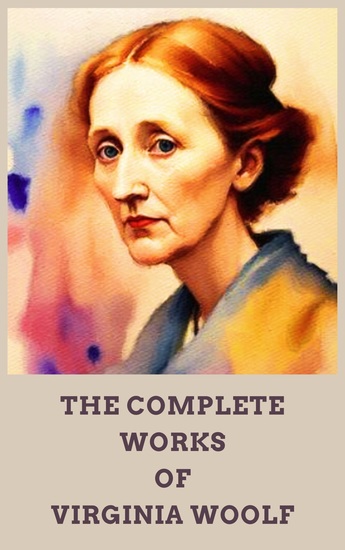
Virginia Woolf - The Complete Works - cover

Virginia Woolf - The Complete Works

Virginia Woolf, Zenith Crescent Moon Press

Editorial: Zenith Crescent Moon Press

  • 0
  • 0
  • 0

Sinopsis

🌊 Step into the extraordinary world of Virginia Woolf with The Complete Works, a comprehensive collection of her literary masterpieces. This definitive eBook gathers all her iconic works, including Mrs. Dalloway, To the Lighthouse, Orlando, and The Waves, as well as her groundbreaking essays and short stories. Dive into Woolf's eloquent prose and explore the intricacies of human consciousness, memory, and time.

✨ Woolf's works are a celebration of modernist innovation, offering profound insights into the human experience. Her use of stream of consciousness, lyrical beauty, and experimental narrative structures make her a cornerstone of 20th-century literature. This collection also features her powerful essays, such as A Room of One's Own, which continue to inspire discussions on gender, identity, and creativity.

đź“– Celebrated for her ability to capture fleeting moments and inner thoughts, Virginia Woolf's writing resonates with timeless themes of love, loss, and self-discovery. The Complete Works invites you to witness her literary genius and immerse yourself in the richness of her imagination.

🌟 Embark on a transformative reading experience with the works of one of modernism's most influential voices. Click Buy Now and uncover the enduring beauty of Virginia Woolf's legacy.
Disponible desde: 26/03/2025.
Longitud de impresión: 16223 páginas.

Otros libros que te pueden interesar

  • Essential Labor - Mothering as Social Change - cover

    Essential Labor - Mothering as...

    Angela Garbes

    • 0
    • 0
    • 0
    From the acclaimed author of Like a Mother comes a reflection on the state of caregiving in America, and an exploration of mothering as a means of social change. 
    The Covid-19 pandemic shed fresh light on a long-overlooked truth: mothering is among the only essential work humans do. In response to the increasing weight placed on mothers and caregivers—and the lack of a social safety net to support them—writer Angela Garbes found herself pondering a vital question: How, under our current circumstances that leave us lonely, exhausted, and financially strained, might we demand more from American family life?  
    In Essential Labor, Garbes explores assumptions about care, work, and deservedness, offering a deeply personal and rigorously reported look at what mothering is, and can be. A first-generation Filipino-American, Garbes shares the perspective of her family's complicated relationship to care work, placing mothering in a global context—the invisible economic engine that has been historically demanded of women of color.  
    Garbes contends that while the labor of raising children is devalued in America, the act of mothering offers the radical potential to create a more equitable society. In Essential Labor, Garbes reframes the physically and mentally draining work of meeting a child's bodily and emotional needs as opportunities to find meaning, to nurture a deeper sense of self, pleasure, and belonging. This is highly skilled labor, work that impacts society at its most foundational level. 
    Part galvanizing manifesto, part poignant narrative, Essential Labor is a beautifully rendered reflection on care that reminds us of the irrefutable power and beauty of mothering.
    Ver libro
  • Am I Alone Here? - Notes on Living to Read and Reading to Live - cover

    Am I Alone Here? - Notes on...

    Peter Orner

    • 0
    • 0
    • 0
    "Stories, both my own and those I've taken to heart, make up whoever it is that I've become," Peter Orner writes in this collection of essays about reading, writing, and living. Orner reads and writes everywhere he finds himself: a hospital cafeteria, a coffee shop in Albania, or a crowded bus in Haiti. The result is a book of unlearned meditations that stumbles into memoir. 


    Among the many writers Orner addresses are Isaac Babel and Zora Neale Hurston, both of whom told their truths and were silenced; Franz Kafka, who professed loneliness but craved connection; Robert Walser, who spent the last twenty-three years of his life in a Swiss insane asylum, working at being crazy; and Juan Rulfo, who practiced the difficult art of silence. Virginia Woolf, Eudora Welty, Yasunari Kawabata, Saul Bellow, Mavis Gallant, John Edgar Wideman, William Trevor, and Václav Havel make appearances, as well as the poet Herbert Morris—about whom almost nothing is known. 


    An elegy for an eccentric late father, and the end of a marriage, Am I Alone Here? is also a celebration of the possibility of renewal. At once personal and panoramic, this book will inspire listeners to return to the essential stories of their own lives.
    Ver libro
  • Women of Ancient Greece - Philosophers Leaders and Goddesses - cover

    Women of Ancient Greece -...

    Layla Gupta

    • 0
    • 0
    • 0
    The ancient Greeks created a rich tapestry of gods and goddesses that embodied the complexities of the human experience, and among them, the divine feminine figures stood out as powerful symbols of strength, wisdom, love, and conflict. The goddesses of ancient Greece were not merely passive figures but rather active forces that shaped both the natural world and the lives of mortals. Their stories reveal a deep understanding of the roles and expectations of women, as well as the power dynamics that governed ancient Greek society. 
    Among the most prominent of these divine figures was Athena, the goddess of wisdom, warfare, and craft. Athena was a paradoxical figure, blending intelligence with martial prowess. As the patron goddess of Athens, she embodied the city's values of logic, strategy, and civic duty. Her virginity, a defining characteristic, symbolized purity and independence, and her role as a warrior was unique in that it was based on strategic thinking rather than physical aggression. Athena's guidance was sought not just in matters of war but also in philosophy and the arts, making her one of the most revered figures in the pantheon. 
    In stark contrast to Athena's intellectual and strategic prowess, Aphrodite, the goddess of love, beauty, and desire, represented the compelling and often uncontrollable forces of attraction. Aphrodite's influence was not confined to the physical realm; she also governed the emotional and relational dynamics of gods and mortals alike. Her beauty and charm were legendary, capable of inciting both creation and destruction. Through her, the Greeks understood love not just as a harmonious union but also as a force that could disrupt order, as seen in the myth of her involvement in the Trojan War. Aphrodite’s power was as much about seduction as it was about the more fragile human emotions, teaching that love could be both transcendent and tumultuous.
    Ver libro
  • Feudalism - The Structure of Medieval Society - cover

    Feudalism - The Structure of...

    Harris Ropes

    • 0
    • 0
    • 0
    Feudalism emerged in Western Europe as a response to the collapse of centralized authority following the fall of the Roman Empire. As Roman institutions crumbled in the 5th century, Europe descended into a period of instability and fragmentation. Without the protection and infrastructure once provided by Rome, people turned to local leaders for safety and organization. These leaders—often wealthy landowners or military figures—became the foundation of a new social and political structure that emphasized land ownership, loyalty, and mutual obligation. 
    The early roots of feudal practices can be traced to the relationships that formed during this chaotic period. In the absence of a strong central government, powerful individuals began offering protection to those around them in exchange for service or labor. Over time, this informal system developed into a structured hierarchy, with clearly defined roles and responsibilities. Lords granted land, known as fiefs, to their vassals, who in return pledged loyalty and military support. This mutual dependency became the backbone of medieval society and formalized the relationships that had organically formed during the earlier periods of uncertainty. 
    Localized power became the defining feature of feudal Europe. With no single empire to unify the continent, authority became decentralized. Kings often ruled in name only, while real control rested in the hands of regional lords and nobles. These lords governed their own territories, enforced laws, and maintained private armies. In turn, they depended on the support of lesser vassals and knights, who managed smaller portions of land and fulfilled military duties. This layered structure ensured that each level of society relied on those above and below, creating a rigid yet stable social order.
    Ver libro
  • The Etruscans - History of the Ancient Pre-Roman Civilization in Italy - cover

    The Etruscans - History of the...

    Kelly Mass

    • 0
    • 0
    • 0
    At its peak, the Etruscan society of age-old Italy covered circa what's now Tuscany, western Umbria, and northern Lazio, and areas of what's now the Po Valley, Emilia-Romagna, south-eastern Lombardy, southern Veneto, and small parts of Campania. 
    The first proof of an Etruscan society might be traced back to around 900 BC. 
    This is the Iron Age Villanovan culture, which emerged from the former late Bronze Age Proto-Villanovan civilization in the exact same area and is considered the first stage of Etruscan civilization. 
    Etruscan society lasted till it was taken in by Roman culture. Assimilation started due to the Roman-- Etruscan Wars in the late fourth century BC; it heightened with the grant of Roman citizenship in ninety BC, and was finished in 27 BC, when the Etruscans' terrain was taken in into the freshly established Roman Empire. 
    In this guide, you will learn about these things and many other aspects of the Etruscan civilization.
    Ver libro
  • A Rare Recording of John E Brown - cover

    A Rare Recording of John E Brown

    John E. Brown

    • 0
    • 0
    • 0
    John E. Brown (April 2, 1879 – February 12, 1957) was a prominent Methodist evangelist, publisher, radio pioneer, and educator in the first half of the twentieth century. In 1919, he established John Brown University, one of Arkansas’ leading private universities to provide an interdenominational, Christian education for needy students. He was also the leading figure in securing passage of a law prohibiting the sale of alcohol in Benton County, a ban that continued into the twenty-first century.
    Ver libro