Join us on a literary world trip!
Add this book to bookshelf
Grey
Write a new comment Default profile 50px
Grey
Subscribe to read the full book or read the first pages for free!
All characters reduced
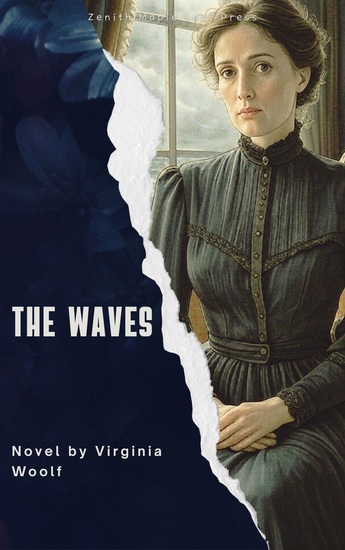
The Waves - cover

The Waves

Virginia Woolf

Publisher: Zenith Maple Leaf Press

  • 0
  • 0
  • 0

Summary

🌊 What if the rhythm of life itself could be captured in words?

Virginia Woolf's The Waves (1931) is her most experimental and poetic novel—a profound meditation on identity, memory, and the passage of time. Told through the soliloquies of six friends from childhood to old age, the book abandons traditional plot in favor of a lyrical tapestry of voices, weaving together the inner lives of its characters into one symphony of thought and emotion.

Through shifting perspectives, Woolf explores the nature of individuality, the bonds of friendship, and the eternal flow of existence. Each character becomes both distinct and interconnected, mirroring the ceaseless rise and fall of waves along the shore.

🌟 Why readers treasure this novel:

Woolf's most ambitious and poetic work, blending fiction and philosophy.

A masterpiece of modernist literature and stream-of-consciousness style.

A timeless reflection on the unity of life, death, and memory.

👉 Click Buy Now and immerse yourself in Woolf's luminous vision of the human soul.
Available since: 08/25/2025.
Print length: 193 pages.

Other books that might interest you

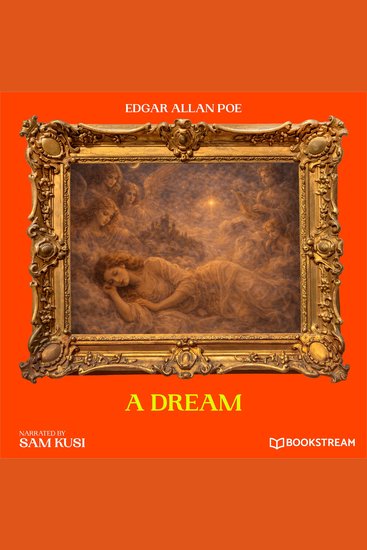
  • A Dream - cover

    A Dream

    Edgar Allan Poe

    • 0
    • 0
    • 0
    A Dream: Edgar Allan Poe was an American writer, poet, editor, and literary critic who is best known for his poetry and short stories.
    
    In visions of the dark night
    I have dreamed of joy departed—
    But a waking dream of life and light
    Hath left me broken-hearted.
    Show book
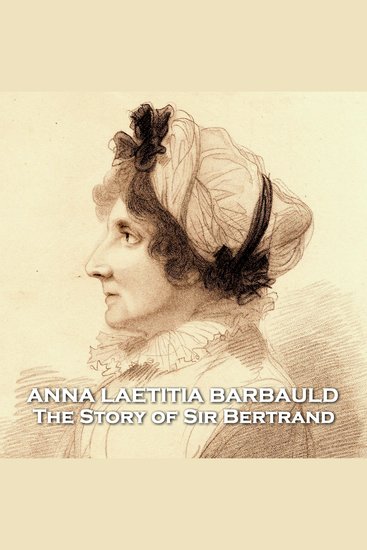
  • The Story of Sir Bertrand - From their pens to your ears genius in every story - cover

    The Story of Sir Bertrand - From...

    Anna Laetitia Barbauld

    • 0
    • 0
    • 0
    The bookshelves of British literature are incredible collections that have gathered together centuries of very talented authors.  From these Isles their fame spread and whilst among their number many are now forgotten or neglected their talents endure.  Among them is Anna Laetitia Barbauld.
    Show book
  • Anna Karenina (Part 5) - cover

    Anna Karenina (Part 5)

    Leo Tolstoy

    • 0
    • 0
    • 0
    Part 5: Kostya and Kitty marry and start their new life on his country estate. Although the couple are happy, they undergo a bitter and stressful first three months of marriage. Kostya feels dissatisfied at the amount of time Kitty wants to spend with him and dwells on his inability to be as productive as he was as a bachelor. When the marriage starts to improve, Kostya learns that his brother, Nikolai, is dying of consumption. Kitty offers to accompany Kostya on his journey to see Nikolai and proves herself a great help in nursing Nikolai. Seeing his wife take charge of the situation in an infinitely more capable manner than he could have done himself without her, Kostya's love for Kitty grows. Kitty eventually learns that she is pregnant.
    Anna Karenina is a novel by the Russian author Leo Tolstoy, first published in book form in 1878. Many writers consider Anna Karenina the greatest work of literature ever, and Tolstoy himself called it his first true novel. It was initially released in serial installments from 1873 to 1877 in the periodical The Russian Messenger.
    Show book
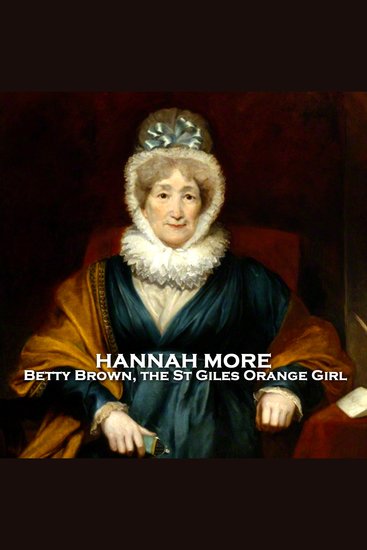
  • Betty Brown the St Giles Orange Girl - From their pens to your ears genius in every story - cover

    Betty Brown the St Giles Orange...

    Hannah More

    • 0
    • 0
    • 0
    Hannah More was born on February 2nd, 1745 at Fishponds in the parish of Stapleton, near Bristol. She was the fourth of five daughters. 
    The City of Bristol, at that time, was a centre for slave-trading and Hannah would, over time, become one of its staunchest critics.  
    She was keen to learn, possessed a sharp intellect and was assiduous in studying.  Hannah first wrote in 1762 with The Search after Happiness (by the mid-1780s some 10,000 copies had been sold). 
    In 1767 Hannah became engaged to William Turner.  After six years, with no wedding in sight, the engagement was broken off.  Turner then bestowed upon her an annual annuity of £200.  This was enough to meet her needs and set her free to pursue a literary career.   
    Her first play, The Inflexible Captive, was staged at Bath in 1775. The famous David Garrick himself produced her next play, Percy, in 1777 as well as writing both the Prologue and Epilogue for it.  It was a great success when performed at Covent Garden in December of that year.  
    Hannah turned to religious writing with Sacred Dramas in 1782; it rapidly ran through nineteen editions. These and the poems Bas-Bleu and Florio (1786) mark her gradual transition to a more serious and considered view of life. 
    Hannah contributed much to the newly-founded Abolition Society including, in February 1788, her publication of Slavery, a Poem recognised as one of the most important of the abolition period.   
    Her work now became more evangelical.  In the 1790s she wrote several Cheap Repository Tracts which covered moral, religious and political topics and were both for sale or distributed to literate poor people.  The most famous is, perhaps, The Shepherd of Salisbury Plain, describing a family of incredible frugality and contentment. Two million copies of these were circulated, in one year. 
    In 1789, she purchased a small house at Cowslip Green in Somerset. She was instrumental in setting up twelve schools in the area by 1800. 
    She continued to oppose slavery throughout her life, but at the time of the Abolition Bill of 1807, her health did not permit her to take as active a role in the movement as she had done in the late 1780s, although she maintained a correspondence with Wilberforce and others.  
    In July 1833, the Bill to abolish slavery throughout the British Empire passed in the House of Commons, followed by the House of Lords on August 1st. 
    Hannah More died on September 7th, 1833.
    Show book

  • The Riddle of the Sands - cover

    The Riddle of the Sands

    Erskine Childers

    • 0
    • 0
    • 0
    "The Riddle of the Sands" stands as one of the earliest spy thrillers, an intriguing blend of adventure, suspense, and a genuine call to national vigilance. First published in 1903, Erskine Childers’s novel occupies a unique place in literary and historical context. Set against the backdrop of a world growing increasingly uncertain, this novel serves not only as a thrilling narrative but also as a reflection of the anxieties of pre-war Europe. Childers crafts a story so gripping and credible that it was heralded as both a piece of literature and a cautionary warning for an unprepared British government. 
    The story unfolds in the labyrinthine tidal channels and sandbanks of the Frisian Islands in the North Sea, where two young Englishmen, Carruthers and Davies, find themselves swept into an unintended espionage mission. What begins as a leisurely sailing holiday soon escalates into a daring adventure, as they uncover a clandestine German plot that could threaten England’s security. The novel's detailed nautical descriptions, drawn from Childers's own passion for sailing, lend an authenticity that deeply immerses the reader in the experience of navigating the sea and its lurking dangers. 
    Head Stories Audio presents "The Riddle of the Sands" by Erskine Childers. Narrated by Simon Hester. With original music.
    Show book
  • The Eye of the Camera - From their pens to your ears genius in every story - cover

    The Eye of the Camera - From...

    Fred M. White

    • 0
    • 0
    • 0
    Richard Bernard Heldmann was born on 12th October 1857, in St Johns Wood, North London.  
    By his early 20’s Heldmann began publishing fiction for the myriad magazine publications that had sprung up and were eager for good well-written content.  
    In October 1882, Heldmann was promoted to co-editor of Union Jack, a popular magazine, but his association with the publication ended suddenly in June 1883.  It appears Heldman was prone to issuing forged cheques to finance his lifestyle.  In April 1884 he was sentenced to 18 months hard labour. 
    In order to be well away from the scandal and the damage that this had caused to his reputation Heldmann adopted a pseudonym on his release from jail.  Shortly thereafter the name ‘Richard Marsh’ began to appear in the literary periodicals.  The use of his mother’s maiden name as part of it seems both a release and a lifeline. 
    A stroke of very good fortune arrived with his novel ‘The Beetle’ published in 1897.  This would turn out to be his greatest commercial success and added some much-needed gravitas to his literary reputation.   
    Marsh was a prolific writer and wrote almost 80 volumes of fiction as well as many short stories, across many genres from horror and crime to romance and humour.   His unusual characters, plotting devices and other literary developments have identified his legacy as one of the best British writers of his time.   
    Richard Marsh died from heart disease in Haywards Heath in Sussex on 9th August 1915.  He was 57.
    Show book